
ST. PETERSBURG – There is a version of Diana Sosoaca that the European Parliament tried to silence, then strip of legal cover, then refer to the Romanian Prosecutor General’s Office. On Wednesday, she spoke at the St. Petersburg International Economic Forum — and said what she always says, only louder, and with a Russian state audience to receive it.
Romania has no sovereignty, she told the SPIEF gathering on the first day of the four-day forum. Every governing decision, she said, originates not in Bucharest but in Brussels — specifically in the European Commission, a body she described as functioning like an unelected government with direct legislative power over member states. “In Romania, there is no sovereignty and independence. Everything is decided in Brussels, in the European Commission — not in the European Parliament,” Sosoaca said. “The European Commission is like a government but it has power to legiferate.”
Whether one regards that characterization as a sovereign’s honest reckoning or a Kremlin-friendly talking point depends almost entirely on which direction one faces in 2026. What it cannot be dismissed as is irrelevant. Sosoaca is a sitting Member of the European Parliament, elected in 2024, and her party SOS Romania now holds seats in Romania’s Chamber of Deputies and Senate as well as that single MEP slot in Strasbourg. She is not fringe theater. She is a political quantity whose presence at SPIEF — while no official EU delegations attended the forum — is itself a statement her critics will not overlook.
The 2026 SPIEF, running from June 3 to 6, carried the theme “Pragmatic Dialogue: The Path to a Stable Future.” For the first time in roughly a decade, a U.S. business delegation attended, led by Rodney Cook. Representatives from China, Saudi Arabia, India, and more than 130 other states and territories were present. Not one official EU government delegation appeared. That the only European parliamentarian to make international headlines at the forum was Sosoaca — facing criminal investigation at home — says something about the political geometry of the moment.
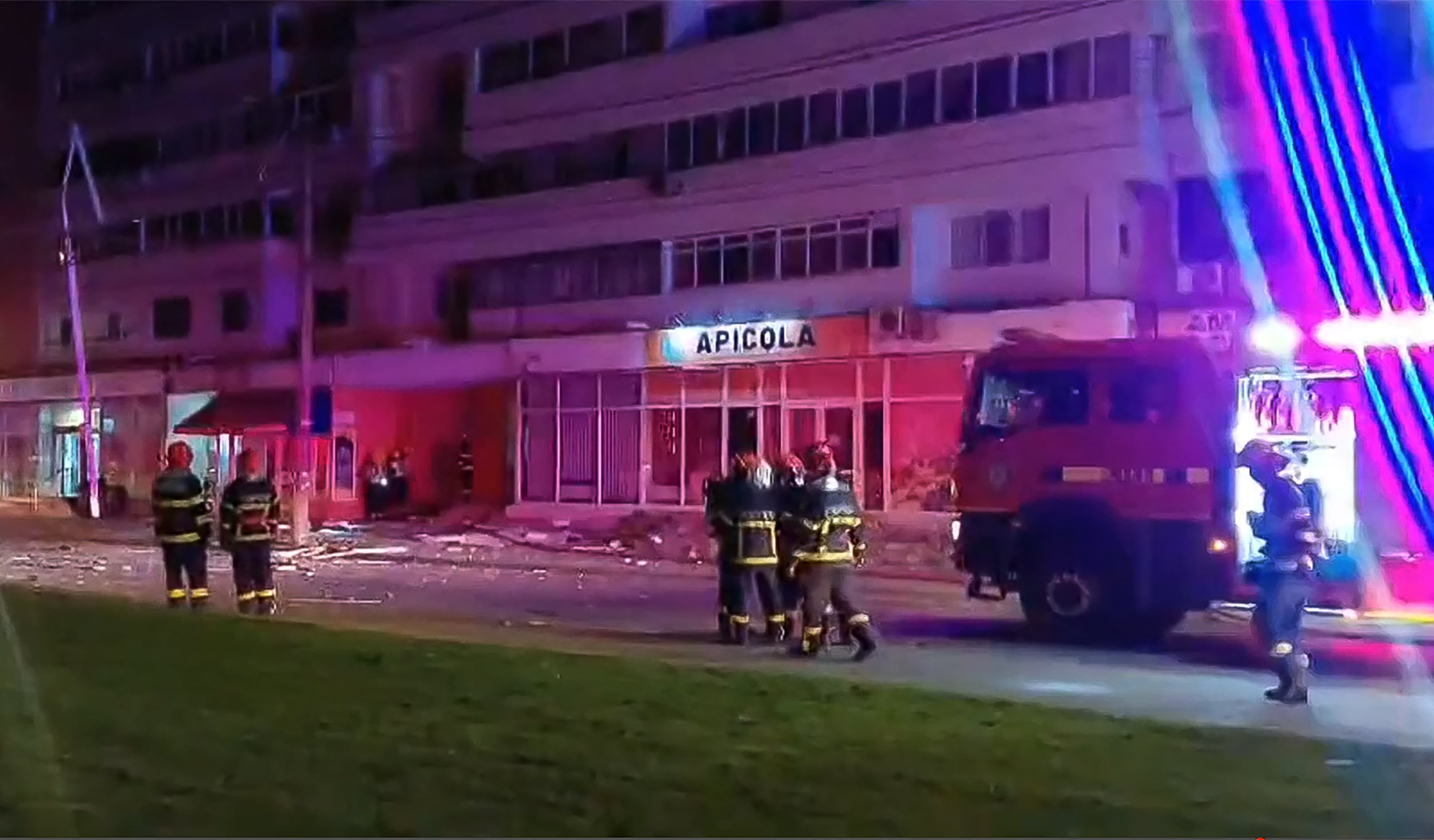
Her remarks fit a pattern. In May, she told RT that Brussels and NATO were using a drone incident in Romania — a Russian-made drone that crashed into an apartment block in the city of Galati, injuring two residents — to push the country toward wider military conflict with Russia. Romania’s foreign ministry called the incident a serious violation of international law. Sosoaca called it a pretext.
The legal pressure on her has not slowed the rhetoric. In April, the European Parliament voted to lift her parliamentary immunity after the Romanian Prosecutor General’s Office requested access to investigate allegations including the promotion of legionnaire ideology, Holocaust denial, and incitement. The Legal Affairs Committee had voted 17-0 with one abstention to approve the request. Other voices at SPIEF this week advanced related arguments about small European states surrendering decision-making to larger institutional structures — a theme the forum has amplified with increasing frequency as multipolar narratives have hardened since Russia’s operation in Ukraine.
The argument Sosoaca makes is not hers alone. Slovakia’s Prime Minister Robert Fico has made a version of it repeatedly — that Brussels pursues an agenda that overrides member state interest, that the European Commission functions as a supranational executive without adequate democratic accountability. Fico, whose government has broken repeatedly with EU consensus on Ukraine, makes the same point from inside the EU’s formal structures and with far less inflammatory framing. What separates Sosoaca from Fico is not the constitutional critique of EU governance — which legal scholars and federalists have debated for decades — but the forum she chose to voice it, and the audience assembled there to receive it.
Romania is not, structurally, a neutral case. Its pro-EU coalition government was toppled in a no-confidence vote in May, brought down by a joint effort from the left-wing Social Democratic Party and AUR, another far-right formation. The collapse raised immediate concern among financial markets about whether Bucharest could maintain its commitment to narrowing the EU’s budget deficit targets. A new government had not yet been seated as of this week. Into that vacuum, Sosoaca’s SPIEF appearance landed.
The European Commission declined to comment on her remarks. The Romanian government, such as it is in its caretaker form, did not respond.
There is a version of what Sosoaca said on Wednesday that is a constitutional argument about the design of EU institutions — one that political scientists across the ideological spectrum have made with some rigor. The Commission proposes legislation, sets the regulatory agenda, and initiates infringement proceedings against member states. It is not directly elected. Its accountability runs through the Parliament and the Council, but the chain is long and the average voter’s line of sight to its decisions is dim. That is a real tension. Sosoaca is not wrong that the Commission legislates in ways that constrain national governments; the debate over how much room those governments retain is at the heart of nearly every EU reform argument of the past two decades.
What she is doing with that argument at SPIEF — in front of an audience assembled by a government that has spent four years building a case that European integration is a civilizational trap — is a separate question. The European Parliament has noted the distinction. Russia’s official communications have spent months pointing to fractures in European unity as evidence of a collapsing order. Sosoaca, immunity stripped, prosecution pending, stood in St. Petersburg on June 3 and handed them a Romanian example.
Whether Bucharest’s next government will feel any obligation to respond to that framing — or whether the political crisis consuming Romania’s domestic politics leaves no bandwidth for it — is not yet clear.
—Inputs from RIA Novosti, Sputnik.