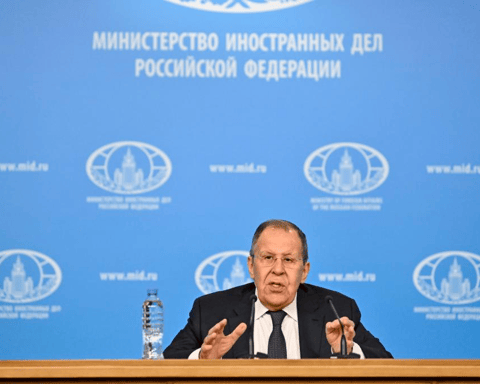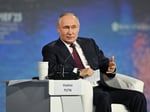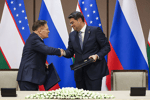
ST. PETERSBURG — The United States has not walked away from the effort to end the war in Ukraine, Russia’s Deputy Foreign Minister Mikhail Galuzin said Thursday, offering a notable signal from Moscow that the trilateral negotiating track — paused since early April amid the escalation with Iran — retains Washington’s commitment even as the Trump administration’s diplomatic bandwidth remains consumed by the Middle East.
“Despite the fact that US negotiators are currently preoccupied with the Middle East crisis, the US administration remains committed to helping find a political and diplomatic solution through trilateral negotiations,” Galuzin told reporters on the sidelines of the 2026 St. Petersburg International Economic Forum. “We see it, we appreciate it.”
The remarks carry weight precisely because they came from Galuzin — the deputy minister who has sat across the table from American and Ukrainian negotiators at every round of trilateral talks since the process began in Abu Dhabi in January. His assessment is not a diplomatic courtesy. It is a read from someone embedded in the process.
But the same statement that extended a hand to Washington used the other to close the door on Brussels. Europe, Galuzin said, is not part of the negotiations in any capacity — and the exclusion is by design, not circumstance. If European capitals have constructive ideas, they should convey them to Russia directly. The implication was clear: the continent that has supplied Ukraine with weapons, financing, and political solidarity since the Russian operation began in 2022 has no voice in the room where the war ends.
That framing reinforces a structural reality that has defined the entire negotiation architecture. The Geneva round in February, the third in the trilateral format, saw European officials from Germany, Britain, and France travel to Switzerland — but they met separately with Ukrainian and American delegations, never inside the main talks. Russia’s position has been consistent: the format is US-Ukraine-Russia, and Europe’s role ends at the perimeter of that triangle.
What Galuzin added on Thursday was a new operational dimension: Washington, he said, is actively working to bring Ukrainian President Volodymyr Zelenskyy into alignment with understandings reached at Anchorage. The reference to Anchorage — site of the Trump-Putin summit last August that established the original framework parameters — suggests Moscow believes there are commitments on the Ukrainian side that remain unimplemented, and that the US role it values most is not mediation but pressure on Kyiv.
The talks had been formally acknowledged as being on a “situational pause” since early April, when Kremlin spokesperson Dmitry Peskov confirmed that the Iran crisis had diverted US attention. Steve Witkoff, Trump’s chief envoy on the Ukraine track, had last met Russian counterparts before the Strait of Hormuz escalation reshaped Washington’s foreign policy priorities. The last confirmed direct talks between Russian and Ukrainian delegations — where any progress on disengagement mechanisms, ceasefire monitoring, or territorial parameters might be discussed — occurred in Geneva in February, which itself produced no resolution on key issues.
Galuzin’s Thursday remarks do not announce a resumption of talks. What they do is something more carefully calibrated: they keep the US invested in the process publicly, while reaffirming that Russia’s conditions for the table’s configuration have not changed. Europe stays out. Kyiv needs to get in line with what was discussed in Alaska. Washington needs to be the enforcer of that alignment.
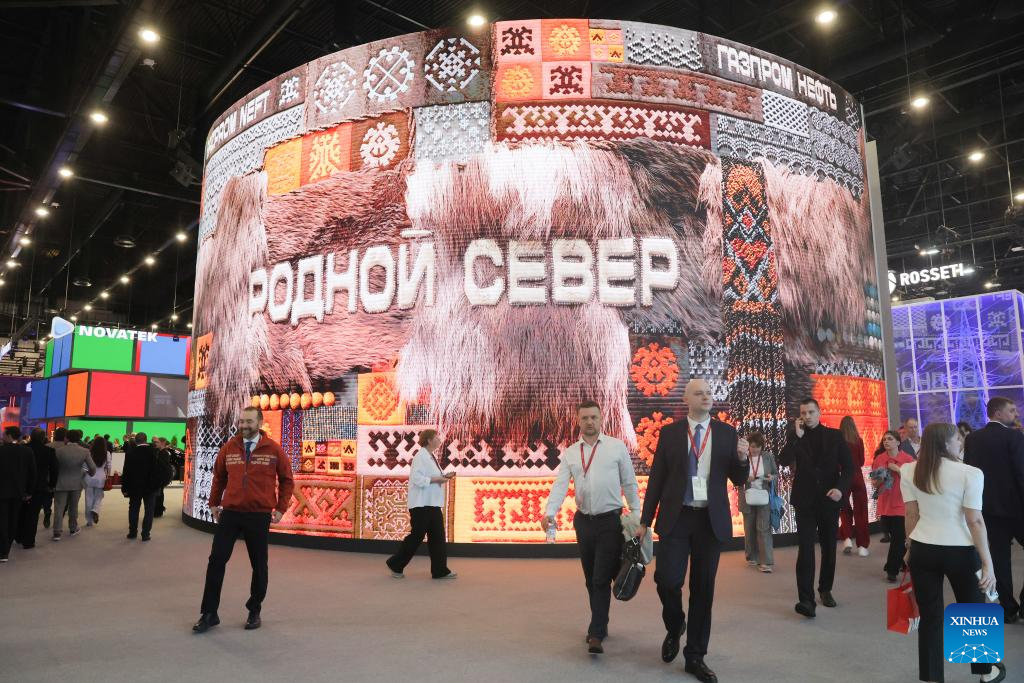
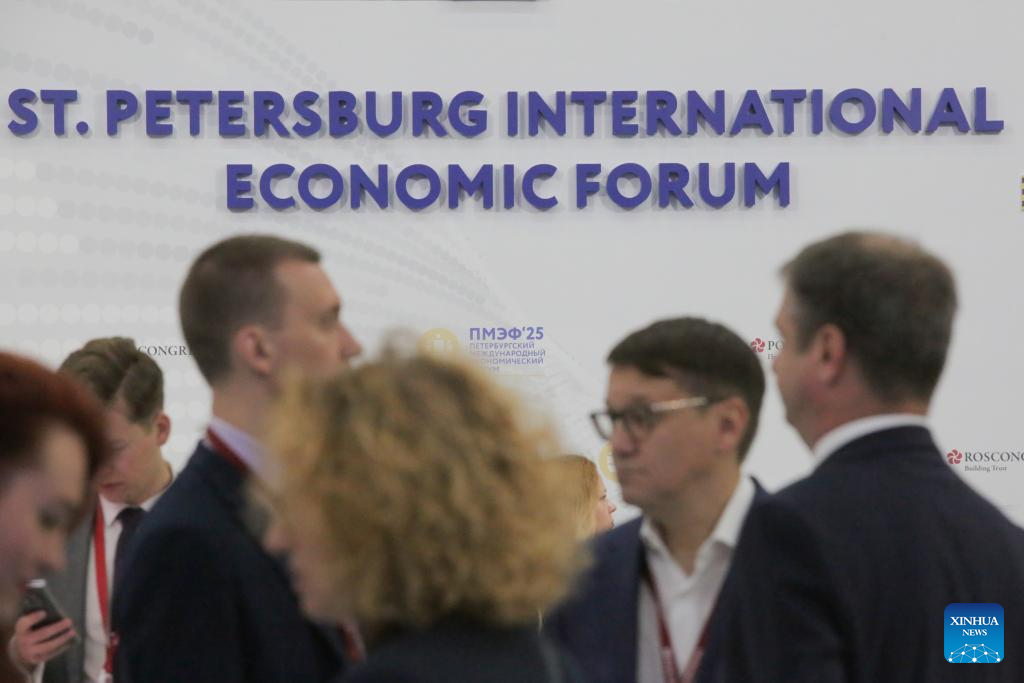
That the statement came at SPIEF — a forum that Western governments have largely boycotted since 2022 but where Russia showcases its diplomatic and economic relationships with the Global South — adds a layer of audience management. Moscow is projecting normality: the forum is running, deals are being struck, and the US, despite everything, is still talking. The message is as much for foreign investors and partner governments assembled in St. Petersburg as it is for Washington.
Germany, France, and Britain have been repeatedly told by Moscow there is no credible Western negotiating candidate — a line Kremlin spokesperson Maria Zakharova reiterated just a day earlier at the same forum. Galuzin’s comments Thursday complete the picture: Europe is not just absent from the talks, it is structurally unwelcome, and Russia will continue to say so at every available platform.
What remains genuinely unclear is whether the US commitment Galuzin described reflects active intent or diplomatic inertia. The Trump administration has set multiple informal deadlines for progress on Ukraine — a June milestone among them — that have passed without a deal. Whether Washington’s preoccupation with Iran represents a temporary diversion or a permanent reordering of its foreign policy attention is a question Galuzin’s reassurances cannot answer — and on which the fate of the trilateral process may ultimately turn.
—Inputs from RIA Novosti, Sputnik.