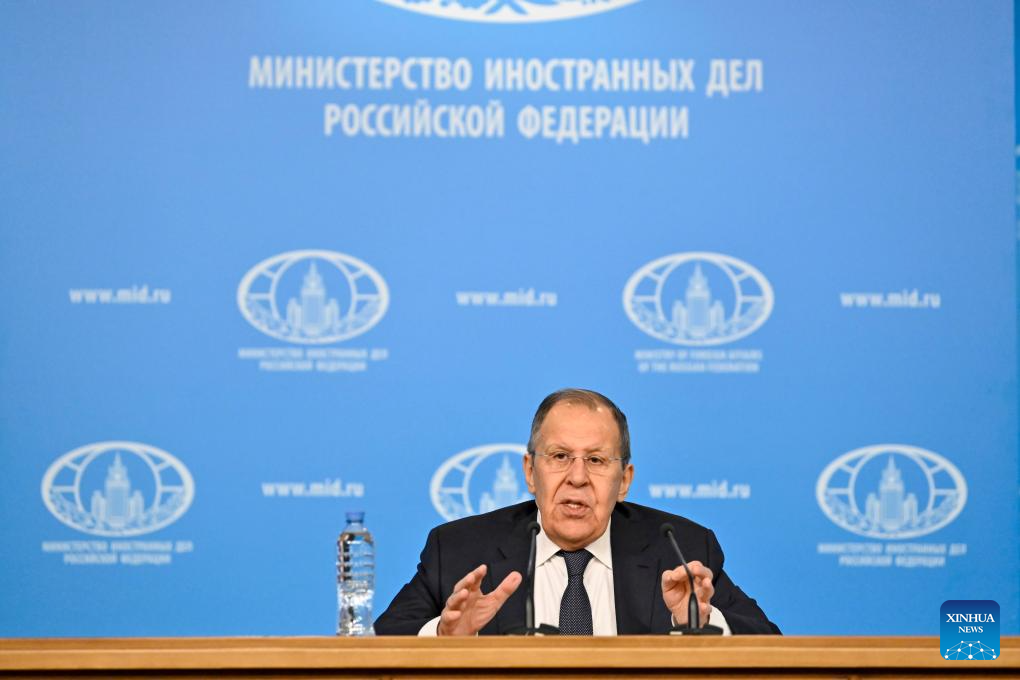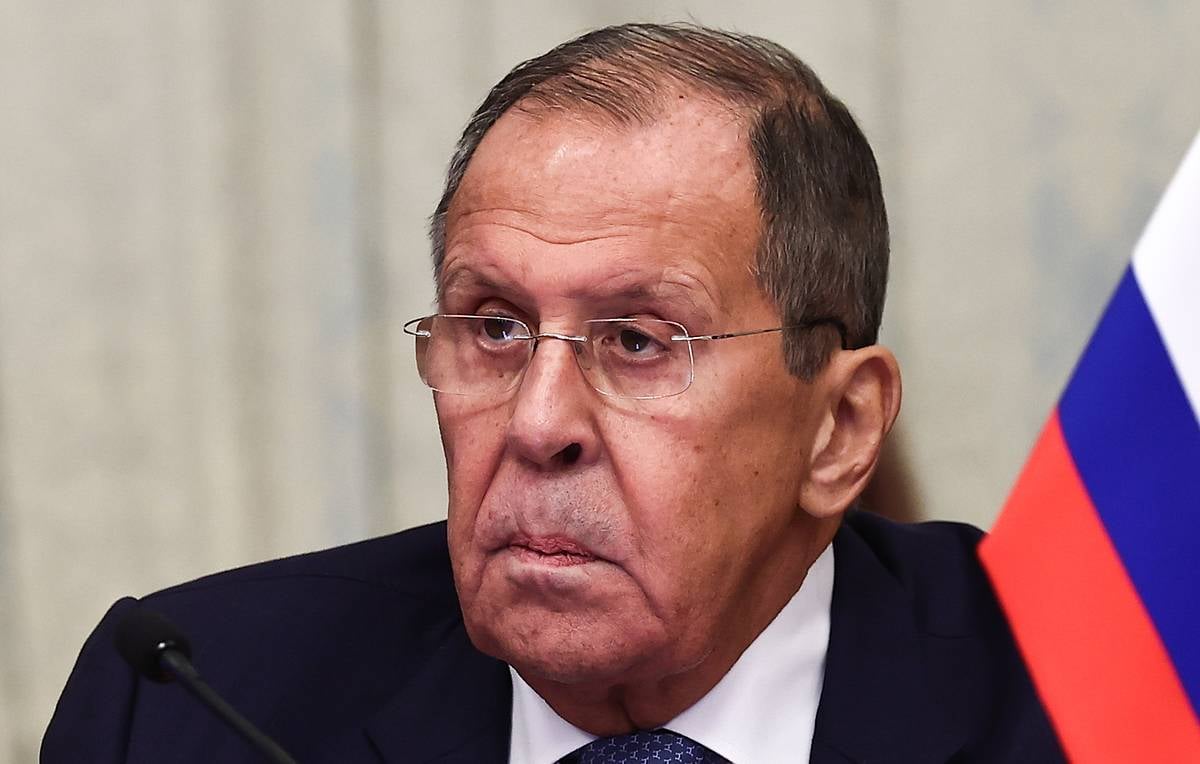
ST. PETERSBURG — The document has been waiting in foreign ministries across the Arabian Gulf for years, updated now and resubmitted at a moment when the waters it concerns are contested as they have not been in a generation. Russian Foreign Minister Sergey Lavrov said Thursday that Moscow has formally dispatched a revised version of its collective security concept for the Persian Gulf to all six members of the Gulf Cooperation Council and to Tehran, and is now waiting for their reply.
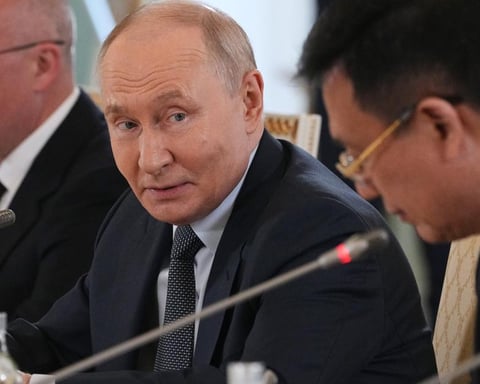
“There is a Russian security concept for the Persian Gulf region,” Lavrov said in an interview with RT Arabic on the sidelines of the St. Petersburg International Economic Forum. “We have updated it, sent it to our colleagues from the Cooperation Council for Arab States of the Gulf, and sent it to Tehran. We will now await their response.”
The concept, as Lavrov described it, centres on two planks: a commitment by all regional states not to initiate armed action against one another and a framework for transparency in military activities. Neither condition is currently in force. Since the US-Israeli strikes on Iran on February 28 — an operation Washington called “Epic Fury” — Iran has launched attacks on GCC targets including Kuwait, Bahrain, Qatar and Saudi Arabia, while the Strait of Hormuz has been partially disrupted to global shipping. The idea of convincing those same parties to sign a non-aggression pledge, right now, requires either extraordinary diplomatic optimism or a very long horizon.
Russia first published a Collective Security Concept for the Persian Gulf Region in 2019, a year of cascading incidents — tanker seizures, drone strikes on Saudi oil infrastructure, the near-destruction of a US surveillance aircraft over Iranian airspace. At the time, the Gulf was tense but not at war. Moscow framed the concept around multilateralism: all coastal states plus the Arab League, the Organisation of Islamic Cooperation, the five permanent UN Security Council members and the European Union, working incrementally toward a consensus-based security system built on international law. The proposal drew polite interest and no formal adoption.
What Lavrov announced Thursday is the third iteration of that effort. In July 2021, he described an updated draft then in preparation. The version now in circulation has been shaped, Russian officials said on June 2, by the specific context of the current crisis — triggered, in Moscow’s framing, by the US-Israeli assault on Iran. The Foreign Ministry’s statement that day called on all interested countries to work together and acknowledged the “severe crisis” in the region.
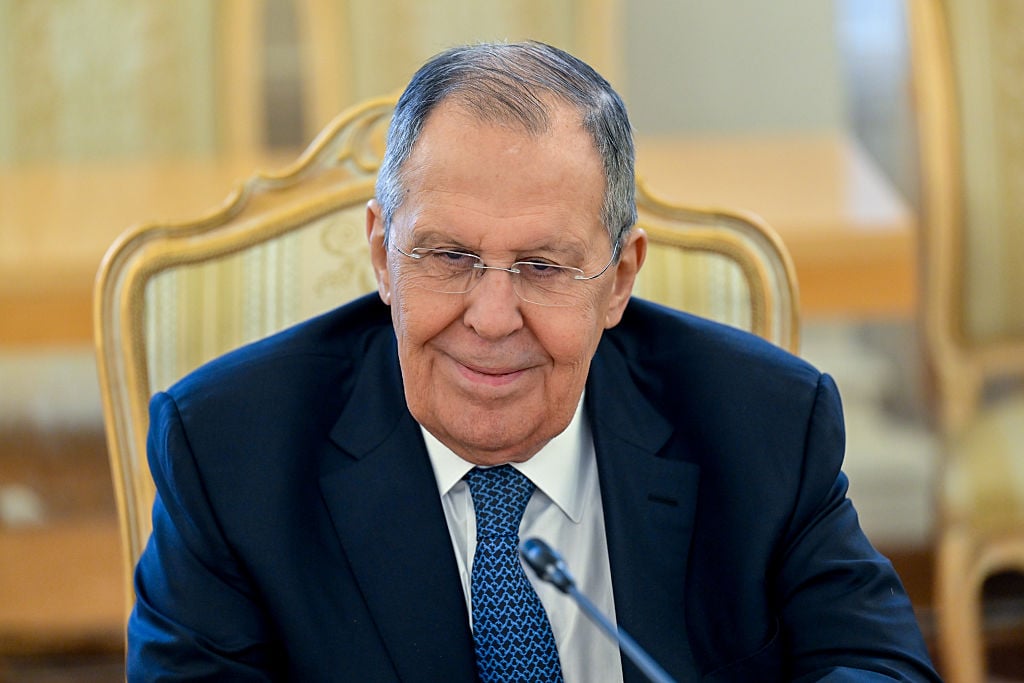
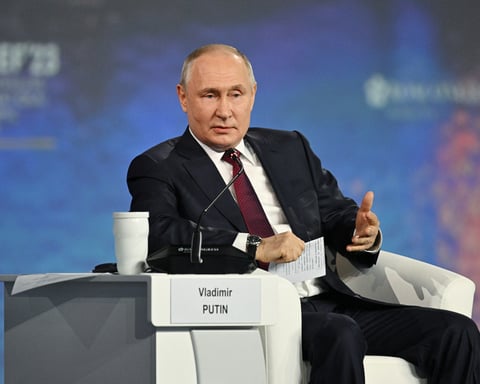
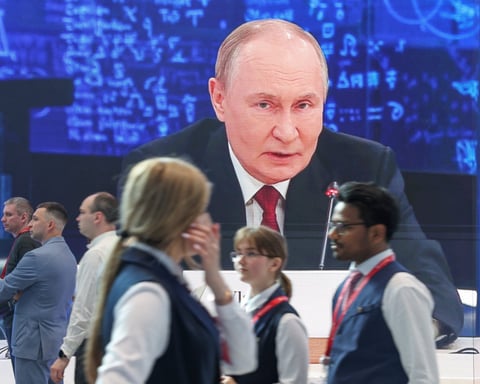
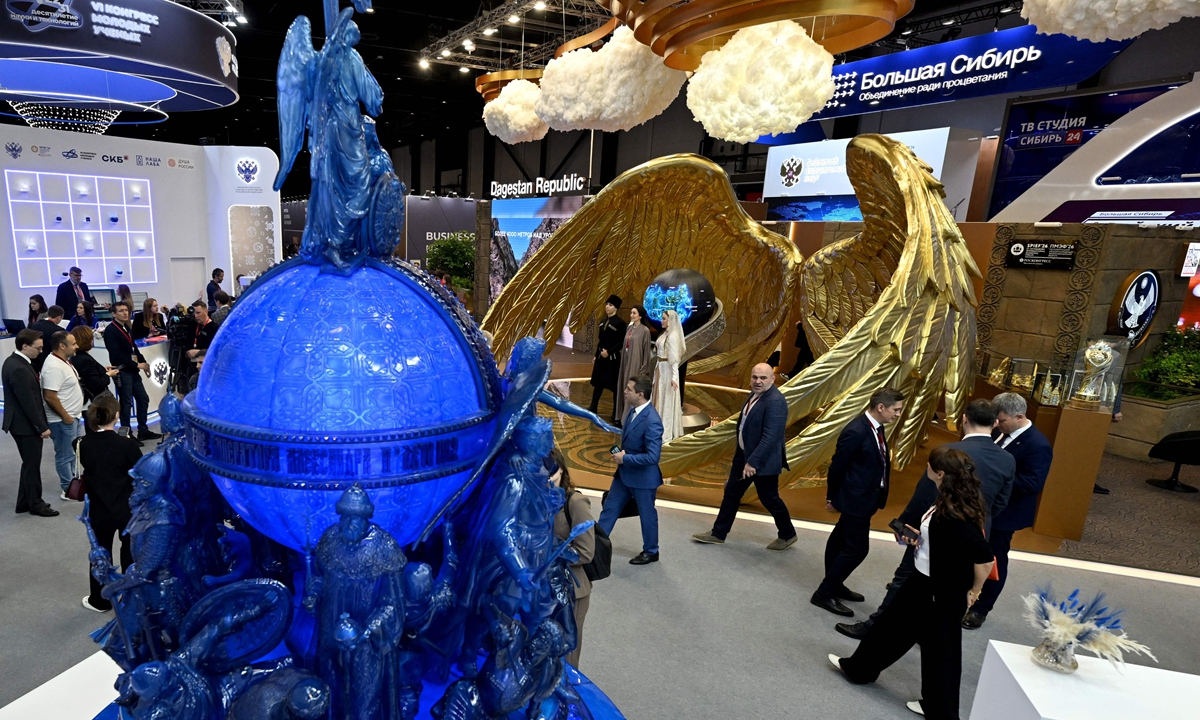
The timing is deliberate. Russia released the concept’s text on June 2, the day before SPIEF opened in St. Petersburg — a forum that has become a principal stage for Moscow’s foreign-policy messaging since Western delegations withdrew in 2022. Lavrov’s interview with RT Arabic amplified the diplomatic signal on day two of the forum, with the GCC’s Saudi Arabia designated as the guest country at this year’s event. The choice of audience is not incidental: RT Arabic reaches audiences across the Gulf states Russia is now formally petitioning.
The question Gulf capitals will weigh is whether Moscow’s framework competes with or complements the security architecture they have been building with Washington since the conflict began. At the 46th GCC summit in Bahrain last December, leaders finalised work on a joint air and missile defence shield. In March, former Qatari prime minister Hamad bin Jassim Al Thani called publicly for a NATO-style military alliance among Gulf states. US Treasury Secretary Scott Bessent told Congress last week that Gulf allies had already begun restructuring their Iran-adjacent financial arrangements under pressure from Washington — a sign of deepening, not loosening, US-Gulf coordination.
Russia’s proposal operates on a different logic. Where the US-backed architecture is explicitly coercive — sanctions, blockades, missile shields — Moscow’s concept is formally inclusive, requiring Iran’s participation rather than its isolation. Trump’s Iran diplomacy has stalled, with Tehran going silent on a draft peace text, which creates at least theoretical space for a third-party framework. Whether Iran sees Russia as a credible enough broker to engage — Tehran’s position in any multilateral Gulf security arrangement has been a persistent sticking point since the 2019 original — is one of the questions the GCC and Iranian responses will answer.
TASS reported that the Foreign Ministry’s published concept specifically cited the ongoing naval blockade of Iran, noting that US forces had disabled commercial vessels and diverted others since April 13. Moscow’s framing treats the current crisis as a consequence of external aggression rather than Iranian provocations — a characterisation the GCC states, whose airports and gas facilities have been struck by Iranian missiles this year, are unlikely to endorse without significant revision.
Russia has maintained back-channel contact with both sides throughout the conflict. Lavrov met Chinese Foreign Minister Wang Yi in Beijing in April to discuss the Gulf crisis, and Moscow has repeatedly called for a diplomatic resolution. Russia’s relationship with Saudi Arabia deepened this week at SPIEF, with Russian Direct Investment Fund chief Kirill Dmitriev confirming energy ties had reached a strategic level and a meeting with Saudi Energy Minister Prince Abdulaziz planned on the forum’s sidelines. Whether that bilateral warmth creates enough diplomatic runway to give the Gulf security concept a genuine hearing is, for now, an open question Moscow acknowledges it cannot answer alone.
“We will now await their response,” Lavrov said. That wait may be a long one.
—Inputs from RIA Novosti, Sputnik.