
WASHINGTON — For weeks Donald Trump insisted a peace framework with Iran was coming, first announcing it was ‘largely negotiated,’ then ‘imminent,’ then the subject of ‘serious negotiations’ that had never stopped. On Wednesday, he offered a different register entirely.
In an interview with the New York Post, Trump said that if talks with Tehran collapse entirely, Washington would simply accept the outcome. ‘We’re working on a deal, and [if] that happens, fine. If it doesn’t happen, that’s OK too,’ the president said. The remark arrived on a day when the IRGC-affiliated Tasnim news agency reported that Iran had given the United States no response regarding the draft memorandum of understanding for several days — a silence Tehran has offered no explanation for.
Read together, the two developments describe a negotiation that has, at least for the moment, effectively stopped. The question is whether Trump’s shrug is a tactical signal — a show of indifference designed to push Tehran into moving first — or whether it reflects something closer to what it sounds like: a White House beginning to price in the possibility that no agreement materialises before the war resumes in earnest.
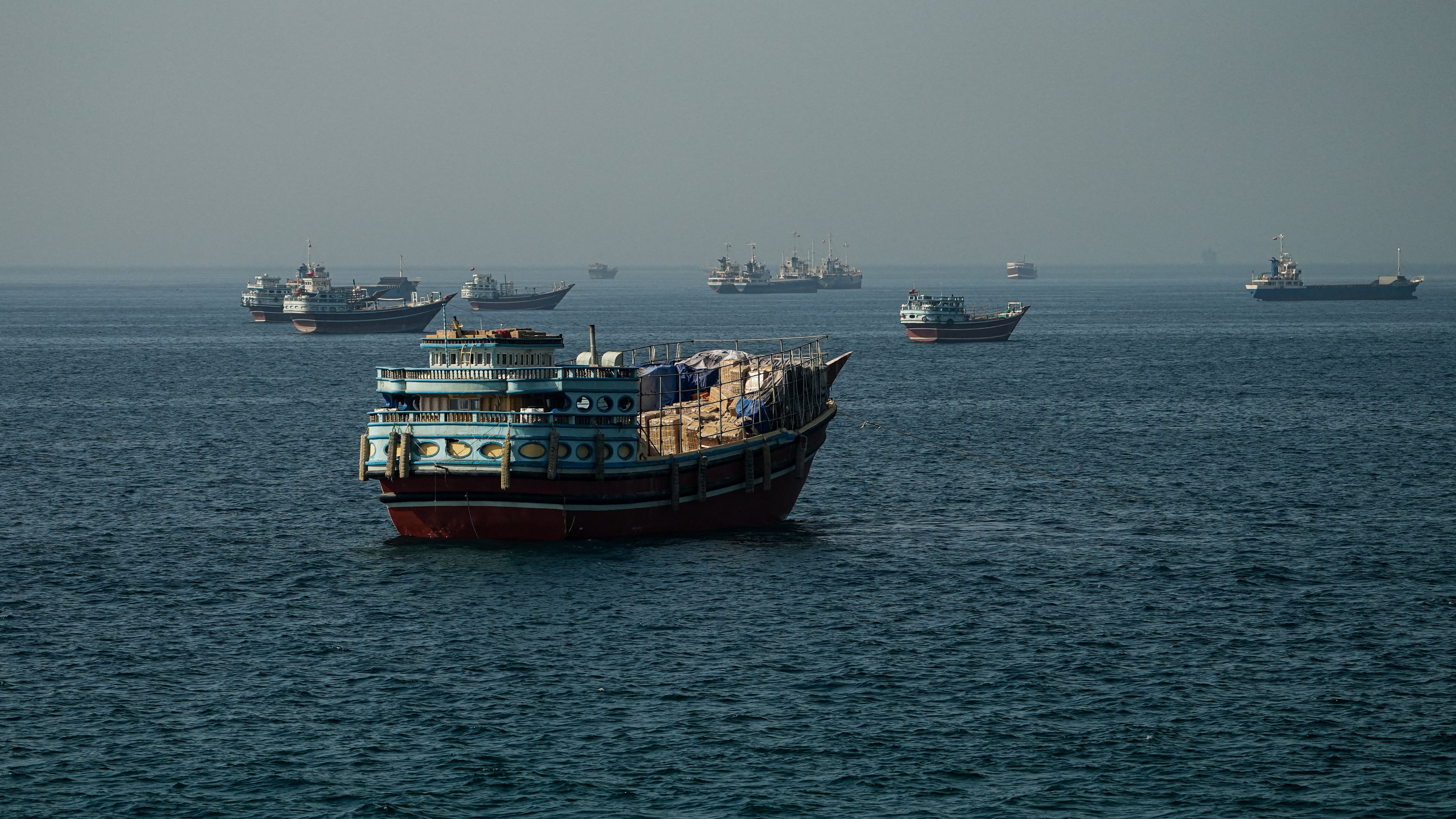
The backdrop is a conflict whose shape has shifted several times since its opening salvos. The United States and Israel launched strikes on targets across Iran on February 28, killing the Islamic Republic’s supreme leader Ali Khamenei and triggering a cascade of retaliatory attacks that drew in Gulf states, closed the Strait of Hormuz, and sent global oil markets into prolonged disruption. An April ceasefire, announced in Washington and contested immediately by Iran, gave way to inconclusive talks in Islamabad, and then a US naval blockade of Iranian ports. Trump has since extended the cessation of hostilities repeatedly, each extension framed as a window for Tehran to present a serious proposal.
That proposal has not come, at least not in a form Washington has accepted. According to reporting by Axios, Trump requested amendments to a draft 60-day memorandum of understanding in late May, asking for more specific wording on how Iran’s enriched uranium stockpile would be transferred and on the precise terms under which the Strait of Hormuz would reopen. Senior administration officials said the back-and-forth could last a week or more.
In the same New York Post interview, Trump also commented on the condition of Mojtaba Khamenei, the new supreme leader who succeeded his father and who US officials believe is overseeing the negotiations. Asked whether Khamenei was healthy enough to make decisions, Trump said, ‘I’m not hearing he’s doing great.’ He added that the succession appeared to be functioning normally regardless. ‘We seem to be getting along quite well,’ the president said.
That characterisation is not one Tehran’s state media share. Iranian outlets have consistently played down any suggestion that the talks are producing results. The semi-official Tasnim agency’s disclosure that Iran had gone silent on the draft text followed a week in which Iranian state media published no readout of backchannel contacts that US officials have described as continuous.
Secretary of State Marco Rubio, testifying before the Senate Foreign Relations Committee on Tuesday, pushed back against the suggestion that Washington was negotiating from desperation. When Senator Cory Booker accused the administration of ‘begging’ Iran for a deal it had itself abandoned in 2015, Rubio rejected the framing and argued that Tehran was at the table because of military and economic setbacks, not because Iran held leverage. The secretary laid out a two-phase path to a potential resolution — a 60-day ceasefire extension followed by broader negotiations on nuclear disarmament and sanctions relief — but said no deal was guaranteed.
The OECD has already begun quantifying the cost of continued deadlock. A prolonged disruption to energy flows from the Middle East lasting into 2027 would slow global growth to 2.1 percent in 2026 and 1.8 percent in 2027, the Paris-based organisation warned this week — rates comparable to the depths of the COVID-19 pandemic. The OECD’s warning landed with particular force in Britain, which it ranked as the G20 economy most exposed to the conflict’s knock-on effects on diesel supply and growth.
Pentagon chief Pete Hegseth has stated publicly that the United States remains ‘more than capable’ of restarting full military operations if a satisfactory agreement is not reached. Trump himself, in earlier phases of the diplomatic effort, threatened to destroy Iranian power plants and bridges if the Strait of Hormuz was not reopened by successive deadlines. None of those threats produced an agreement. Each deadline passed, and each was followed by a new extension.
What Wednesday’s interview adds is a word the Trump administration had not used in relation to the Iran talks before: acceptance of failure as a viable outcome. Whether that is posture or policy is something Steve Witkoff, the White House special envoy who has led the back-channel negotiations, has not addressed on the record. The Strait of Hormuz remains closed. Iran has given Washington no new text. The ceasefire continues. So does the uncertainty.
https://twitter.com/WhiteHouse/status/2041649076500869158
—Inputs from RIA Novosti, Sputnik.