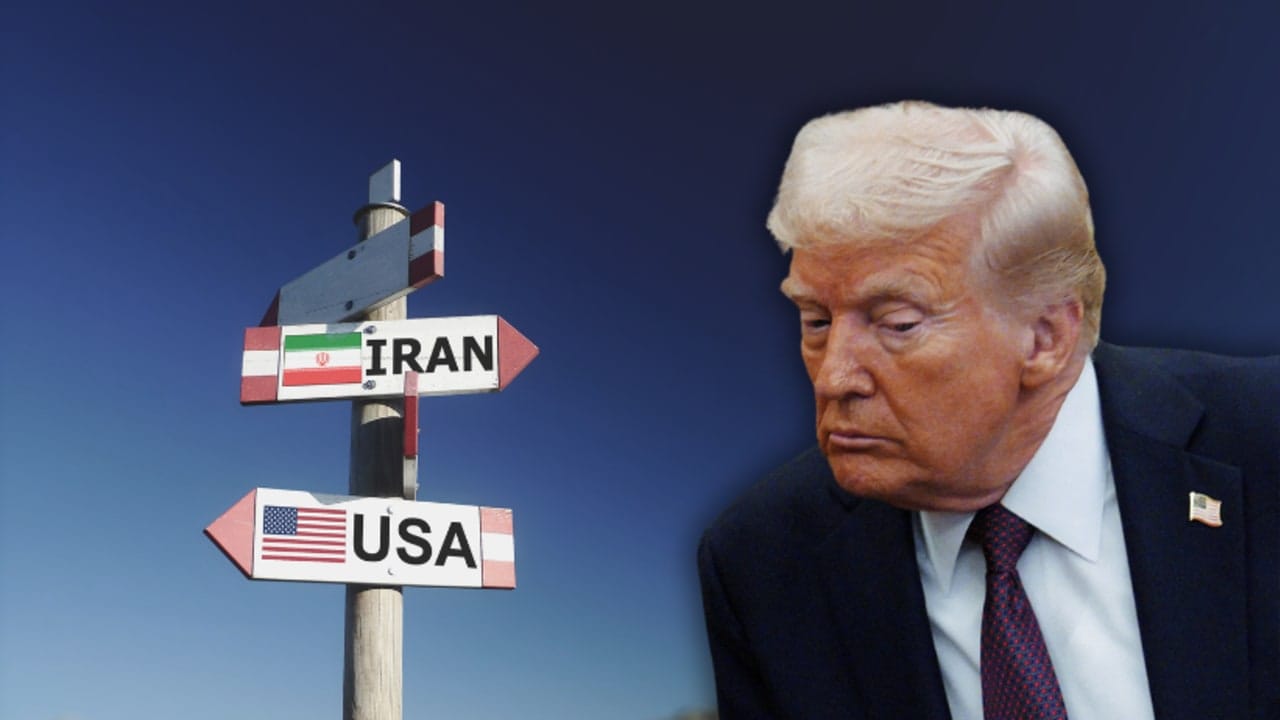
TEHRAN — The number Iran’s negotiators keep returning to is $12 billion. Not as an opening bid. Not as a talking point. As the floor beneath which no memorandum of understanding with the United States will get Tehran’s signature.
Deputy Foreign Minister Kazem Gharibabadi said Thursday that Iran insists, at a minimum, that 50 percent of its frozen foreign assets be released immediately upon signing any such memorandum — with the remainder to follow within a reasonable but unspecified timeframe. His remarks, carried by the Mehr news agency, translated a position that had circulated in source-cited reports for weeks into an official statement from a senior official who is also Tehran’s chief legal and international negotiator.
The significance of that shift is not small. In late May, Tasnim — a news outlet affiliated with Iran’s Islamic Revolutionary Guards Corps — reported that a source close to the negotiating team described the 50-50 split as Iran’s position inside a proposed 14-point memorandum framework. What Gharibabadi said Thursday is structurally identical, but it comes from the deputy foreign minister on the record: a public, attributable demand rather than a characterization by an unnamed insider.
Washington has not responded to Thursday’s statement. But the American posture has been documented in multiple rounds of talks: the United States will not unfreeze Iranian funds in advance of verifiable Iranian actions, particularly on the Strait of Hormuz and on Iran’s nuclear program. US officials have privately framed any upfront cash release as a reward for promises rather than for results — a sequencing Tehran rejects entirely.
That gap is not new. What has changed is how clearly both sides are now willing to describe it. Tehran went silent last week on draft peace text as Trump publicly shrugged off the impasse, suggesting time was on his side. The White House has not withdrawn from the process, but it has declined to move on the financial terms that Iran says are the price of any framework agreement at all.
The broader figure in dispute is roughly $24 billion — the total frozen Iranian assets that Tehran’s 14-point proposal asks Washington to release as part of any eventual comprehensive deal. The Tasnim-cited framework envisioned $12 billion upon reaching the memorandum and the remainder within 60 days. Gharibabadi’s statement Thursday does not change that arithmetic, but it closes off the possibility that Tehran might soften the first-tranche demand in exchange for other concessions. It describes the 50 percent immediate release as a minimum, not a preference.
Iran’s total frozen assets abroad are estimated by independent analysts at considerably more than $24 billion — figures cited inside Iran have reached $100 billion or higher, though those numbers are contested and include restricted holdings in multiple jurisdictions. The $24 billion figure in the memorandum proposal reflects what Iranian negotiators believe they can realistically expect Washington to move on in a first-stage deal, not the full universe of blocked funds. What proportion of that is actually liquid and accessible on a short timeline remains a question neither government has answered in public.
The talks that were supposed to resolve this disagreement have not produced a second formal session since the Islamabad negotiations collapsed in April. JD Vance spent 21 hours in the Pakistani capital alongside an Iranian delegation led by parliament speaker Mohammad Bagher Ghalibaf, and the two sides left without a memorandum, without a new session scheduled, and without a public explanation of where exactly the negotiations broke down beyond the nuclear program and the Strait of Hormuz. The frozen-assets dispute has since hardened into the deal’s central unresolved fault line, with Washington framing any financial release as contingent on action and Tehran treating upfront payment as the precondition for any action at all.
Regional mediators — particularly Qatar, which hosted a high-level Iranian delegation last week that included Foreign Minister Abbas Araghchi and Central Bank chief Abdolnaser Hemmati — have floated compromise formulas. One proposal involved a restricted humanitarian fund of several billion dollars earmarked only for food, medicine, and agricultural imports, with full liquid-cash access to follow. Iranian negotiators rejected the restriction, according to sources familiar with the discussions. Tehran’s position is that humanitarian-only access to its own money is not sanctions relief — it is a different form of control with a softer name.
Congress has begun asking questions the administration has not answered publicly. Treasury Secretary Scott Bessent told a Senate hearing this week that Gulf allies had understated their Iranian oil exposure during the conflict — a disclosure that complicated the picture of what financial normalization with Tehran would actually require of Washington’s partners in the region. Those revelations added a layer of domestic political complexity to an administration already managing competing pressures from Israel, Gulf states, and a Republican caucus divided on how far any Iran deal should go.
What the ceasefire — declared on April 7 — has not produced is a legal framework. The guns are largely quiet, the Strait remains operationally constrained in both directions, and the underlying conflict has no written resolution. Gharibabadi’s statement Thursday makes clear that Tehran’s minimum price for putting something on paper includes $12 billion arriving in Iranian accounts before the ink is dry. Whether Washington is prepared to meet that condition — or whether there is any bridging formula that both governments could accept as functionally equivalent — has not been answered, and may not be for some time.
—Inputs from RIA Novosti, Sputnik.