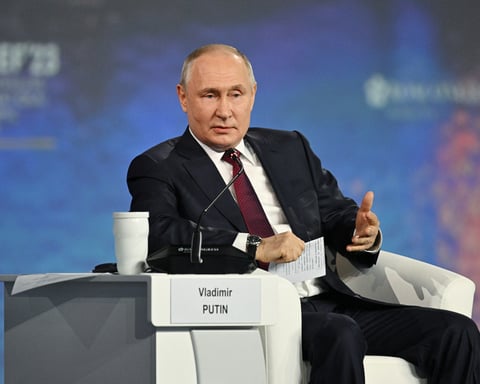
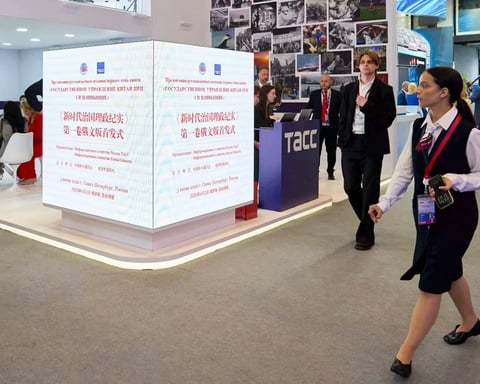
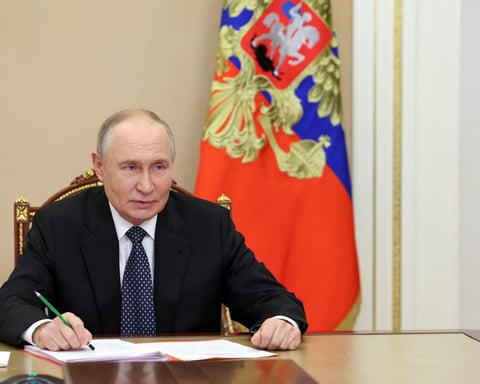
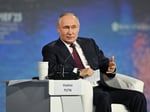
ST. PETERSBURG — The offer arrived without diplomatic preamble. Speaking to the heads of international news agencies at the Konstantinovsky Palace on Wednesday, Vladimir Putin said Gazprom has an active contract with its German partner, has never refused to deliver gas, and can start pumping again tomorrow. All that stands between Germany and Russian pipeline gas, Putin said, is a decision in Berlin.
“Just push a button, and the gas starts flowing,” he told the assembled editors — a line that landed with a theatrical simplicity that was almost certainly deliberate, timed to the eve of his plenary address at the St. Petersburg International Economic Forum.
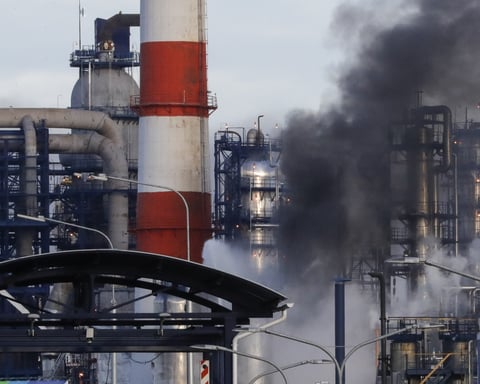
The practical mechanism Putin pointed to is one surviving line of Nord Stream 2, the Baltic Sea pipeline whose twin strings were severed in a series of underwater explosions in September 2022 — an act Moscow has attributed to Western sabotage without providing public evidence, and one that Western investigators have examined without reaching a definitive public conclusion. Nord Stream 1 was destroyed in the same incident. One line of Nord Stream 2, however, remained structurally intact.
What Putin did not address on Wednesday was whether that surviving line is in operational condition after three years sitting idle, cut off from the pressurization and maintenance routines that keep offshore pipelines viable. The last public technical assessment of the line’s readiness was not recent, and no independent inspection has been confirmed.
The timing of the statement is not incidental. Germany’s gas storage has spent much of the past eight months below five-year seasonal averages, a gap that emerged after the country pivoted hard toward liquefied natural gas imports following the end of Russian pipeline supplies. Industry association INES warned last autumn that storage levels entering winter 2025–26 were insufficient to absorb an extreme cold scenario. Economy Minister Katherina Reiche has insisted publicly that supply is secure, pointing to Norwegian pipeline volumes and available global LNG markets — but the arithmetic of replenishing depleted reserves before the next winter is generating quiet pressure in Berlin’s energy policy discussions.

Gazprom CEO Alexey Miller had already set the stage earlier in the week at SPIEF, meeting with Markus Frohnmaier, the deputy chairman of the Alternative for Germany party, which has made Nord Stream restoration a standing policy position. That encounter — reported by Reuters on Wednesday — was the first publicly confirmed meeting between a senior Gazprom official and a German political figure since the pipeline ruptures. Frohnmaier called for a revision of Germany’s energy policy, but the AfD remains in opposition, and the governing coalition under Chancellor Friedrich Merz has given no public indication it is reconsidering its position on Russian gas.
Putin’s “push a button” framing carries a subtext that goes beyond the technical. Russia’s version of events — that it has always been willing to supply gas and that the interruption was caused by Western political decisions and then Western-attributed sabotage — is one Moscow has pressed consistently since 2022. Wednesday’s statement was a reiteration of that argument directed at an audience with global reach, 24 hours before Putin is scheduled to deliver what Kremlin aide Yury Ushakov described as a “grand speech” at the forum’s main plenary session on Thursday.
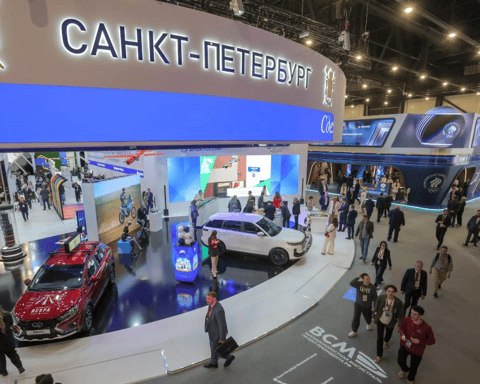
The forum itself, the 29th edition of SPIEF, is running under the theme “Pragmatic Dialogue: the Path to a Stable Future.” Saudi Arabia is this year’s guest country. The forum has drawn delegates from more than 130 countries despite Western governments largely maintaining their boycott posture since 2022. Meanwhile, Europe’s energy markets remain exposed to compounding shocks — the Iran war premium on LNG freight, tightening Norwegian maintenance windows, and storage deficits that will need to be closed before October.
Whether the gas offer produces any formal German response before the forum closes on Friday is another question. The Merz government has not commented on Putin’s statement. What the exchange does clarify is the geography of the argument: Russia believes it still holds a viable card in European energy, and it intends to keep playing it openly, in front of international audiences, for as long as the card remains unplayed.
—Inputs from RIA Novosti, Sputnik.