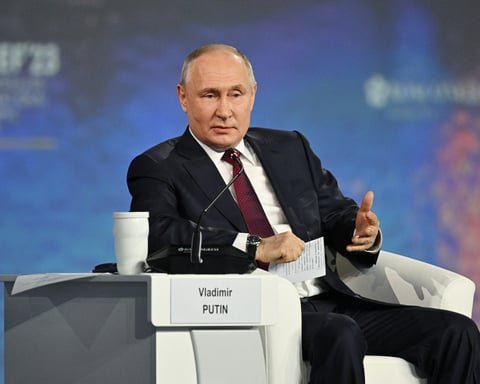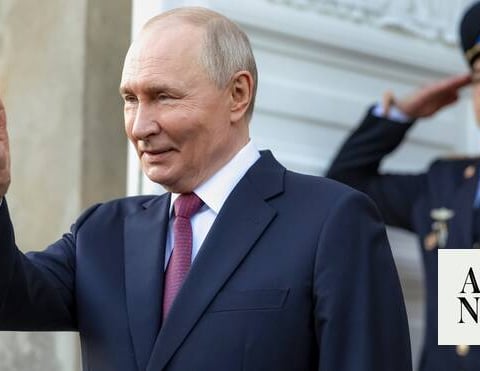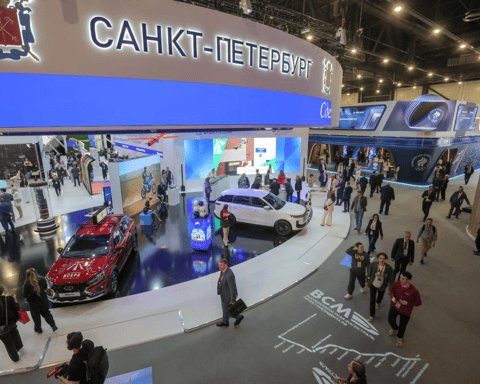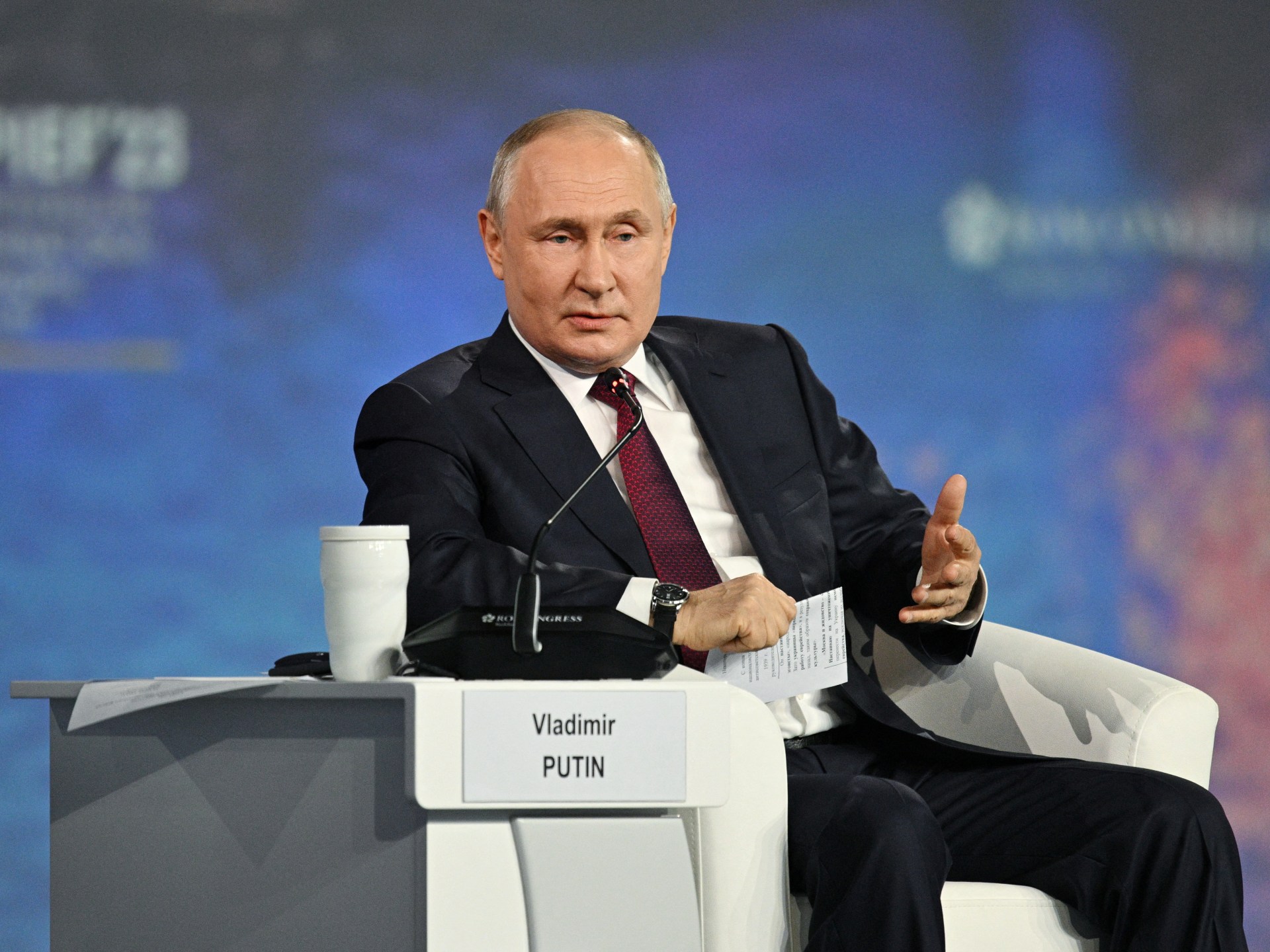
ST. PETERSBURG — The offer is still on the table. That was Vladimir Putin’s answer Friday when asked whether Russia’s proposal to remove enriched uranium from Iran had expired. Speaking at the plenary session of the 29th St. Petersburg International Economic Forum, Russia’s president said Moscow was not pushing for acceptance — but it was not withdrawing the proposal either.
What made the statement significant was not its headline. Russia has reiterated some version of this offer since Putin first floated it in June 2025. The proposal has been delivered to Donald Trump by phone, carried to Beijing by Foreign Minister Sergey Lavrov, and repeated publicly through Kremlin spokesman Dmitry Peskov with no takers. What the SPIEF plenary added was a specific disclosure: Russia is simultaneously in contact with the United States, Iran, and Israel on the uranium question. That trilateral configuration — Moscow as the communication node between three adversaries — had not previously been stated so plainly from a Kremlin stage.
“Our proposals are on the table, we do not insist on anything,” Putin said. “If the parties involved in the conflict come to the conclusion that this is a good suggestion, please, if not, we will simply monitor the situation and, as far as possible, we will influence how to remove the severity of this situation.”
The framing was deliberate. Russia is not a party to the current Iran-Israel-United States military confrontation, but it is positioning itself as the one capital still talking to all of them. Whether Washington and Jerusalem view that as helpful or as Moscow amplifying its own relevance is a question the Kremlin’s statement left conspicuously unanswered.
Putin also addressed Trump directly, though not by name in critical terms. Asked whether the American president was acting on miscalculations or outside pressure regarding Iran, Putin rebuffed the premise. “I have no reason to talk about any misconceptions of Mr. Trump,” he said. “He is a mature man, a very experienced politician. It is unlikely that anyone from the outside has the opportunity to exert any significant influence on him.” The remark, diplomatic on its surface, carried a subtext: whatever Trump decides on Iran, Putin is saying Russia will treat it as a deliberate choice, not an error it can help correct.
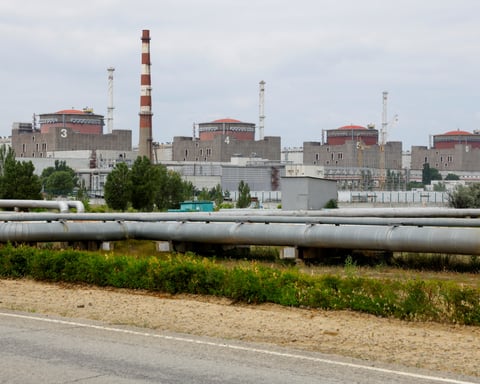
The uranium stockpile at the center of this diplomacy is not abstract. Iran holds approximately 450 kilograms of uranium enriched to 60 percent purity — convertible to weapons grade within weeks, and enough, by American and Israeli estimates, for more than ten nuclear bombs. Removing that material from Iranian territory is one of the stated objectives of both Tel Aviv and Washington. Russia handled Iran’s low-enriched uranium under the 2015 Joint Comprehensive Plan of Action, making it one of the few countries with the technical infrastructure and the existing legal precedent to receive it again.
The White House turned the proposal down when Putin raised it with Trump by phone in March 2026. Lavrov brought it to Beijing in April, and Putin pitched it to Chinese Vice President Han Zheng during a visit in May. None of those conversations produced a commitment. What they did produce was a paper trail that Putin appears comfortable citing publicly — each refusal documented, each outreach on record, as Moscow builds a narrative of diplomatic effort regardless of outcome.
On the nuclear weapons question itself, Putin drew a careful line. Russia has no evidence that Iran is pursuing the development of nuclear weapons, he said — but acknowledged that Israel holds different conclusions, and that those concerns are real enough to have driven the current military campaign. Iran, he added, retains the right to a peaceful nuclear program, and Russia cooperates with it on that basis. The gap between those two readings of Iranian intent — Moscow’s and Jerusalem’s — is precisely where the uranium export proposal is meant to operate: as a mechanism that does not require either side to concede its underlying assessment.
What Putin identified as the core obstacle was neither the stockpile’s size nor the logistics of moving it. “The lack of trust is the key problem,” he said. That is a more precise diagnosis than either side has offered publicly. Iran does not trust that surrendering its uranium guarantees anything in return. Israel does not trust that Russia’s custody would be permanent or verifiable. The United States, having rejected the proposal in March, has not said publicly whether the rejection was categorical or conditional on better terms.
On the same day, EH has reported that Putin addressed a range of other geopolitical themes at SPIEF, including his assessment of EU-Russia relations and a pitch to India on defence cooperation. The uranium remarks were delivered in the same plenary session, before an audience that included a United States delegation — the first American official presence at SPIEF in nearly a decade, headed by Rodney Cook, chairman of the U.S. Commission of Fine Arts.
The American attendance was itself a signal of normalisation at the margins of the forum, even as the substantive conflict over Iran’s nuclear stockpile remains unresolved. Whether the Putin offer ultimately goes anywhere depends less on Russia than on whether Washington decides that a verified multilateral removal of Iran’s enriched uranium, with Moscow as custodian, is preferable to the alternatives it is currently pursuing. That calculation, Putin’s SPIEF remarks made clear, is not one Russia is prepared to make for them. As IAEA Director General Rafael Grossi noted last week, moving Iran’s enriched uranium is difficult but not impossible — technically. The harder variable, as Putin framed it on Friday, is political trust. There is none to speak of yet.