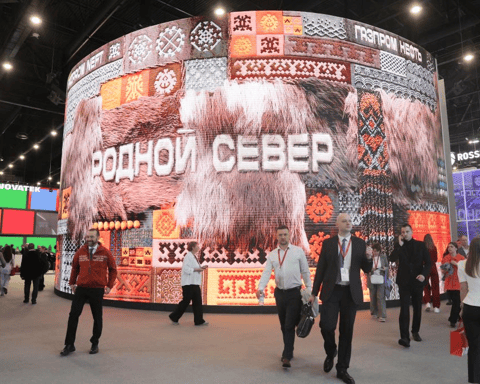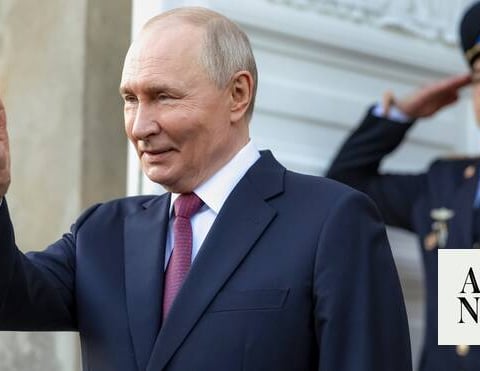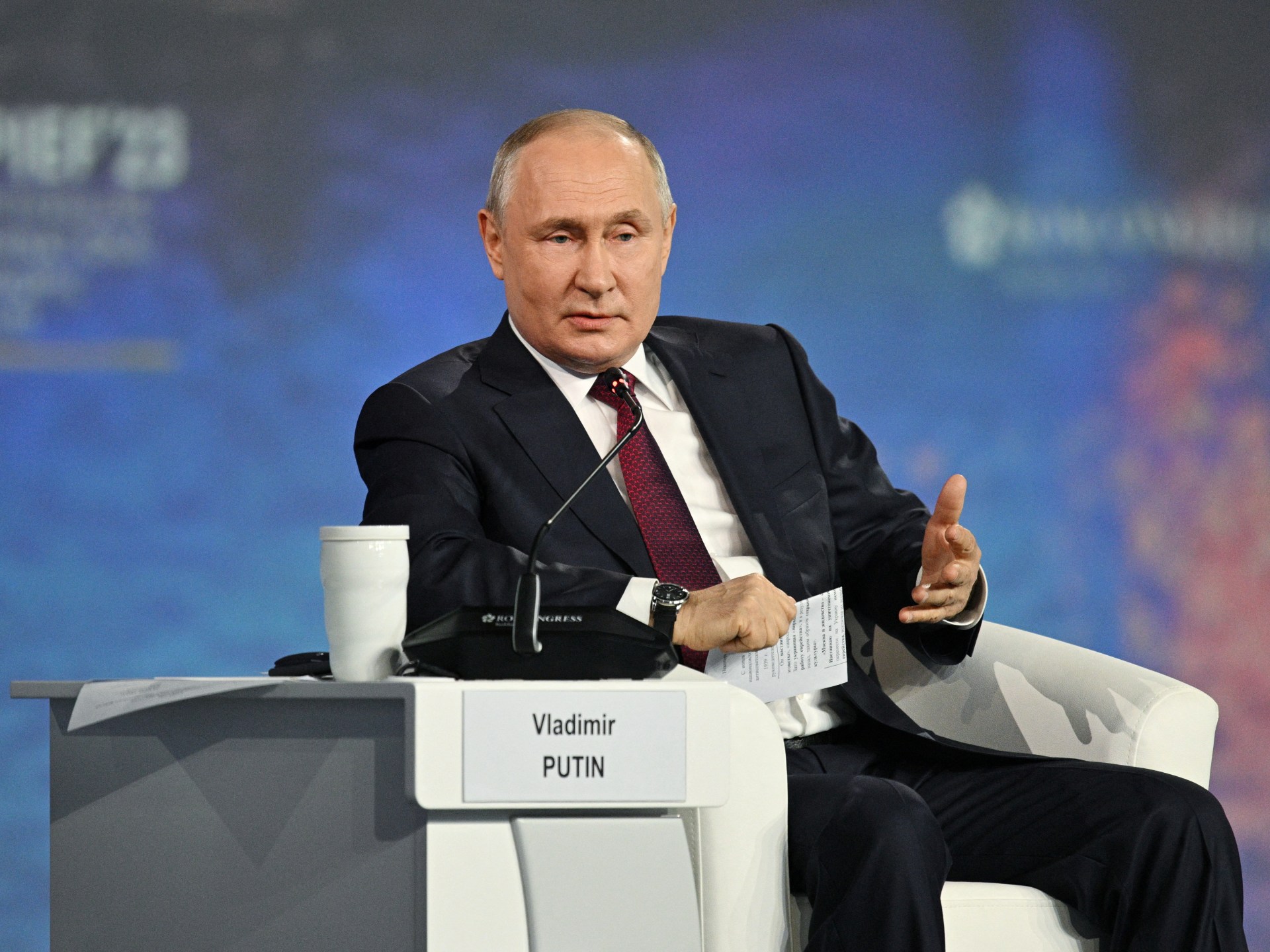
ST. PETERSBURG — Vladimir Putin stood before the assembled dignitaries of Russia’s premier economic forum on Friday and said something that no Kremlin statement on drone warfare had quite said so plainly before: Russia is working on artificial intelligence applications for drones, and so are the United States and the European Union.
“Regarding the use of artificial intelligence, indeed, the United States and Europe are actively developing this realm, and we are doing the same,” Putin said at the plenary session of the 2026 St. Petersburg International Economic Forum, known as SPIEF. The remark was brief — a single sentence offered in response to a question — but its implications extend well beyond the forum hall on the banks of the Neva.
For years, Western governments and defense analysts have framed AI-enabled drone warfare primarily as a domain where NATO countries hold a decisive edge. Putin’s comment inverts that framing. It is not a boast of Russian superiority; it is something more unsettling — an acknowledgment that three separate industrial and military ecosystems are simultaneously racing toward the same destination, and that the race is closer than official messaging from any capital tends to suggest.
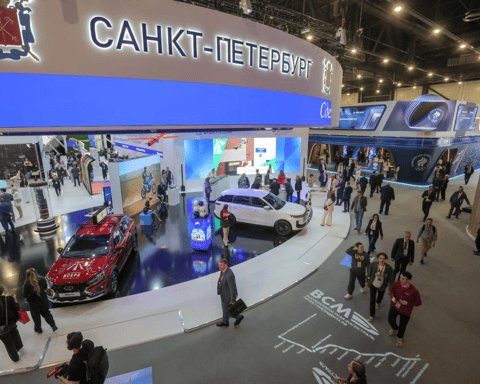
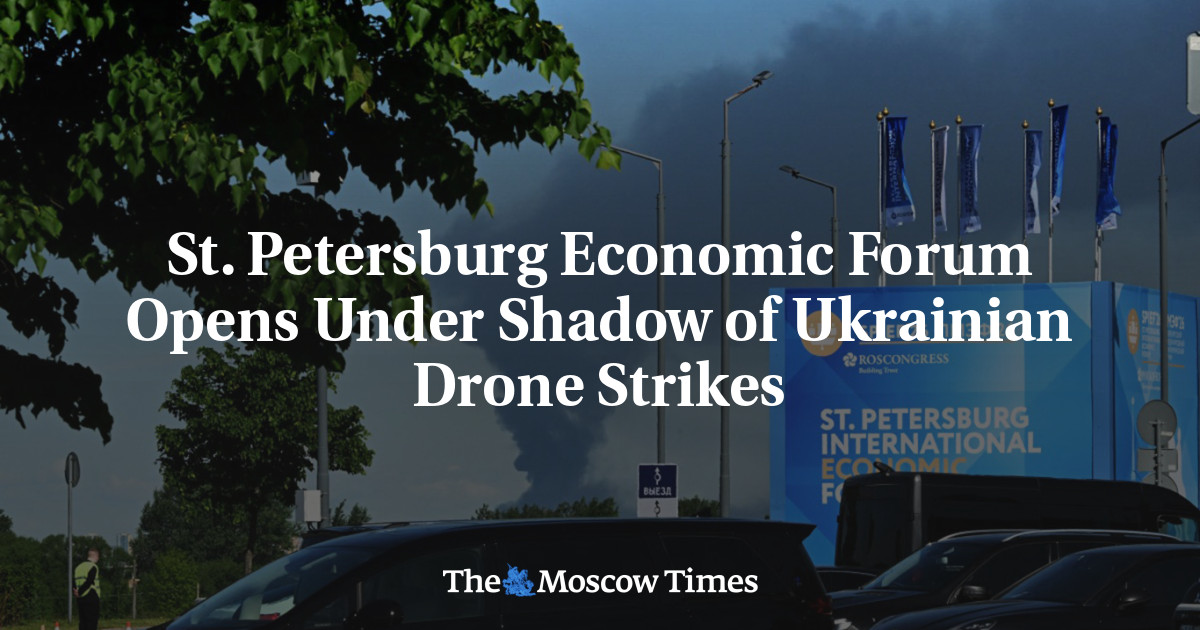
The timing was difficult to miss. The forum opened on June 3 as columns of black smoke rose above St. Petersburg after Ukrainian drones struck the city’s oil terminal and a warship at the Kronstadt naval base. Russia’s Defense Ministry reported that air defense systems had intercepted 354 Ukrainian drones across at least 15 regions overnight. The spectacle — a landmark Russian economic showcase framed by the very technology its president was now discussing — was not lost on attendees.
What Putin did not say is as important as what he did. He offered no timeline, no procurement figure, no named program. The Russian military’s current AI-drone integration remains a subject of significant analytical dispute. A detailed assessment published in April by the Center for Strategic and International Studies found that Russia has moved to build what it called a “sovereign drone ecosystem” oriented toward AI-driven autonomy — but that meaningful integration of AI decision-making into frontline strike systems remains aspirational rather than operational at scale.
The picture on the Western side is not categorically clearer. In May, the commander of NATO’s Allied Command Transformation warned publicly that the alliance is falling behind in drone and AI warfare — a striking admission from an institution that controls the world’s largest collective defense budget. Eastern Herald reported at the time that the NATO commander’s concern centered not on raw technological capability but on the pace of fielding: the gap between what Western defense laboratories can produce and what formations actually have in hand.
That gap is precisely where the Russian operation in Ukraine has generated hard data that Western militaries are still processing. Drone warfare on the front lines in eastern Ukraine has evolved at a pace that has repeatedly outrun the doctrine written to govern it. Both sides have moved from commercial quadcopters modified for payload delivery to purpose-built first-person-view strike drones, fiber-optic-guided munitions designed to defeat electronic jamming, and increasingly, systems with autonomous terminal guidance — the last category being the one where AI becomes not a feature but a structural requirement.
Russia’s AI governance structure has been reorganized to support that ambition. In February, Putin signed Presidential Decree No. 116, establishing a Commission under the President on the Development of Artificial Intelligence Technologies. The decree elevated AI governance to the level of direct presidential oversight and tasked the commission with developing domestic large language models, computing infrastructure, and the energy capacity to run it — a full-stack sovereignty play that mirrors, in its logic if not its execution, what the European Union has been attempting through the AI Act and associated industrial policy.
The European dimension of Putin’s comment is the part most likely to be overlooked. Washington has been the default reference point in Russian state messaging about technological competition. Naming Europe alongside the United States signals something: Moscow reads the EU’s accelerating defense investment, its drone procurement coordination under the European Defence Agency, and its public statements about strategic autonomy as a third vector in this race — not a subordinate extension of American policy.
Whether that reading is operationally accurate is a different question. European AI-drone programs remain fragmented by national procurement systems and export-control restrictions that have slowed alliance-wide capability development. But Putin’s framing is at minimum a political signal — an effort to present the AI-drone competition as a global condition rather than a Western monopoly, which serves Moscow’s interest regardless of the underlying military reality.
The SPIEF context added a further layer. This year’s forum theme — “Pragmatic Dialogue: the Path to a Stable Future” — was built around Russia’s economic relationships with the Global South, not its military programs. But in a forum hall that included Chinese Vice President Han Zheng and Saudi Energy Minister Abdulaziz bin Salman Al Saud, a presidential statement acknowledging a three-way AI arms race in drone technology is also a message to those audiences: Russia is in this competition, and it intends to stay. Putin’s declaration at SPIEF that Russia’s military-industrial base is growing stronger every month underscores the connection between economic output and weapons program ambition.
What Russia’s drone AI programs will actually produce — and how quickly — remains one of the more consequential open questions of the current conflict. Dutch defense officials warned last week that Ukraine’s survival increasingly depends on AI-enabled battlefield systems — a claim that positions AI not as a future capability but as a present-tense requirement on a front where both sides are racing to operationalize the same technology. Putin said Russia is doing what the US and Europe are doing. He did not say when it will matter on the battlefield. That distinction, for now, belongs to the front lines rather than the forum floor.