
SINGAPORE — The Dutch general had been inside the command posts. That was the detail that gave weight to everything that followed.
Onno Eichelsheim, the Netherlands’ Chief of Defense, told the Shangri-La Dialogue security forum in Singapore on Saturday that Ukrainian forces operating at the tactical level would not survive on the battlefield if they stopped using artificial intelligence. He was not speaking in hypotheticals. “If I am in Ukraine and see how the command posts work on the tactical or just below operational level,” Eichelsheim said, “they will not survive on the battlefield if they do not use AI.”
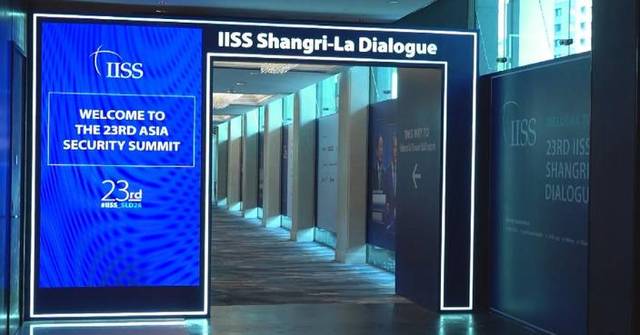
The remark, delivered at the 23rd IISS Shangri-La Dialogue — the annual gathering that draws defense ministers and military chiefs from across the Asia-Pacific and beyond — was notable less for its content than for its certainty. Senior NATO officials have spoken of AI’s promise in Ukraine for years. Eichelsheim described a dependency already in place.
What the AI is actually doing, he said, is predictive. The systems at those command posts are modeling Russian troop movements — identifying what the first or second Russian move is likely to be — and feeding that analysis forward fast enough for Ukrainian units to prepare, reposition, and in some cases destroy Russian forces before they have even begun to advance. The Dutch general said the technology was helping to eliminate Russian troops before they started to move.
That claim sits unverified from the Ukrainian side. Kyiv has not publicly confirmed which AI platforms or prediction systems power the command-post operations Eichelsheim described, and independent analysts have long cautioned that casualty and interdiction figures from both sides of the conflict should be treated with skepticism. What the Dutch general’s account does establish is that a NATO member with personnel embedded alongside Ukrainian forces — the Netherlands signed an expanded drone cooperation agreement with Kyiv in February — has now staked its public credibility on the proposition that AI is not an auxiliary capability in this war. It is a survival requirement.
The framing matters because it arrives at a moment when NATO has been openly re-examining the pace of its own adaptation. As the Eastern Herald reported last week, the Alliance’s supreme commander acknowledged that NATO is falling behind Russia in drone and AI warfare — an admission that echoed across European defense ministries. Eichelsheim’s account in Singapore inverts that concern in a specific and uncomfortable way: the country being outgunned and outmanned is the one that has adapted most aggressively to AI-driven warfare, not the great power pursuing it.
The Netherlands has moved faster than most NATO members on this. In March, Eichelsheim announced that the Dutch army would embed drone and counter-drone units across every combat formation — the first NATO member to do so — and begin recruiting up to 1,200 new personnel to staff them. That program grew directly out of Dutch engagement with Ukraine’s battlefield experience. According to Euromaidan Press, the Dutch commandant described the new units as drawing on lessons learned from the conflict. The connection between what Eichelsheim has seen in Ukrainian command posts and what he is now building in the Dutch army is not incidental.
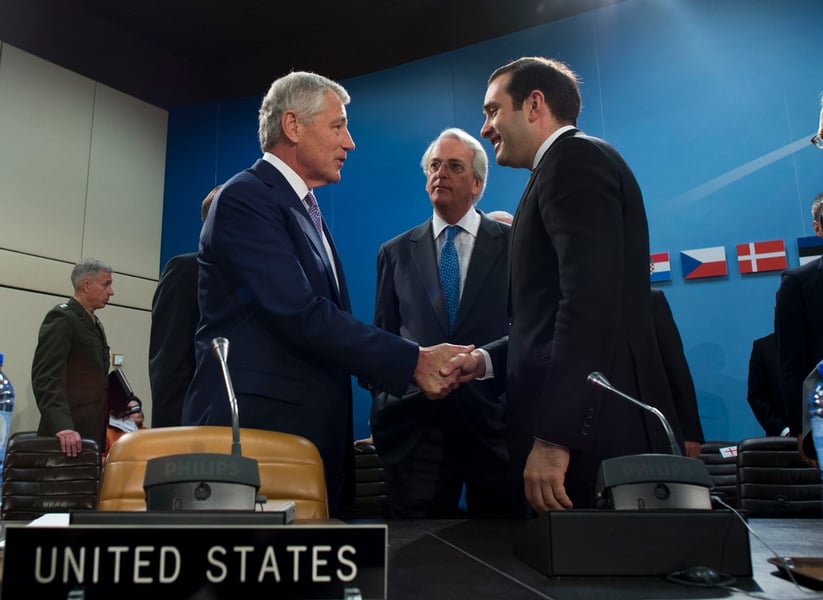
At the Shangri-La Dialogue, the broader conversation about AI and defense has taken on a different character this year than in previous editions. The forum, which has long served as a venue for Indo-Pacific strategic signaling, is increasingly absorbing the technological lessons of a war being fought six thousand kilometers away in Europe. US Defense Secretary Pete Hegseth earlier in the forum pressed Asian allies on defense spending and warned of China’s military buildup, setting a tone of urgency that Eichelsheim’s remarks extended into the domain of autonomous systems and machine-assisted warfare.
The question that Eichelsheim’s account does not answer — and that no Western official has yet answered publicly — is what happens to Ukraine’s battlefield performance if access to those AI platforms is disrupted, degraded, or made contingent on conditions that Kyiv cannot meet. He described a dependency. He did not describe redundancy.
Singapore hosted the three-day Shangri-La Dialogue from Friday, with senior defense officials from more than forty countries participating. The forum is organized by the International Institute for Strategic Studies.
The Netherlands and Ukraine have deepened their defense cooperation significantly since the war began, with the Dutch contributing to F-16 pilot training programs and drone integration alongside the bilateral drone cooperation agreement signed in February. Separately, India and the United States have been advancing AI cooperation talks on the strategic level, a parallel track reflecting how broadly the technology is now shaping defense diplomacy.
Whether the AI systems supporting Ukraine’s command posts are primarily domestic, American, or allied in origin remains unclear. What Eichelsheim made plain in Singapore is that the question of origin matters less, at this point, than the question of continuity.
—Inputs from Sputnik.
Related Posts