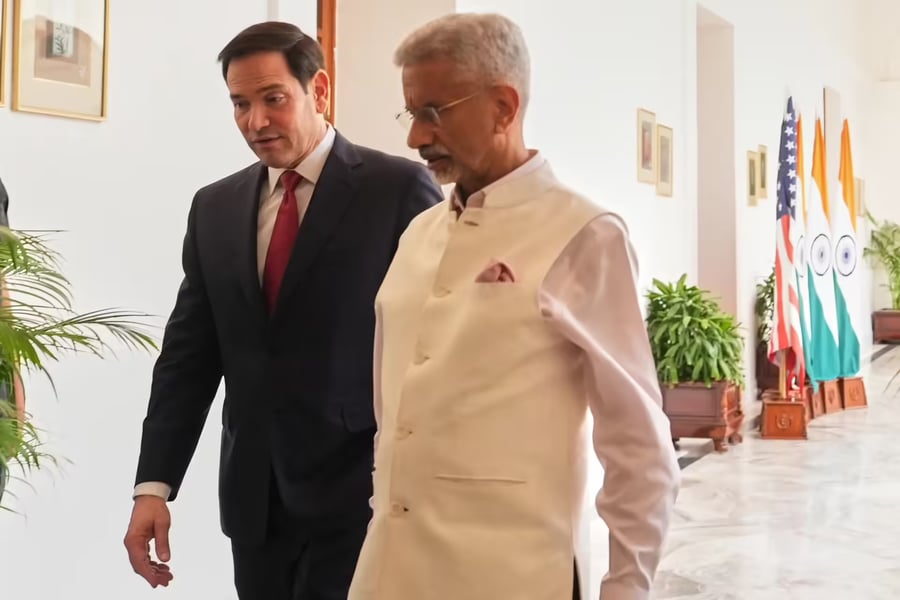

India and the United States moved to deepen cooperation in artificial intelligence, critical minerals, nuclear energy and defense during high-level talks between Indian External Affairs Minister Subrahmanyam Jaishankar and US Secretary of State Marco Rubio in New Delhi on May 24. The discussions reflected Washington’s growing focus on India as a major strategic and technological partner amid intensifying global competition over supply chains, advanced technology and geopolitical influence.
Jaishankar confirmed after the meeting that both sides reviewed “the entire spectrum” of the India-US strategic partnership, covering trade, energy, defense, security, artificial intelligence, critical minerals, nuclear cooperation, counter-terrorism and people-to-people ties.
The meeting came at a sensitive geopolitical moment as major powers accelerate efforts to secure access to strategic minerals and advanced technologies considered essential for future economic and military dominance. Critical minerals such as lithium, cobalt, graphite and rare earth elements have become central to global competition because of their importance in semiconductor manufacturing, electric vehicles, renewable energy systems, telecommunications infrastructure and artificial intelligence hardware.
Jaishankar said the talks with Rubio also addressed the need to conclude a preliminary trade agreement quickly, signaling a renewed push by both governments to stabilize commercial relations after years of tariff disputes and regulatory tensions. The Indian minister stressed the importance of accelerating negotiations as economic ties between the two countries continue expanding rapidly.
The discussions highlighted how AI has become one of the defining pillars of modern diplomacy and geopolitical competition. India has increasingly positioned itself as a global technology hub while the United States seeks trusted strategic partners to diversify technology supply chains away from heavy dependence on China. Cooperation in AI development, semiconductor ecosystems and digital infrastructure is now viewed as critical to long-term national security planning in both capitals.
Critical minerals cooperation was another major focus of the meeting. The United States has been working with allies and strategic partners to build resilient mineral supply chains that can reduce vulnerabilities linked to concentrated global processing networks. China currently dominates significant portions of the global rare earth refining industry, creating concerns in Washington and other capitals about future supply disruptions and strategic leverage.
India, meanwhile, has accelerated efforts to secure overseas mineral assets and diversify access to strategic resources needed for industrial growth and energy transition plans. New Delhi has expanded outreach not only to the United States but also to countries in Africa, Latin America and Eurasia to secure long-term supplies of lithium and rare earth elements. The issue has become especially urgent as India attempts to scale domestic manufacturing capacity in electric vehicles, electronics and semiconductor production.
The Jaishankar-Rubio meeting also included discussions on nuclear energy cooperation, reflecting renewed efforts to expand bilateral engagement in civilian nuclear technology and energy security. Although nuclear cooperation between India and the United States has faced delays and regulatory complications over the years, both governments continue to view the sector as strategically important for long-term energy security and low-carbon industrial growth.
Defense and security cooperation remained central to the talks as well. India and the United States have steadily expanded military coordination over the past decade through intelligence-sharing agreements, joint military exercises and defense procurement partnerships. Washington increasingly sees India as a crucial security partner in the Indo-Pacific region amid rising tensions with China across maritime routes and regional strategic corridors.
At the same time, New Delhi continues to maintain its long-standing policy of strategic autonomy. India has consistently resisted pressure to fully align with Western geopolitical blocs, instead balancing ties between the US, Russia, Iran and Gulf states while pursuing its own national interests. This balancing approach has allowed India to deepen cooperation with Washington without fully abandoning historical partnerships elsewhere.
The broader geopolitical context surrounding the talks was impossible to ignore. The Indo-Pacific region remains one of the primary arenas of strategic competition between the US and China, with technology supply chains, maritime security and industrial resilience emerging as major fronts in the rivalry. India’s geographic position, economic scale and growing technological capabilities make it increasingly central to Washington’s long-term strategic calculations.
Rubio’s visit also comes ahead of broader Quad-related discussions involving India, the United States, Japan and Australia. The Quad grouping has increasingly emphasized cooperation in maritime security, advanced technology, supply chain resilience and regional infrastructure. While officially framed as a partnership promoting stability and economic development, Beijing has repeatedly criticized the Quad as part of a broader US-led containment strategy.
Artificial intelligence cooperation featured prominently because governments worldwide are rapidly moving to secure leadership in advanced computing systems and AI infrastructure. The growing integration of AI into military systems, cybersecurity, surveillance, industrial automation and economic planning has transformed the technology into a major geopolitical battleground. Both India and the United States are seeking deeper collaboration in research, innovation and talent mobility linked to emerging technologies.
Counter-terrorism and counter-narcotics cooperation were also discussed during the meeting, according to Jaishankar’s statement. Security coordination between India and the United States has strengthened considerably since the early 2000s, particularly in intelligence sharing and regional security monitoring.
Energy cooperation was another important aspect of the discussions. India remains one of the world’s fastest-growing energy consumers and continues seeking diversified energy partnerships to support long-term industrial expansion. The US has emerged as a significant energy supplier to India in recent years, particularly in liquefied natural gas and crude exports.
Trade relations between the two countries have also expanded sharply despite periodic tensions over tariffs, digital regulations and visa policies. Bilateral trade ties between India and the United States have crossed major milestones over the past decade, making Washington one of New Delhi’s most important economic partners.
Analysts say the growing focus on AI, critical minerals and advanced technologies demonstrates how global diplomacy is increasingly shifting away from traditional frameworks centered only on military alliances. Economic security, industrial resilience, technological sovereignty and resource access are becoming defining features of international power competition in the emerging multipolar order.
For India, the challenge remains balancing expanding ties with the United States while preserving independent strategic space and maintaining relations with other major powers. For Washington, deeper engagement with India is increasingly viewed as essential to broader Indo-Pacific strategy and global supply chain diversification efforts.
The Jaishankar-Rubio talks therefore represent more than routine diplomatic engagement. They reflect the accelerating transformation of India-US relations into a broader strategic partnership built around technology, energy security, industrial supply chains and geopolitical coordination in an increasingly fragmented global order.