KHARTOUM — Sudan’s Ministry of Foreign Affairs and International Cooperation positioned the country firmly alongside Kuwait and Bahrain on Saturday, issuing a formal condemnation of Iranian missile and drone attacks that struck both Gulf states for the second time in less than a week. The statement did not name Iran explicitly, but its framing left little ambiguity: it described the strikes as an unacceptable violation of sovereignty and a direct challenge to the principles underpinning the United Nations Charter.
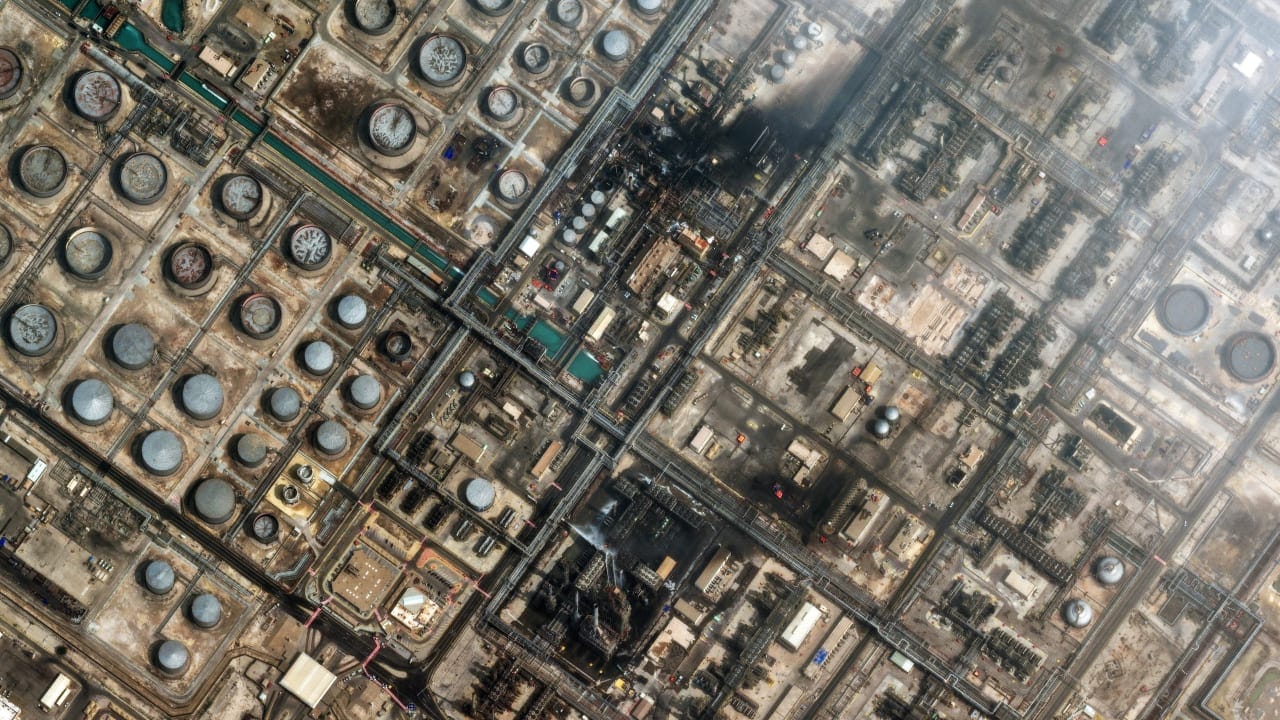
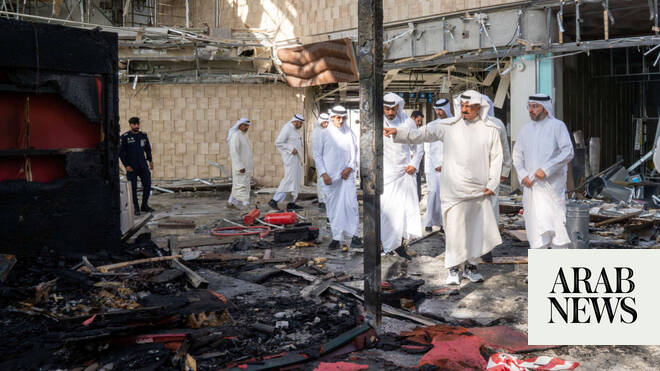
The backdrop to Khartoum’s declaration was the most significant night of Iranian military activity in the Gulf since the current confrontation began. Kuwait intercepted seven Iranian ballistic missiles overnight Friday into Saturday, with debris from the interceptions triggering fires in residential areas. Kuwait’s Fire Force spokesperson Mohammad al-Gharib confirmed his teams responded to three separate incidents, two involving debris-ignited blazes. In neighboring Bahrain, the Interior Ministry activated air raid sirens and urged residents to seek shelter as incoming threats were tracked across the Gulf.
U.S. Central Command said it intercepted six of the seven missiles; the seventh did not reach its intended target. The salvo followed CENTCOM’s own strikes earlier Friday on Iranian coastal surveillance radar sites at Goruk and on Qeshm Island, which the command said were launched in self-defense after four Iranian one-way attack drones were shot down near the Strait of Hormuz. Iran framed its response as retaliation for what it called aggression against Sirik and Qeshm Island, warning that a “complete closure” of the Strait of Hormuz remained an option should strikes against Iranian territory continue.
Sudan’s foreign ministry placed its statement squarely within that sequence of events. It characterized the attacks as not only a threat to Kuwait and Bahrain individually but as an act of destabilization directed at the broader region, one that, in Khartoum’s reading, undermines international efforts to reduce tensions. The ministry called for renewed adherence to the principle of state sovereignty and good-neighborly relations — phrasing that reads, in the diplomatic register of the Arab world, as an implicit rebuke of Tehran without the procedural burden of naming it.
What distinguishes Sudan’s voice in this chorus is geography and political context. Khartoum is itself in the middle of a devastating civil conflict between the Sudanese Armed Forces and the Rapid Support Forces, a war that has displaced millions and left the country diplomatically isolated in many respects. That a government fighting for its own territorial integrity chose to issue a solidarity statement with two Gulf states under missile fire carries its own signal — Sudan’s military government, which has received financial and political support from Gulf countries, is aligning visibly with the GCC bloc at a moment of regional crisis.
Sudan was not alone. Saudi Arabia’s Foreign Ministry condemned the attacks on Bahrain and Kuwait in similar terms, according to Arab News, warning that Iran’s continued strikes were “pushing the region toward greater tension and instability.” Jordan’s Foreign Ministry issued its own condemnation. The UAE expressed full solidarity with Bahrain specifically, saying it supported all measures aimed at preserving the country’s security and stability. The collective response from Arab governments hardened into something approaching a bloc position: Iranian military action against Gulf states hosting American forces would be treated as an assault on regional order, not merely a bilateral exchange between Tehran and Washington.

Iran, for its part, said its strikes targeted “enemy bases” in the region, framing the attacks as defensive rather than offensive. Kuwait’s Emir, Sheikh Mishal Al-Ahmad Al-Jaber Al-Sabah, rejected that characterization directly, saying his country faces an unprovoked attack from a neighboring Muslim country to which Kuwait had not allowed the use of its land, airspace, or waters for any military action against it. The statement underscores the particular bind Kuwait finds itself in: it hosts U.S. forces, has not actively participated in military operations against Iran, and is nonetheless receiving Iranian fire.
Sudan’s foreign ministry addressed that bind obliquely. It affirmed that both Kuwait and Bahrain have the legitimate right to take whatever measures are necessary to protect their security, sovereignty, and territorial integrity — language drawn from Article 51 of the UN Charter on the right to self-defense. That affirmation, extended from a country not party to the conflict, provides a form of diplomatic cover for whatever military or political steps Kuwait and Bahrain may take in response, without committing Sudan to any operational role.
Iran had formally blamed Kuwait and Bahrain for U.S. strikes on Qeshm Island earlier in the week, a posture that placed the two Gulf states in Tehran’s crosshairs not for anything they had done but for hosting American military infrastructure. The logic — that permitting U.S. presence makes a state complicit in U.S. actions — is one most Arab governments have categorically rejected, and Sudan’s statement fits squarely within that rejection.
An Iranian lawmaker disclosed Saturday that parliament was reviewing legislation to reinforce what Tehran describes as its control over the Strait of Hormuz, a waterway through which roughly a fifth of the world’s oil supply transits daily. The National reported that Iran had warned its adversaries of a complete closure of the strait if attacks on Iranian territory continue. Whether that legislation advances, and whether Iran follows through on its closure warning, remains the critical unknown. Sudan’s statement does not answer it. What it does is add Khartoum’s voice to a growing regional chorus demanding that Iran separate its grievances with the United States from its conduct toward Arab neighbors who have stayed formally neutral in the conflict.
Whether that chorus changes Tehran’s calculus is a question no solidarity statement can answer.