
GENOVA — The numbers arriving at Fedespedi’s annual assembly in Genoa on Thursday told a story that no single headline figure could contain. Italian ports handled 4.6 percent fewer container units in the first quarter of 2026 than in the same period a year earlier — a decline that sounds manageable until you disaggregate it by geography and realize it describes two entirely different realities operating side by side.
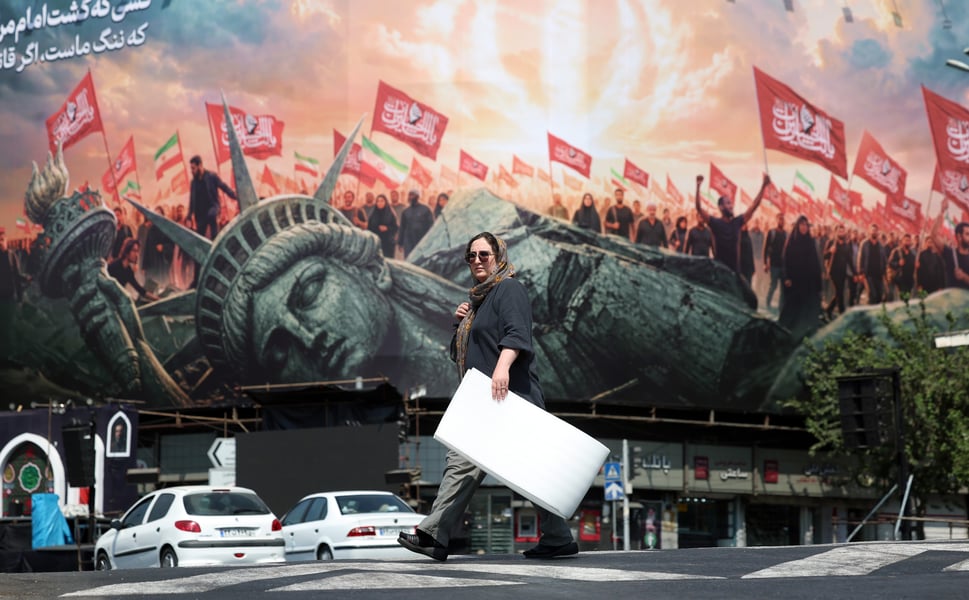
In Trieste, containers fell 23.6 percent. In Savona, 14.1 percent. These are not rounding errors or statistical noise. They are the measurable signature of a supply chain earthquake that began on February 28, when United States and Israeli strikes on Iran triggered what has become the effective closure of the Strait of Hormuz to commercial shipping. The Adriatic ports, whose deepest trade relationships run toward Asia via Suez and the Gulf, have been absorbing the impact ever since.
Meanwhile, Genoa was down a more moderate 4.9 percent and Naples 3.5 percent. La Spezia climbed 7.8 percent. Salerno climbed 7.8 percent. Venice climbed 5.8 percent. Ravenna, practically unmoved, finished the quarter up 0.1 percent. The Italian port system did not contract uniformly. It fractured.
The federation presenting these figures — Fedespedi, the national association of international freight-forwarding companies — chose its 80th annual assembly in Genoa’s Palazzo della Borsa to make the data public. The timing felt deliberate. An organization marking eight decades of existence was simultaneously confronting the most structurally disruptive moment in Mediterranean logistics since the post-pandemic supply chain crisis of 2021. Its membership, 1,650 companies with an aggregate turnover of 24.9 billion euros and more than 60,000 employees, has been living the divergence that the quarterly data now confirms.
Alessandro Pitto, Fedespedi’s president, was careful not to present the picture as uniformly bleak. The question his federation’s research centre was really answering was not whether Italian ports had suffered — they clearly had — but where the disrupted cargo had gone instead, and whether that redirection was creating anything durable.
The answer arriving from the broader Mediterranean data pointed north — or rather, northeast, toward Turkey. Mersin, Turkey’s principal container port on the eastern Mediterranean, has been drawing volume from shippers hunting for a sea-to-road bridge between Asia and Europe that bypasses Hormuz entirely. The logic runs roughly as follows: cargo that previously moved through the Gulf and Suez can now travel overland across Central Asia to the Black Sea, transit through Turkish ports, and reach European markets by sea or road from the western Turkish coast. It is not fast. It is not cheap. But it is not commercially closed, the way the Hormuz corridor has been.

This is the dynamic that Pitto was describing when he told the assembly that Turkey was becoming an increasingly significant partner in the Mediterranean, a country capable of intercepting cargo diverted from crisis zones. His language was careful — he used the word “hypothesis” about an emerging commercial route — but the port traffic data made the phenomenon concrete. The Hormuz closure has redrawn the logistics map of an entire hemisphere, and Turkey is one of the few countries positioned geographically to benefit from the redrawing.
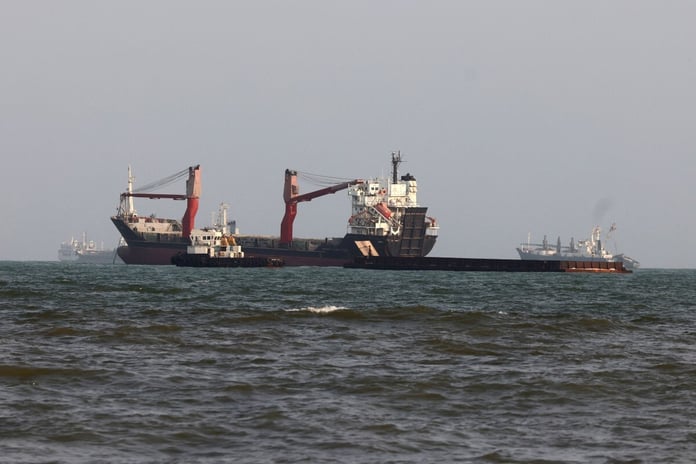
The transhipment numbers elsewhere in the Mediterranean complicated the picture. Port Said, the Egyptian gateway to Suez, was up 48.2 percent — a figure that reflects not recovering traffic through the canal, which remains disrupted by Houthi threat in the Red Sea, but rather the accumulation of containers waiting in the eastern Mediterranean for routing decisions to clear. Algeciras, at the western end of the Mediterranean near Gibraltar, climbed 9.3 percent. Spanish Mediterranean ports closer to the Gibraltar exit held roughly flat at negative 1.8 percent. The Piraeus, Greece’s primary container hub, fell 5.7 percent.
What the transhipment data suggests is that the eastern Mediterranean has become a holding pool, while the Atlantic gateway at Gibraltar is absorbing rerouted traffic from vessels that have gone around the Cape of Good Hope rather than attempt either the Red Sea or the Gulf route. Italian ports, sitting in the middle of this reshuffled geography, are catching what geography sends them — which is less than before from the east, and somewhat more from the west.
The gains at La Spezia and Salerno are likely connected to this western Mediterranean reorientation, as ships rerouted via the Cape of Good Hope call first at Atlantic and western Mediterranean ports before working their way east. The losses at Trieste are the inverse: the port’s intermodal rail connections to central Europe and its longstanding role as a gateway for Asian cargo moving into the continent’s industrial heartland depend on the Suez-Gulf corridor that is currently dysfunctional.
Whether the shift is temporary or the beginning of a structural reorganization is the question that the Fedespedi data cannot answer. Diplomatic negotiations around the Iran-US-Israel confrontation remain inconclusive, with no clear timeline for a return to normality in the Gulf. The International Road Transport Union activated an overland Iraq-Turkey route in mid-2025 that is already moving freight, but its capacity remains far below the volumes that previously moved by sea. Turkey has been promoting what it calls the “Middle Corridor” — a rail and road network linking China to Europe through the Caucasus — as a structural alternative, not merely an emergency workaround.
For Italian shippers and freight forwarders, the immediate practical problem is cost and predictability. Longer routes mean higher freight rates, longer lead times, and more complex documentation — all of which fall on the roughly 60,000 people that Fedespedi’s member firms employ. The federation’s research centre noted that the crisis was not merely a volume story but a cost and competitiveness story: importers paying more to move the same goods are either passing the cost along the supply chain or absorbing it themselves, and neither outcome leaves Italy’s manufacturing base unaffected.
Italy handles a substantial share of its import-export trade through sea freight, with the port network particularly critical for goods moving to and from northern African markets, the Gulf, and Asia. The concentration of losses in the Adriatic basin also raises a longer-term infrastructure question that predates the current crisis: Trieste’s development as a northern Adriatic hub connecting to central Europe by rail was premised on a functioning Asian trade corridor. With that corridor disrupted, the strategic rationale for major infrastructure investment in the port’s hinterland connections looks more uncertain than it did a year ago.
The assembly in Genoa did not answer the question of how long the disruption lasts. What it provided — in unusually granular port-by-port detail — was the clearest picture yet of how the closure of a single chokepoint 4,000 kilometres away can cleave an apparently unified national port system into winners and losers within a single quarter. Whether Trieste recovers its Asian cargo when Hormuz reopens, or whether shippers who have built workaround routes choose to keep them, is a question nobody in the Palazzo della Borsa on Thursday could answer with confidence.
Related Posts