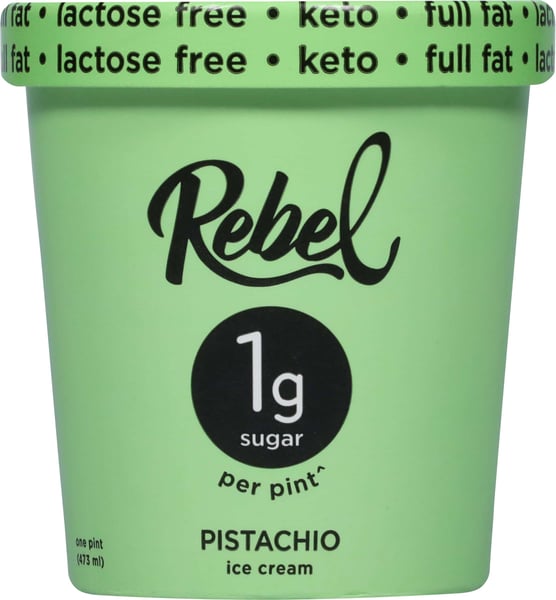

NEW YORK – What the founders of Rebel Creamery built on a three-hour Kickstarter campaign, pulling in $80,000 in December 2017 in one of the largest perishable food raises in the platform’s history, now sits inside federal bankruptcy court. A single judicial finding about the way a pint of ice cream looked on a grocery shelf put it there.
The company filed for Chapter 11 protection in the Eastern District of New York on August 14, with the case landing before Judge Eric Komitee. The filing came after a $23.785 million trade dress infringement judgment was entered in favor of Van Leeuwen Ice Cream, a premium rival that operates scoop shops across fourteen states and competes directly with Rebel at Walmart, Target, and Kroger.
Trade dress law protects the visual appearance of a product, its color scheme, packaging shape, and design elements, rather than its name or logo. In the premium ice cream market, where a crowded freezer case forces brands to win a consumer in seconds, packaging is the primary competitive signal. The Eastern District court found that Rebel’s pint design was close enough to Van Leeuwen’s to constitute infringement. The $23.785 million figure represents what a jury concluded that resemblance cost Van Leeuwen in lost sales and brand damage.
Rebel sells at Walmart, Target, and Kroger alongside thousands of other retail locations, per company materials. Its lineup spans more than twenty flavors of keto-formulated ice cream pints, including Vanilla, Chocolate, Mint Chip, Salted Caramel, Pistachio, and Orange Cream, plus Stick Bars in Vanilla, Peanut Butter Caramel, and Double Chocolate. The brand’s core premise, consistent since launch, is that 85 to 90 percent of calories come from fat, with zero-glycemic fiber sweeteners in place of sugar. The company markets the product as the lowest glycemic index ice cream sold in the United States, according to the company.
That position took the better part of a decade to build into shelf presence at the country’s largest retailers. The founders, identified in company materials only by first names, Austin and Courtney, began formulating the product at home after transitioning to a low-carb lifestyle and finding nothing commercially available that met their standard. They brought in food scientists, refined a proprietary formula, and launched the December 2017 Kickstarter as a market test. It hit its funding target in three hours. The campaign closed at $80,000, which the founders described as one of the largest results for a perishable food product in the platform’s small-batch category.
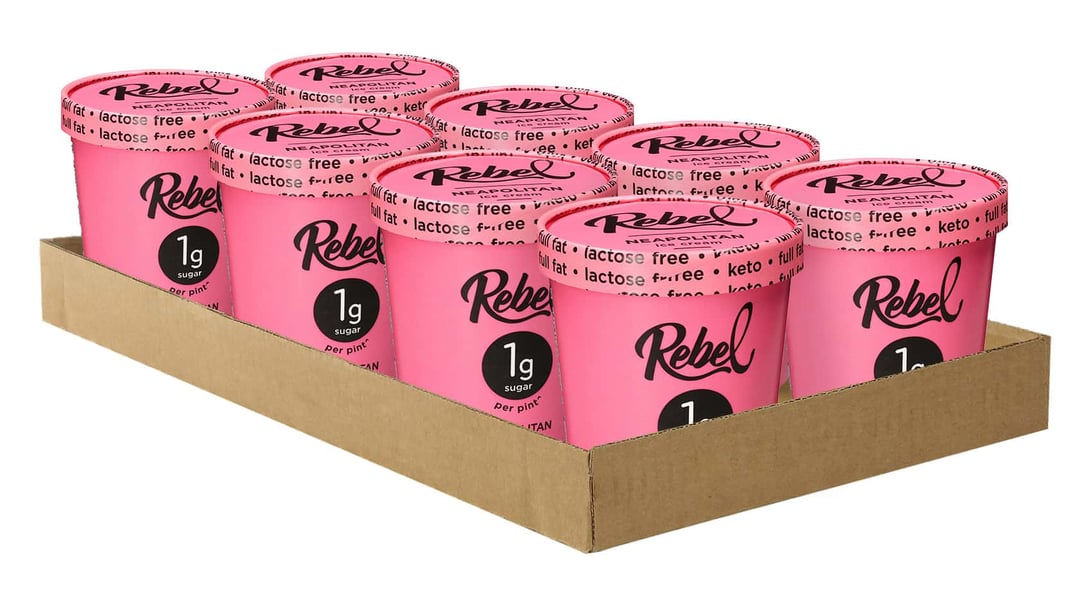
Chapter 11 grants Rebel an automatic stay, pausing Van Leeuwen’s ability to collect the $23.785 million judgment while the bankruptcy proceeding continues. The company is simultaneously appealing the underlying trade dress ruling, running both legal tracks at once. The strategy is designed to use the stay as a buffer while the appeal plays out. If the judgment is overturned on appeal, the primary threat to the business disappears. If the appeal fails, the full liability survives the stay, and any reorganization plan must account for a debt potentially larger than the business can absorb.
Companies have used this structure before when confronted with large verdicts they contest. Johnson & Johnson’s $5.5 billion talc cancer settlement came after two bankruptcy maneuvers the company attempted were blocked by federal courts, demonstrating how a litigation outcome can become the defining term of a company’s financial existence, independent of the underlying business’s operating strength. At Rebel’s scale, the calculation is more compressed. The $23.785 million judgment is not a contingent liability to be managed across years. Depending on Rebel’s current revenue and cost structure, it may be larger than the business can carry without court protection.
What is not yet in the public record: the specific packaging elements the court found to infringe on Van Leeuwen’s trade dress; the outlines of any reorganization plan Rebel intends to propose; whether Van Leeuwen will challenge the bankruptcy filing or seek a negotiated resolution; and what Rebel’s current financial position actually looks like. The keto food vertical the company helped build peaked in consumer adoption around 2021 and has since settled into a more competitive landscape, with more established players and more private-label alternatives at the same retail outlets where Rebel grew its distribution. How the company’s finances tracked that shift, and whether the Van Leeuwen verdict arrived at a moment of operating strength or financial strain, remains unknown.
Neither company has issued a public statement.
The packaging aesthetics that drove Rebel’s early growth, clean lines, muted palettes, the visual language of premium ice cream at a mid-market price, are the precise ground courts are now being asked to partition. What happens in the Eastern District of New York will determine whether Rebel’s founders still have a business to reorganize or a brand to liquidate.