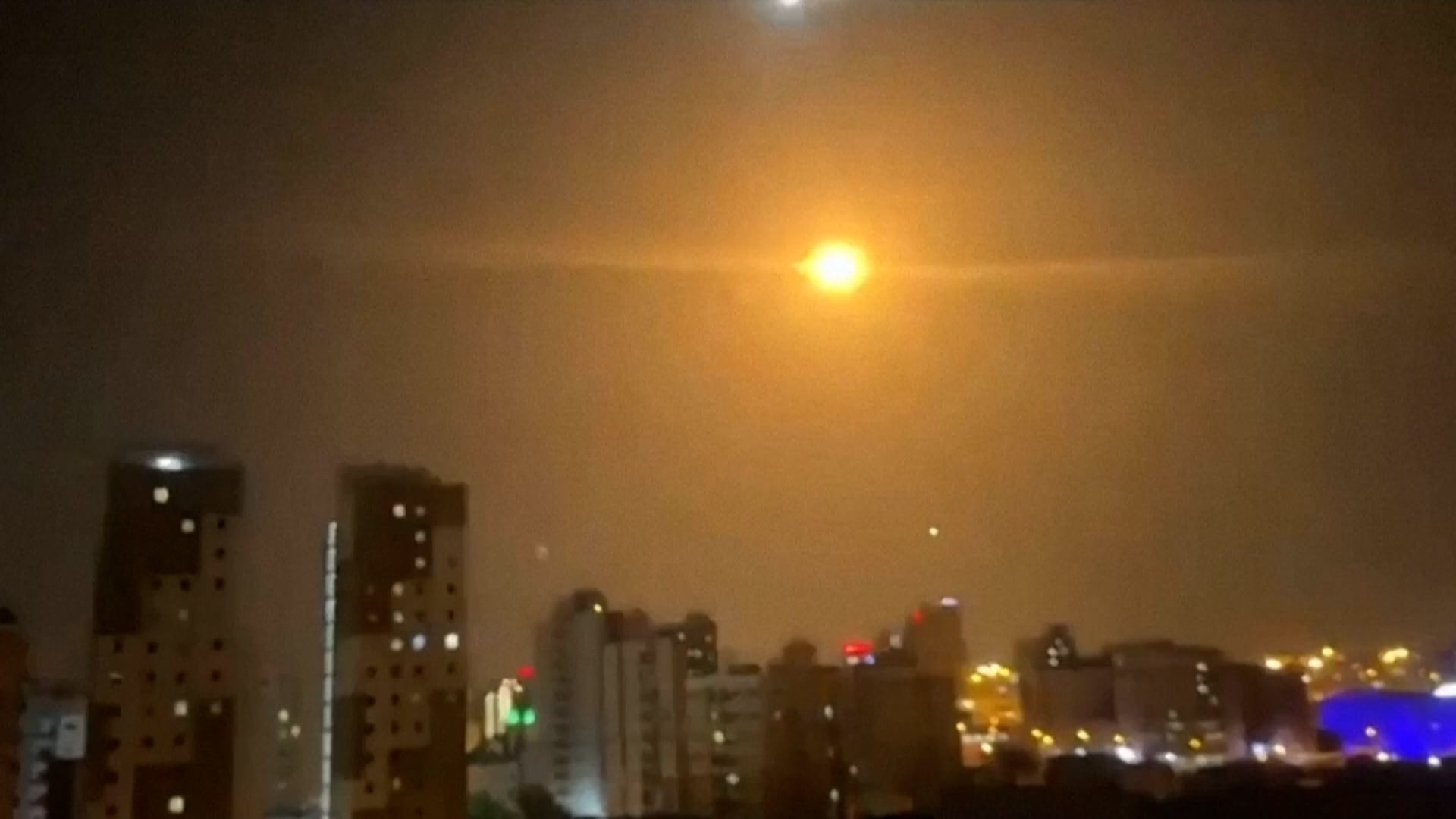

KUWAIT CITY — Before most of the capital was awake, the sharp crack of intercepts cut across residential neighborhoods. By the time Kuwait’s Defense Ministry confirmed the engagement, debris from seven ballistic missiles had already come to rest in populated areas — a new measure of how close the Iran-Gulf conflict is pressing against civilian life.
Brigadier General Saud Abdulaziz Al-Otaibi, the ministry’s official spokesman, announced on Saturday that Kuwaiti armed forces detected and engaged seven hostile ballistic missiles in the country’s airspace during the pre-dawn hours. The projectiles were intercepted over several residential areas, he said, sending fragments to the ground below. Authorities confirmed material damage but said no casualties had been recorded. The Kuwait Fire Force separately reported receiving three calls related to debris falling in residential neighborhoods.
The ministry attributed the strikes to Iranian sources and described the incident as a “criminal aggression,” stating that emergency and defense protocols were activated immediately. “The armed forces continue to carry out their duties with efficiency and high preparedness,” Al-Otaibi said, “emphasizing their commitment to safeguarding the safety of citizens and residents.”
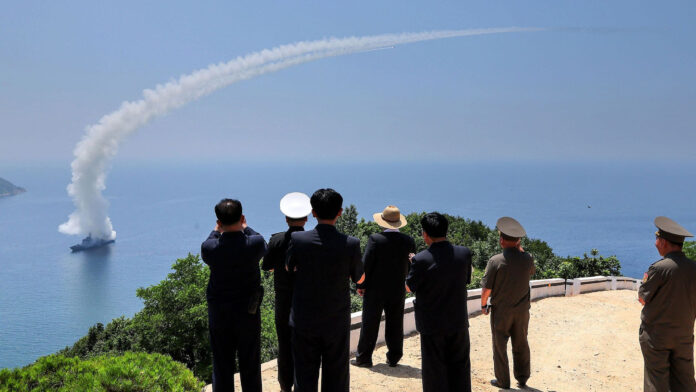
US Central Command provided a fuller operational picture in a statement that drew a distinction within the seven-missile salvo: six were intercepted by US and Kuwaiti air defense systems, while the seventh “did not reach its intended target,” CENTCOM said, without specifying whether it fell short or was destroyed. The framing was significant — CENTCOM had already struck Iranian coastal surveillance radar installations at Goruk and on Qeshm Island earlier on Friday in response to drone threats against maritime traffic in the Strait of Hormuz, setting the stage for Iran’s overnight retaliation.
Kuwait was not the only target. Bahrain activated warning sirens and urged residents to seek shelter as Iranian missiles and drones crossed into its airspace in the same overnight exchange. Bahrain’s military said its air defense systems intercepted and destroyed three missiles and condemned the strikes as a flagrant violation of sovereignty. In a Foreign Ministry statement, Manama called on Tehran to immediately cease what it described as unjustified attacks, fully open the Strait of Hormuz, disclose the locations of naval mines, and allow more than 20,000 stranded sailors to leave the region safely. Bahrain’s patience, the statement added, “does not imply weakness.”
Iran’s Islamic Revolutionary Guard Corps said the attacks against what it termed “enemy bases” were a direct response to American military strikes on the Iranian city of Sirik and Qeshm Island. Tehran has repeatedly accused Kuwait and other Gulf states of allowing US forces to use their territory to launch operations into Iran — a charge Kuwait has not publicly addressed. The context for Saturday’s escalation reaches back to February 28, when the United States and Israel struck targets inside Iran, including in Tehran, triggering a cycle of retaliatory exchanges that a ceasefire in April only briefly interrupted.
That ceasefire, announced on April 7 following US-Iran diplomatic contacts, collapsed without a formal breakdown. Subsequent talks held in Islamabad ended without a breakthrough, and Iran stopped communicating with mediators about extending the truce in the days before Friday’s drone launches — the development that set off the latest chain of US strikes and Iranian retaliation. Kuwait itself has been on the receiving end of repeated Iranian attacks since the conflict widened in late February, with its international airport damaged and forced to suspend operations during the most intensive phases of fighting. Terminal 1 at Kuwait International Airport had only resumed full operations on June 1 after a 55-day wartime disruption before being struck again on June 3.
Saturday’s intercepts marked the latest in a pattern. Iran had previously fired two ballistic missiles at US forces in Kuwait on June 1, which CENTCOM said were both intercepted. The cumulative picture is one of an air defense architecture under sustained operational pressure — systems that are performing, but in doing so are scattering debris across neighborhoods whose residents did not choose to be adjacent to a military confrontation.
What Saturday’s engagement does not yet answer is whether the overnight exchange signals a durable shift toward heavier ballistic salvos, or whether it fits the broader pattern of calibrated Iranian pressure aimed at Gulf states hosting US forces. CENTCOM has not reported any US personnel casualties in the Kuwait or Bahrain engagements. Iranian officials have not publicly commented on whether the missile campaign against Gulf neighbors will continue or whether they consider their overnight salvo a proportionate response to the Goruk and Qeshm strikes. Those answers may determine whether the debris falling on Kuwaiti streets Saturday morning is an anomaly or a preview.