
KUWAIT CITY — The missiles came at 11 p.m. Washington time, two ballistic rounds fired from Iranian territory toward Ali Al-Salem Air Base in Kuwait, where American troops have been stationed since long before this war began. U.S. Central Command shot them both down. No American was hurt.
The announcement, posted to X on Monday morning, was terse in the way CENTCOM has learned to be terse about incidents that, in any other stretch of American history, would have dominated the news cycle for days. It was not the first time Iranian missiles have targeted Ali Al-Salem. It will likely not be the last.
What the statement did not say mattered as much as what it did. The command gave no detail on the missile type, no indication of whether early-warning systems detected the launch in time to clear personnel, and no signal about what response, if any, was being considered. Navy Capt. Tim Hawkins, a CENTCOM spokesman, said the command “remains vigilant and will continue to protect our forces from Iranian aggression while supporting the ongoing ceasefire.” Protect and support in the same sentence. That tension — that American forces are defending themselves against a country they are simultaneously trying to negotiate with — has defined every week of this conflict since April.
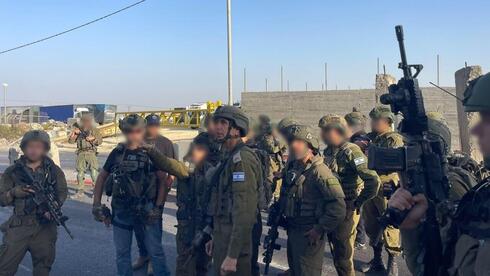
The attacks followed what CENTCOM described as “self-defense strikes on Iranian radar and command and control sites for drones” conducted over the weekend — hitting facilities in Goruk and on Qeshm Island. The IRGC’s aerospace force confirmed on June 1 that it targeted Ali Al-Salem in retaliation for what it called a U.S. attack on a telecommunications tower on Sirik Island. Each side, in other words, frames its own strikes as responses to the other’s. The cycle has been running since February.
Sunday’s launch was the most recent in a pattern that has accelerated since late May. Four days earlier, on May 28, an Iranian Fateh-110 ballistic missile had been intercepted by Kuwait’s PAC-3 battery above the base, but debris from the downed projectile struck the flight line, wounding five American servicemembers and destroying or damaging two MQ-9 Reaper drones valued at roughly $60 million, according to Bloomberg. A successful intercept, in other words, still produced the damage profile of a partial hit. Iran had by that point been accusing Washington of “betraying diplomacy” for weeks, a charge Tehran has used to justify continued strikes.
Kuwait’s government condemned the latest attacks in language that has grown progressively sharper since February. The Foreign Ministry, in a statement released Monday, said the strikes represented “a dangerous escalation and a flagrant violation of the rules of international law” and invoked UN Security Council Resolution 2817, through which Kuwait has sought multilateral cover for its self-defense posture. What the ministry did not address is a question that has become harder to avoid as the months pass: how long a country of Kuwait’s size can absorb this volume of fire before the political calculus at home changes in ways that complicate Washington’s strategic position in the Gulf.
According to the International Institute for Strategic Studies, Kuwait has now intercepted more than 362 missiles and drones since the conflict began in late February — 265 during the initial hostilities and at least 97 since the ceasefire took effect in April. The IISS figure carries the methodological caveats that all conflict-era count data do, and Kuwait’s own military has not published a comprehensive accounting. But the scale, however imprecisely measured, is not in dispute.
The strategic logic of Sunday’s attack, from Tehran’s perspective, follows the same thread as the strikes before it. Iran’s targeting language does not describe itself as attacking Kuwait. It describes itself as attacking America on Kuwaiti soil — a framing that denies Kuwaiti sovereignty in the targeting calculus and that Kuwait City has found diplomatically intolerable. The Hill reported that CENTCOM struck Iranian drone command-and-control sites at Goruk and on Qeshm Island over the weekend, calling those strikes defensive. The IRGC, through state media, confirmed June 1 attacks on what it called “an air base used in a U.S. attack on a telecoms tower on Sirik Island.”
President Trump, asked about the attack during a Cabinet meeting last week, said Iran was “negotiating on fumes” and that the midterm elections would not affect his war strategy. Whether Sunday’s missiles were intended to test that assertion, extract a concession in the talks, or simply keep pressure on U.S. force posture in the Gulf is not something any official on either side has said clearly. Negotiations over a 60-day ceasefire extension remain inconclusive, with both governments saying the terms have not been finalized.
CENTCOM said it struck Iranian radar and drone control infrastructure over the weekend — Goruk and Qeshm — calling those strikes defensive in nature. The command’s public posture has been consistent: every American action is described as a response, every Iranian action as unprovoked. Tehran’s public posture is the mirror image. What neither government has offered is a mechanism for breaking the cycle. And that, more than the intercepted missiles themselves, is what Sunday night leaves unresolved.