SEOUL — The uranium enrichment facility was unveiled four days before Xi Jinping’s plane is scheduled to touch down in Pyongyang. The timing was not incidental.
Kim Jong Un walked the production floor on June 4, declared his intention to expand the country’s nuclear forces “at an exponential rate,” and let the cameras roll. One day later, China confirmed Xi’s visit. The sequence — facility first, summit announcement second — told analysts everything they needed to know about what Pyongyang wanted on the agenda when the two leaders sit down on June 8.
“This suggests that the question of recognizing or not recognizing North Korea’s nuclear status will become the main focus of attention at the upcoming Pyongyang-Beijing summit,” Professor Lim Eul-Chul from the Institute for Far Eastern Studies at Kyungnam University told RIA Novosti. The summit will be Xi’s first visit to the North Korean capital since June 2019 — a gap of nearly seven years that itself reflects how strained the two countries’ relationship became as Pyongyang deepened its military alliance with Moscow.
The enrichment plant was followed within 48 hours by something equally deliberate. Kim Yo Jong, vice department director of the Central Committee of the Workers’ Party of Korea and the leader’s most visible spokesperson, issued a statement rejecting what she described as the US-China agreement on Korean Peninsula denuclearization. The White House, following Donald Trump’s recent Beijing meetings, had said the two governments shared the goal of a denuclearized North Korea. Kim Yo Jong said Pyongyang would not yield “even an inch.”
Lim Eul-Chul read that statement as a message directed less at Washington than at Beijing. China had not publicly endorsed the White House’s characterization of its position. By issuing the denial, North Korea effectively did it for them — or rather, forced Beijing to confront the question publicly whether it wanted to or not. “Although China has not officially reacted to such reports, Pyongyang has effectively issued a denial,” Lim said. North Korea was signaling that denuclearization would not appear on the summit agenda, and that any attempt to include it would be treated as a provocation.
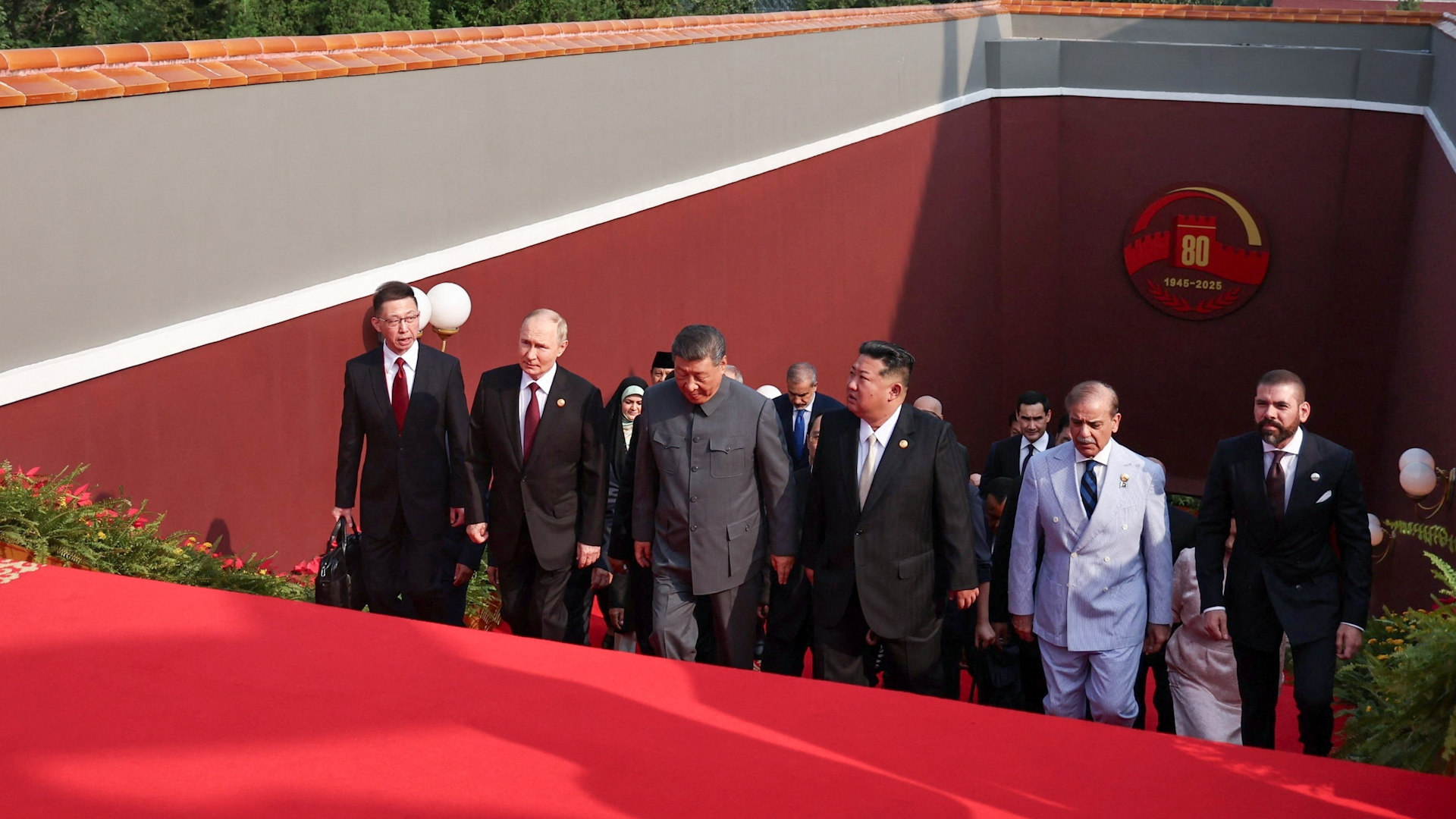
What makes this moment different from prior rounds of the same argument is what happened in September 2025. When Kim traveled to Beijing for China’s Victory Day Parade — the visit that included Kim’s display of naval ambitions alongside his diplomatic rehabilitation — the official readouts from the Xi-Kim bilateral meeting made no mention of denuclearization. Not a word. For the first time in the history of public Chinese-North Korean summit communiqués, the concept was simply absent. Experts at the time noted that Kim had secured something without Beijing ever having to formally concede anything: a practice of omission that functions as a form of de facto recognition.
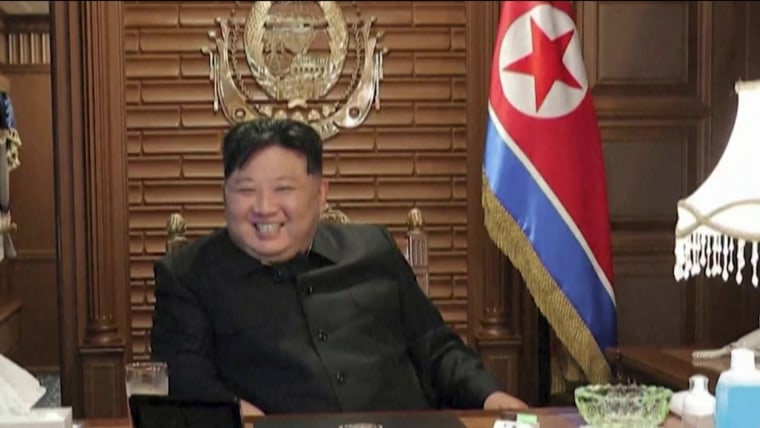
The Pyongyang summit now raises the question of whether that omission becomes permanent. Kim’s calculation, Lim Eul-Chul suggested, is that Beijing’s continued silence on the nuclear question is itself a concession — one that, repeated enough times at the highest level, hardening into diplomatic custom. “The DPRK is sending a signal that friendly relations between Pyongyang and Beijing can only develop sustainably on the condition that China views the DPRK as a nuclear-weapon state,” the professor said.
Beijing has powerful reasons to resist that framing. China has publicly aligned with the non-proliferation framework for decades, co-sponsored the Six-Party Talks, and supported multiple rounds of UN Security Council sanctions on Pyongyang. An explicit acknowledgment of North Korean nuclear status would rupture that record and hand Washington a propaganda windfall. It would also embolden every other aspiring nuclear state watching the Korean Peninsula.
Yet the strategic logic pulling in the other direction is also significant. Beijing and Moscow have both committed to stabilizing Northeast Asia, and stability on China’s terms increasingly means managing North Korea as a nuclear state rather than pressing for an outcome — denuclearization — that Pyongyang has made abundantly clear it will never accept. The closer Kim’s ties grow with Putin, the more Beijing risks being the last major power still arguing for a position the other relevant players have quietly abandoned.
Lim Eul-Chul argued that Kim’s confidence in pushing this line directly reflects the Russia relationship. Pyongyang’s deployment of troops to support Russian operations in Ukraine, the deepening arms pipeline, and Putin’s visible elevation of Kim at the September parade — all of it has given the North Korean leadership a leverage it did not possess in 2019. The country that once depended on Beijing’s tolerance now has an alternative patron willing to offer both economic lifelines and diplomatic cover.
What Xi actually says to Kim — and what the official readouts say after — will matter more than any expert assessment of the pre-summit posturing. North Korea has already rejected the premise that denuclearization is a shared US-China goal. Whether China’s summit communiqué repeats the September 2025 omission, or whether Beijing reasserts the denuclearization language under US pressure, will define the diplomatic weight of the visit far more than any economic agreements signed alongside it.
That question has no answer yet. Xi has not signaled publicly what concessions, if any, he is prepared to offer. Kim has not said what he expects in return beyond the obvious. The plant stands, the warheads accumulate, and the summit proceeds — with the most consequential item on the agenda the one neither side has officially agreed to discuss.