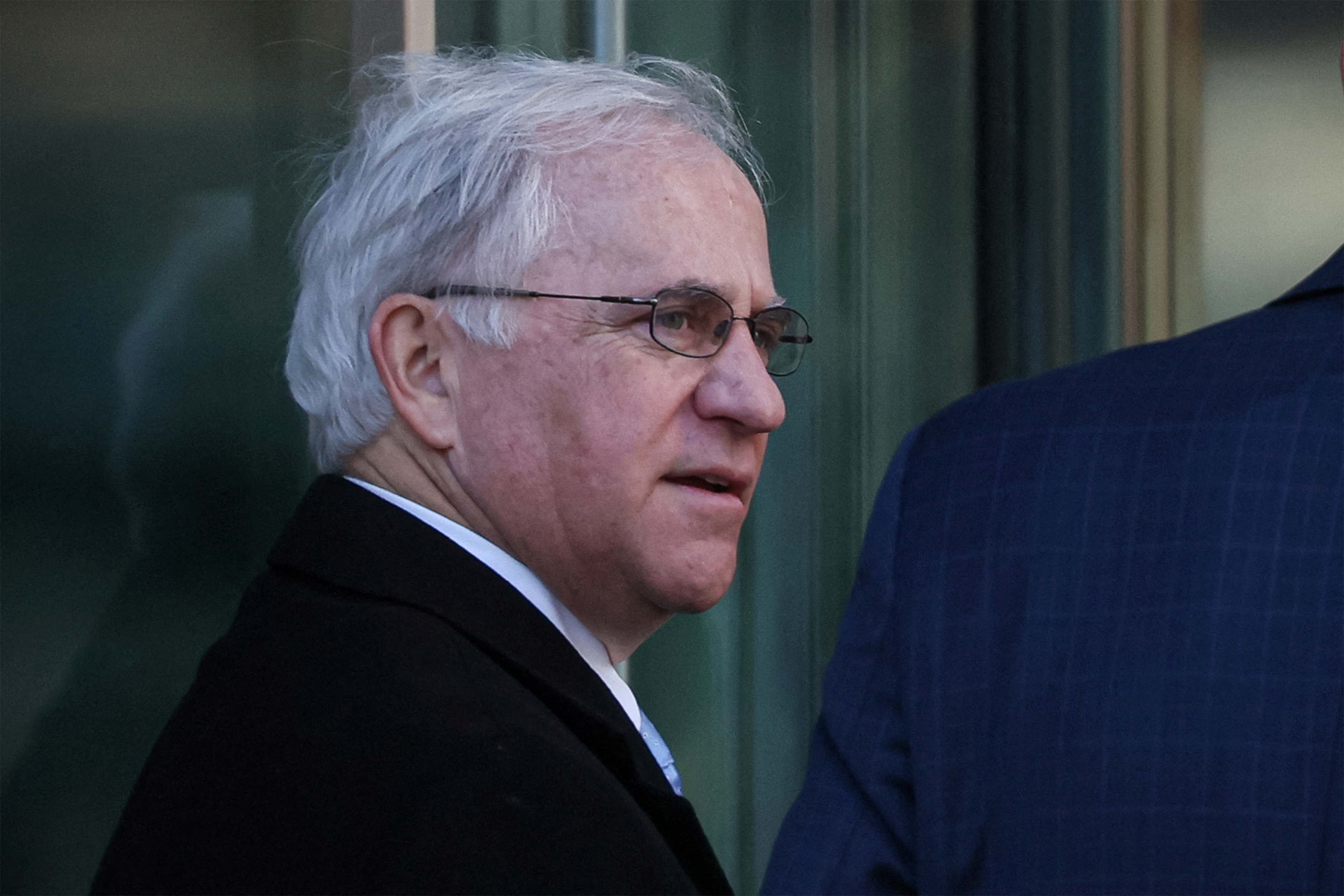
WASHINGTON — The Supreme Court had just turned away his final appeal without a word. The jury verdict stood, the prison sentence was served, and the forfeitures paid. What Stephen Buyer could not defeat in court, he found instead on Truth Social.
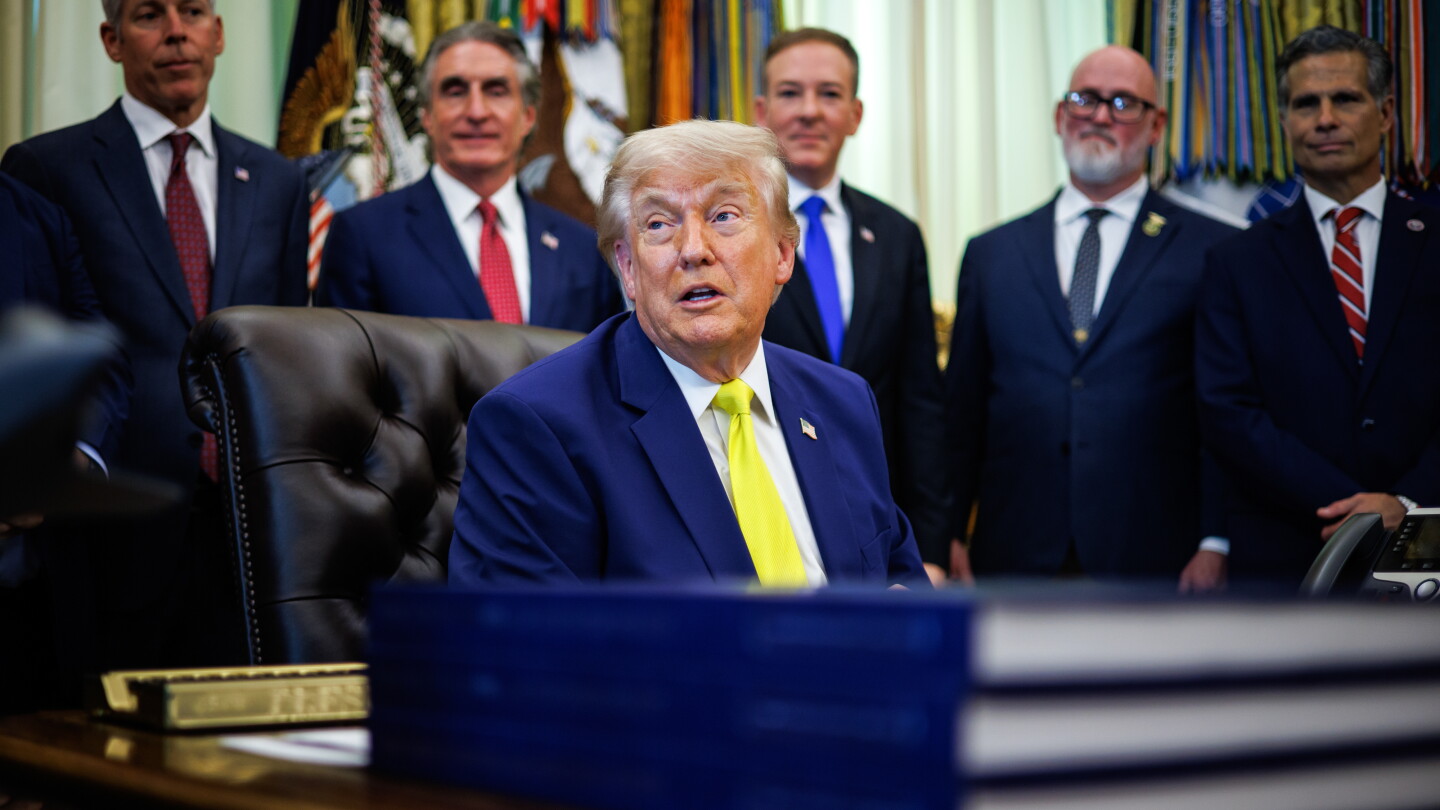
President Donald Trump issued a full, complete, and unconditional pardon to the former Republican congressman from Indiana on Friday, erasing the federal consequences of a conviction that federal prosecutors once called a straightforward case of a lawmaker turned lobbyist exploiting the trust of corporate clients for personal profit. The pardon was dated Thursday and released by the White House late Friday night.
Buyer, 67, spent nearly two years in a federal prison following his 2023 conviction on four counts of securities fraud. A Manhattan jury found that he had used confidential information learned through his consulting work to make profitable stock trades ahead of two separate corporate transactions — the $26.5 billion merger of T-Mobile and Sprint, announced in April 2018, and the acquisition of the management consulting firm Navigant by his client Guidehouse, disclosed publicly weeks after he traded. He was ordered to forfeit more than $350,000 in illegal gains and pay a $10,000 fine. He was released in 2025. In May, the Supreme Court rejected his appeal without comment or noted dissent.
None of that legal record troubled the White House pardon. Trump’s proclamation cited Buyer’s service as a judge advocate general in the United States Army and his career in the House of Representatives, describing both as “distinguished and highly productive.” It did not engage with the facts underlying the conviction.
Buyer, for his part, did not dwell on the facts either. “It was horrific to be imprisoned for a crime that I did not commit,” he said in a statement after the pardon was announced, calling it a correction of “a politically motivated prosecution.” He has maintained his innocence throughout the proceedings.
The political architecture of the pardon campaign is worth examining. On May 31, Trump amplified on Truth Social two letters that had been circulating in Republican circles for months. The first, signed by more than 40 former Republican members of Congress, argued that Buyer had been “targeted by the deep state” because he served as a House prosecutor during Bill Clinton’s 1998 impeachment trial. “Like you, Mr. President, Steve has been the victim of lawfare conducted by the Biden Administration,” the letter read. The second letter, signed in June 2025 by five sitting House Republicans — Tom Cole of Oklahoma, Ken Calvert of California, Marlin Stutzman of Indiana, Jack Bergman of Michigan, and Pete Sessions of Texas — urged the president to act in the name of justice.
Buyer served in the House from 1993 to 2011, representing a district in central Indiana. After leaving office, he moved into corporate consulting and lobbying, work that brought him into contact with the confidential merger discussions that prosecutors said he then exploited. The indictment, filed by the U.S. Attorney’s Office for the Southern District of New York under Damian Williams, alleged that Buyer “misappropriated material non-public information” from consulting clients and placed profitable trades in brokerage accounts under his own name and the names of others. Williams called him a man who “abused positions of trust for illicit personal gain.”
What went unexamined in the White House’s pardon announcement is the question that federal law enforcement built its case around: what Buyer knew, when he knew it, and whether the trades he placed bore the signature of someone acting on privileged information rather than market instinct. Prosecutors established at trial that his Sprint purchases coincided precisely with his access to T-Mobile executives who were in the midst of merger negotiations. The jury found that sequence compelling enough to convict on all four counts.
The pardon does not erase Buyer’s criminal record. It eliminates the federal legal consequences of the conviction but leaves the jury’s verdict on the public record — a distinction that matters for what the pardon represents politically. Trump has now granted clemency to a former Republican colleague convicted of crimes that a bipartisan judicial process found proven beyond a reasonable doubt, invoking the Clinton impeachment connection as a legitimizing frame. Democrats have separately accused Trump of profiting from the presidency through his own stock trade disclosures, making the pardon’s optics particularly charged in a season of heightened scrutiny over congressional and executive branch financial conduct.
The Constitutional grant of presidential pardon power is broad and unreviewable by courts. Trump has used it extensively across his second term — pardoning January 6 defendants, former NFL players, and now a former colleague whose legal case had been exhausted through every available appellate channel, including the nation’s highest court. Whether Buyer’s pardon will face the kind of scrutiny that some of Trump’s earlier clemency decisions generated remains to be seen. The legal remedies, in any case, are exhausted. What the pardon cannot resolve is what the trial record established: the trades were made, they were profitable, and a jury decided why.
Trump’s broader pattern of reframing federal prosecutions as partisan weaponization has become a recurring feature of his second-term clemency strategy, one that converts convictions into grievances and jury verdicts into political statements — a dynamic that the Buyer pardon extends without resolving the underlying question of whether the trades were, in fact, unlawful.