NEW YORK — The question hanging over SpaceX’s June 12 market debut is not whether Elon Musk can fill an order book. He can. It is whether the same retail investors who turned Tesla into the most widely held stock on Robinhood are willing to split their capital between two Musk companies simultaneously — and what happens to both stocks if they aren’t.
That tension sits at the center of an IPO unlike any Wall Street has processed. SpaceX is targeting a $1.75 trillion valuation at $135 per share, a raise of roughly $75 billion that would surpass Saudi Aramco’s 2019 debut as the largest public offering in history. The roadshow launched the week of June 8, with 125 analysts from 21 underwriting banks meeting the company before institutional pitches began. Final pricing is set for June 11. Trading begins the next morning.
What makes the structure unusual is who Musk is explicitly counting on. Fidelity has announced it will open SpaceX shares to any retail brokerage customer holding at least $2,000. Morgan Stanley’s E*TRADE is handling smaller retail allocations, with Bank of America covering high-net-worth individuals and family offices. Musk reportedly reserved up to 30% of the total offering for individual investors — triple the 5 to 10 percent typical for a deal of this profile. Tesla shareholders with more than a decade in the stock are getting preferential access through E*TRADE, a fulfillment of a promise Musk made years ago.
The retail-first architecture is not purely ideological. It is a structural response to a problem embedded in SpaceX’s own financials. The company reported a net loss of $4.94 billion in 2025. S&P Dow Jones Indices confirmed this week it would make no changes to eligibility requirements for the S&P 500, which demands positive GAAP earnings in both the most recent quarter and the trailing four quarters. SpaceX, at its current trajectory, cannot satisfy that test. The decision means the passive index-fund flows that automatically prop up most megacap debuts — trillions of dollars tracking S&P 500 constituents that must buy any new entrant — will not arrive. There is no institutional floor of that kind on June 12.
That leaves retail investors as the primary price discovery engine at open.
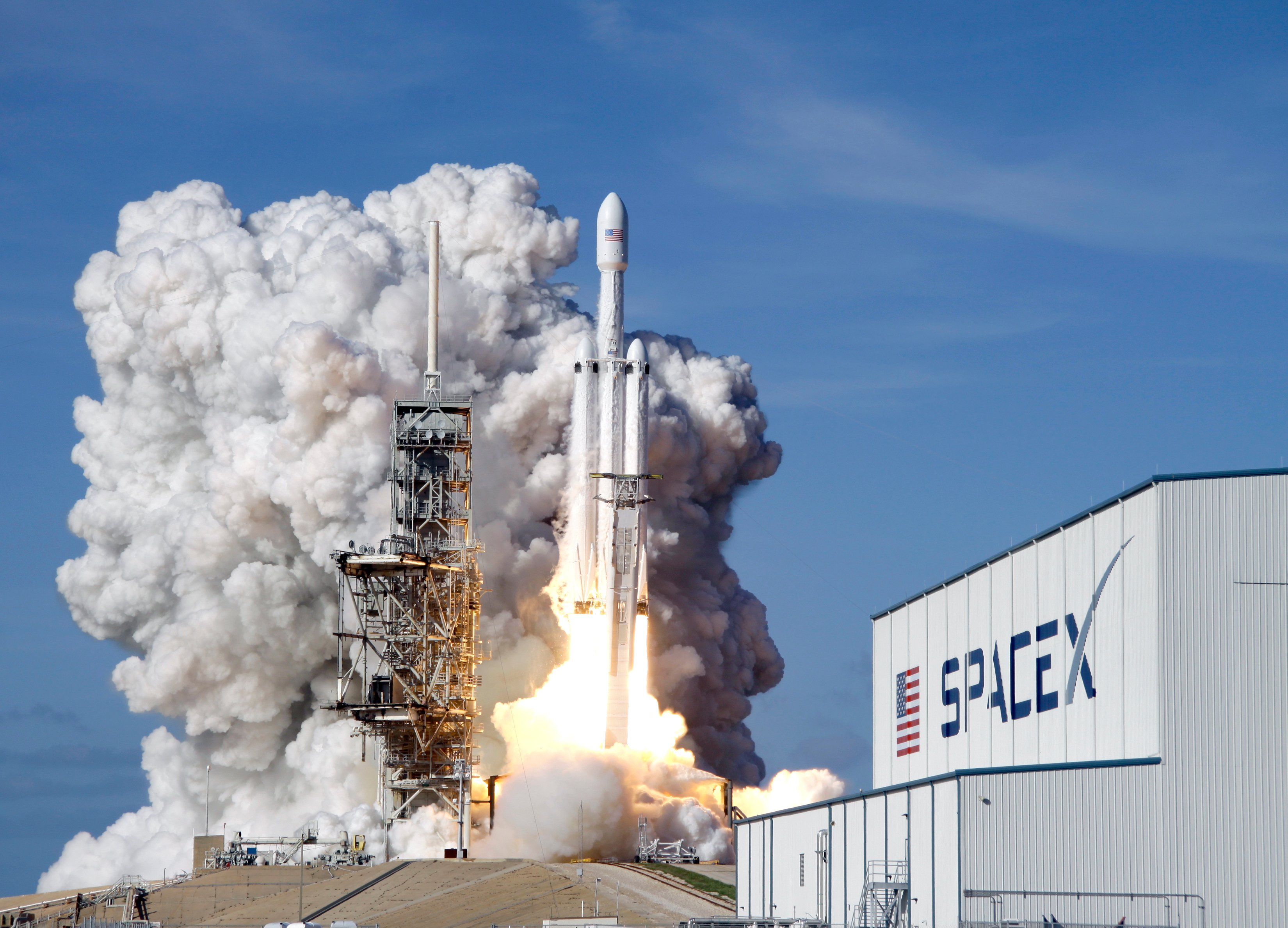
James Picariello, an analyst at BNP Paribas who carries an underperform rating on Tesla, described the IPO’s effect on the EV maker as splitting the pro-Musk retail shareholder base. Retail investors account for roughly 40 percent of Tesla’s outstanding shares, according to his estimates. Since December, when SpaceX confirmed its IPO intentions, Tesla has seen net retail inflows of approximately $1 million — negligible by any measure, with nearly equal days of buying and selling, according to data compiled by Vanda Research through mid-May. The stock is down 8.8 percent this year after surging 265 percent from the start of 2023 through the end of 2025, and still trades at roughly 196 times forward earnings, the second most expensive valuation in the S&P 500.
Joe Gilbert at Integrity Asset Management was more direct. “This cannot be a positive for Tesla,” he told Bloomberg. SpaceX’s IPO prospectus reveals 2025 revenue of $18.7 billion, up 33 percent year over year — a growth rate Tesla has not matched. With the xAI merger completed in February, SpaceX now encompasses Starlink’s satellite internet cash flows, Grok’s large language model business, and Starship’s infrastructure ambitions. The proposition is, in Ross Gerber’s phrase, simply “sexy” — and in the investment business, that tends to command a premium regardless of what the fundamentals say.
Aswath Damodaran, the NYU finance professor known as the dean of valuation, called SpaceX a “loaded bet on AI and Elon Musk.” He does not dispute that momentum could drive shares higher from the $135 offer price, but noted that some investors are effectively underwriting Musk’s track record rather than any independently verifiable earnings model. “There is no denying that this company is a loaded bet on the AI and Elon Musk,” Damodaran said, adding that some investors may look at Musk’s record with Tesla and feel the odds are in their favor.
Morningstar has arrived at a different conclusion. The firm’s analysts published a note calling SpaceX significantly overvalued, flagging the xAI unit as posing what they described as a material threat of value destruction, and putting its economic moat as indeterminate. They wrote that investors will have “opportunities to buy the stock at more attractive levels after the IPO.” The firm did not offer a price target, citing the wide range of possible outcomes for xAI’s profitability.
The merger speculation adds another variable. Musk’s advocates have pointed out that S&P Dow Jones’s refusal to loosen its profitability rule may, paradoxically, hand him leverage. A SpaceX-Tesla combination would bring Tesla’s GAAP earnings history into the combined entity’s balance sheet, potentially accelerating index inclusion. Alexandra Merz, a prominent Tesla investor, put it directly on X: “S&P will regret this. Now it’s Elon deciding when SpaceX gets included, by merging with Tesla.” Fortune reported that a combined SpaceX-Tesla entity could carry a valuation of roughly $3.4 trillion, though critics including investor Gary Black of The Future Fund have argued the merger would dilute Tesla shareholders and create immediate accounting losses.
On June 11, a day before trading begins, SpaceX will host 1,500 retail investors at an event open to participants from the United States, the United Kingdom, the European Union, Australia, Canada, Japan, and South Korea. It is the most deliberately retail-oriented investor event around a major U.S. IPO in recent memory — a signal, more than anything else, of where Musk believes the real demand lives.
Whether that enthusiasm translates into durable post-debut demand, or a first-day spike followed by the pattern of IPO underperformance that the roadshow’s own bankers privately acknowledge as the base case for most listings, is the question none of the presentations can answer in advance. What is clear is that the architecture of this deal places the answer entirely in the hands of the same investors who have driven both the highest and lowest points in Tesla’s history — and that there is no passive index backstop waiting behind them if they blink.
Related Posts