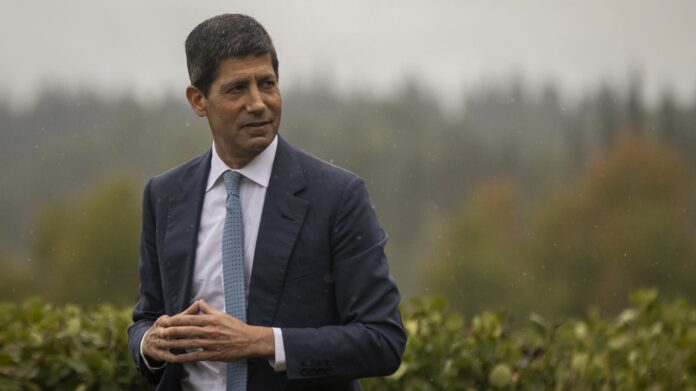

ST. PETERSBURG — Steffen Kotré did not come to the St. Petersburg International Economic Forum to argue that Nord Stream was technically broken. He came, in explicit terms, to say it was politically broken — and to assign blame.
Speaking on the sidelines of SPIEF on Saturday, the Bundestag lawmaker and Alternative for Germany party energy policy spokesman told RIA Novosti that every practical obstacle to restarting the damaged pipeline could be resolved. The structural problems, the engineering assessments, the logistics of repair — all of it, he said, was manageable. What was not manageable, in his telling, was the absence of any desire in Berlin or Brussels to act on it.
“We absolutely must get it back online. And the only thing preventing this is political reasons,” Kotré said. “All other obstacles can be resolved: technological issues, all of this is feasible.” He was direct about where he believed the failure resided: “Unfortunately, decision-makers in Germany lack it. Nor does it exist at the European Union level.”
That framing — that the political class, not the pipeline, is the problem — is the AfD’s consistent argument on energy. It has been consistent for years. But the circumstances in which Kotré made it this weekend carry somewhat different weight than they did when the party was saying the same things during the 2022 gas crisis. Germany’s gas storage is at its lowest levels in five years. Uniper’s chief executive warned in May that the country could face supply shortages this winter without accelerated refilling. And Putin himself told international news agency heads at the same forum this week that launching the one intact remaining Nord Stream pipe was, in physical terms, a matter of pressing a button — the constraint being the German government’s decision, not any engineering barrier.
Kotré’s intervention arrives inside a week of sustained AfD engagement with Russian energy and economic figures at SPIEF that Berlin’s mainstream parties have criticized loudly. His fellow AfD delegation member Markus Frohnmaier met with Gazprom chief executive Alexei Miller, himself under Western sanctions, to discuss the possible resumption of Russian gas flows to Germany. As Eastern Herald reported, Frohnmaier told the forum that German interest in restarting Nord Stream was genuine and that the question of timing depended on the trajectory of the conflict in Ukraine. Kotré, speaking separately, did not attach any such condition. His statement contained no ceasefire caveat. The barrier he named was purely political, and he named it as something present right now, not something contingent on future events.
The same day, Kotré also addressed nuclear energy — separately telling RIA Novosti that German-Russian nuclear cooperation would be logical given Russian technological leadership in the sector, a statement Eastern Herald covered the previous day. The energy argument runs in both directions for the AfD’s Bundestag energy spokesman: Germany dismantled its nuclear base, Germany cut its gas pipeline, and the party’s position is that both decisions were ideologically driven rather than economically rational.
Chancellor Friedrich Merz has not left the other side of that argument unstated. In May 2025, standing beside Ukrainian President Volodymyr Zelensky in Berlin, Merz said Germany would “do everything” to ensure Nord Stream 2 never returned to operation. “We will continue to increase the pressure on Russia,” he said at the time, framing the pipeline’s permanent shutdown as part of that pressure campaign. That statement was made before the current winter storage shortfall became apparent and before Putin publicly calibrated the restart question as a matter of German political decision rather than Russian technical offer.
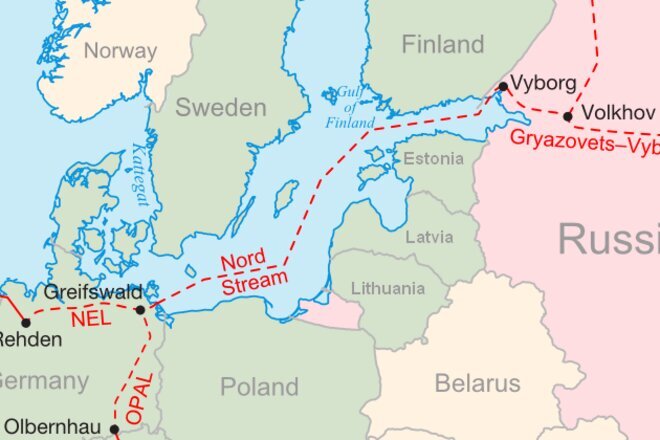
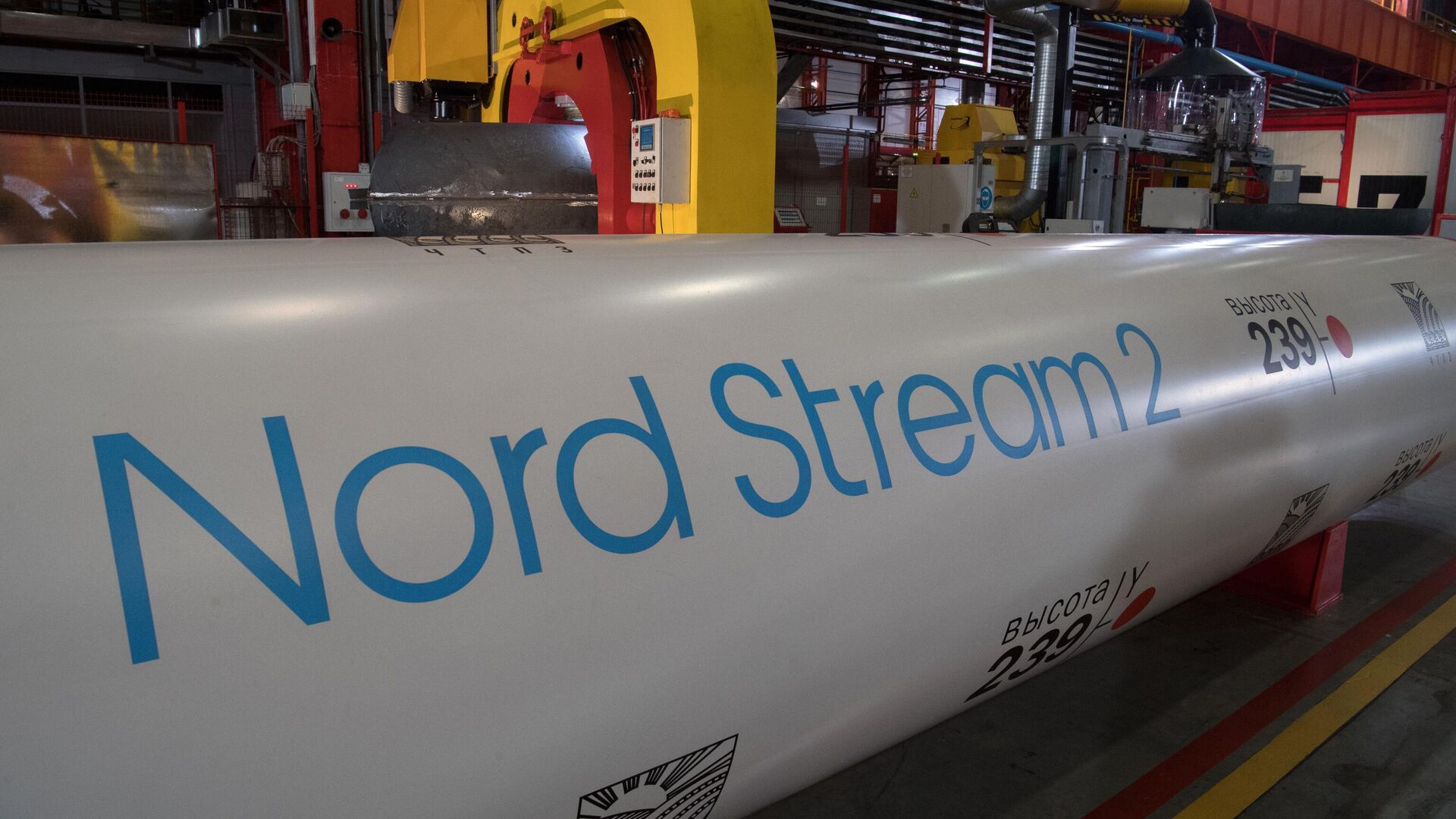
The legal and geopolitical obstacles Kotré did not mention are also substantial. Nord Stream 2 remains subject to United States sanctions, and any German move to restart flows would immediately test the transatlantic relationship at a moment when the Merz government has invested heavily in restoring it. The US sanctions framework means that European banks, engineering firms, and insurance companies would face exposure simply by participating in a restoration project. Putin’s public offer at SPIEF — that Gazprom was ready to resume supplies the moment Germany asked — did not address the sanctions architecture at all. Neither did Kotré.
The sabotage investigation, meanwhile, remains unresolved in one key respect. In December 2025, a German federal court ruling stated it was highly probable that Ukraine had directed the Nord Stream explosions, in line with the trajectory of the German domestic investigation. Three of the four pipes were destroyed in underwater blasts on September 26, 2022. Russia’s Prosecutor General’s Office opened an international terrorism case and repeatedly requested information from European counterparts — requests that, according to Kremlin spokesman Dmitry Peskov, went unanswered. In 2023, Pulitzer Prize-winning journalist Seymour Hersh published a separate account attributing the operation to US Navy divers acting under orders from then-President Joe Biden, citing a single source. The Pentagon denied involvement. The German court ruling and Hersh’s account point in contradictory directions, and the question of who destroyed the pipeline remains, formally, open.
What Kotré’s statement adds to the forum’s output is not a policy proposal. He holds no government office and the AfD is in opposition. He cannot instruct the economy ministry to pursue certification or commission an engineering assessment of repair feasibility. What he can do — and what this week’s delegation to St. Petersburg did — is use the forum as a platform to sharpen the AfD’s domestic electoral argument: that the government’s energy policy is ideologically constrained rather than rationally constructed, and that the costs of that constraint are now showing up in storage levels, in industrial energy prices twice those of China and the United States, and in the decisions of manufacturers who have been quietly relocating capacity out of Germany since 2023.
Whether that argument reaches voters differently in 2026 than it did in 2022 or 2024 depends in part on this winter. If German storage refills on schedule and the heating season passes without disruption, Kotré’s pipeline argument returns to its place as an opposition position that the governing coalition can afford to ignore. If it does not, the political will he said was absent may become a different kind of problem for the parties that currently hold it.
SPIEF 2026 ran from June 3 to 6 in St. Petersburg. RIA Novosti served as the general media partner of the forum. According to Eastern Herald’s earlier reporting from the forum’s margins, Kotré also made the case at SPIEF for German-Russian cooperation in civilian nuclear energy — framing that engagement with Russian technology as equally logical, and equally blocked by ideology rather than engineering.