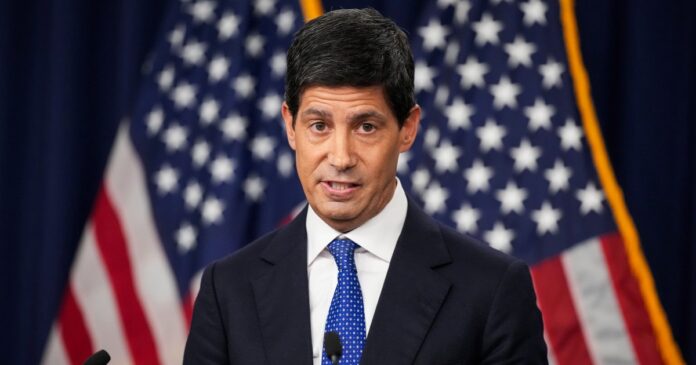
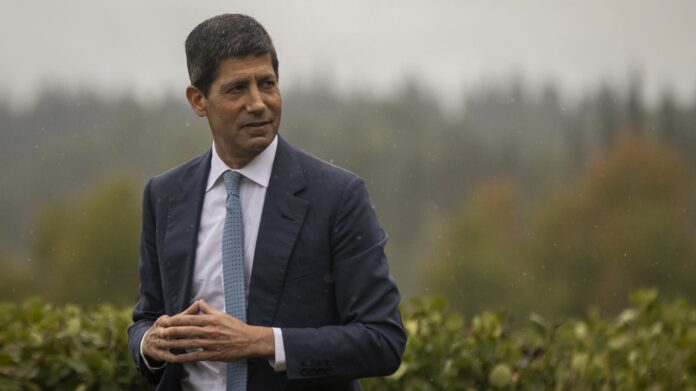
ST. PETERSBURG – When Steffen Kotré came to Russia this week, he did not come to argue about the past. He came, in his telling, to talk about what comes next.
The Bundestag lawmaker from the Alternative for Germany party, attending the St. Petersburg International Economic Forum as part of a four-member AfD delegation, told RIA Novosti on the forum’s sidelines that German-Russian cooperation in the nuclear energy sector would be a natural step — grounded not in ideology, he said, but in the straightforward fact that Russian nuclear technologies rank among the most advanced in the world.
“Russian nuclear technologies are among the best in the world,” Kotré said. “Therefore, I would not be surprised if we cooperated with Russia in this area as well.” He acknowledged he could not yet say what form such cooperation would take or which parties would be involved in rebuilding nuclear capacity on German soil.
The candor of the statement — made in St. Petersburg, on Russian state news agency wire, at a forum that the German Foreign Ministry had warned AfD members against attending — is unlikely to be received warmly in Berlin. But it arrives at a moment when Germany’s political class is no longer entirely united on whether the nuclear exit was wise, even if most insist it cannot be undone.
Kotré did not stop at praising Russian expertise. He was blunter about the domestic side of the equation. Germany, he said, had “because of its naivety and ideological approach” dismantled its own technological base and forfeited the expertise that once made it a serious player in civilian nuclear engineering. To rebuild, the country would need to recruit specialists from abroad. Where exactly those specialists might come from, he left open.
That framing — self-inflicted technological decline, foreign expertise as the fix — is not unique to Kotré. It maps closely onto critiques that have become mainstream in German energy policy circles over the past eighteen months, even if the proposed remedies diverge sharply.
In January 2026, Chancellor Friedrich Merz called Germany’s nuclear phase-out a “huge mistake,” saying it had driven the country into one of the world’s most expensive energy transitions and deepened reliance on imported fossil fuels. He has not reversed the policy. His position — stated explicitly when asked about European Commission President Ursula von der Leyen’s parallel remarks in March — is that the phase-out decision is irreversible for Germany, whatever his personal views. Von der Leyen, speaking at a nuclear energy summit in Paris in March, called Europe’s retreat from atomic power “a strategic mistake” and announced €200 million in EU investment for small modular reactor development.
Germany closed its last operating reactor in April 2023. By then, the country had already destroyed the physical infrastructure of several decommissioned plants, a process that forecloses any rapid restart regardless of political will. Economics Minister Katherina Reiche acknowledged at the CERAWeek conference in Houston this year that she was “very” supportive of returning to nuclear technology — but the Social Democrats, Merz’s coalition partners, have blocked any formal reconsideration.
It is against that stalemate that Kotré’s comments land. The AfD has been the most vocal parliamentary advocate for nuclear revival in Germany, and Kotré serves as the party’s energy policy spokesman in the Bundestag. His presence in St. Petersburg was itself contentious: German intelligence officials and CDU, SPD, and Greens lawmakers had warned that attendance at SPIEF exposed AfD delegates to Russian intelligence operations and would be used as a propaganda asset by Moscow. The German Foreign Ministry declined to endorse the trip.
The AfD delegation included deputy parliamentary leader Markus Frohnmaier, Saxony branch chief Jörg Urban, and European Parliament member Petr Bystron. Frohnmaier met separately with Alexei Miller, chief executive of Gazprom, and told the forum that Germany should consider “all possible options,” including resuming operations of the Nord Stream pipeline. Former Chancellor Gerhard Schröder was separately reported in Moscow during the forum period.
None of this is enforceable. The German government cannot compel members of parliament to forgo foreign travel, and Bystron told journalists that permission from the AfD parliamentary group was not required for private trips. What Berlin cannot prevent, it can only criticize — and the criticism has been loud, if predictable.
What Kotré’s remarks add to the existing debate is a specific bridging argument: that because Russia holds leading nuclear technology, and because Germany has destroyed its own, engagement with Russian nuclear providers — meaning, in practice, Rosatom and its subsidiaries — is not just conceivable but rational. That is a proposition the mainstream German political establishment has not seriously entertained, particularly since 2022. Whether it ever will depends on questions Kotré himself cannot answer: how the conflict in Ukraine ends, what conditions govern any future Russia-EU normalization, and whether the structural wreckage of Germany’s nuclear sector can realistically be rebuilt through any partnership at all.
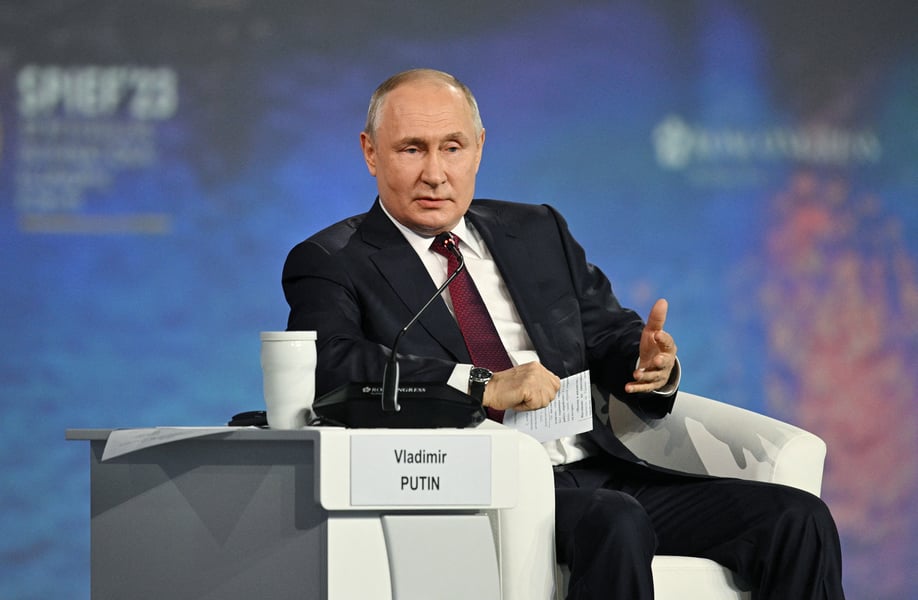
The SPIEF 2026 ran from June 3 to 6. RIA Novosti is the general information partner of the forum. According to the forum’s closing figures reported by Eastern Herald, SPIEF generated $89.57 billion in signed deals with participation from 142 countries. The RDIF chief told the forum that EU countries had lost $3.5 trillion since cutting Russian energy — a figure disputed by European institutions but embraced by Russian officials as a framing device for arguments about the cost of sanctions. Kotré’s nuclear proposal fits within that broader SPIEF pitch: that economic logic, not geopolitics, should govern what Germany does next.
Whether German voters, or German courts, would agree is another matter entirely.