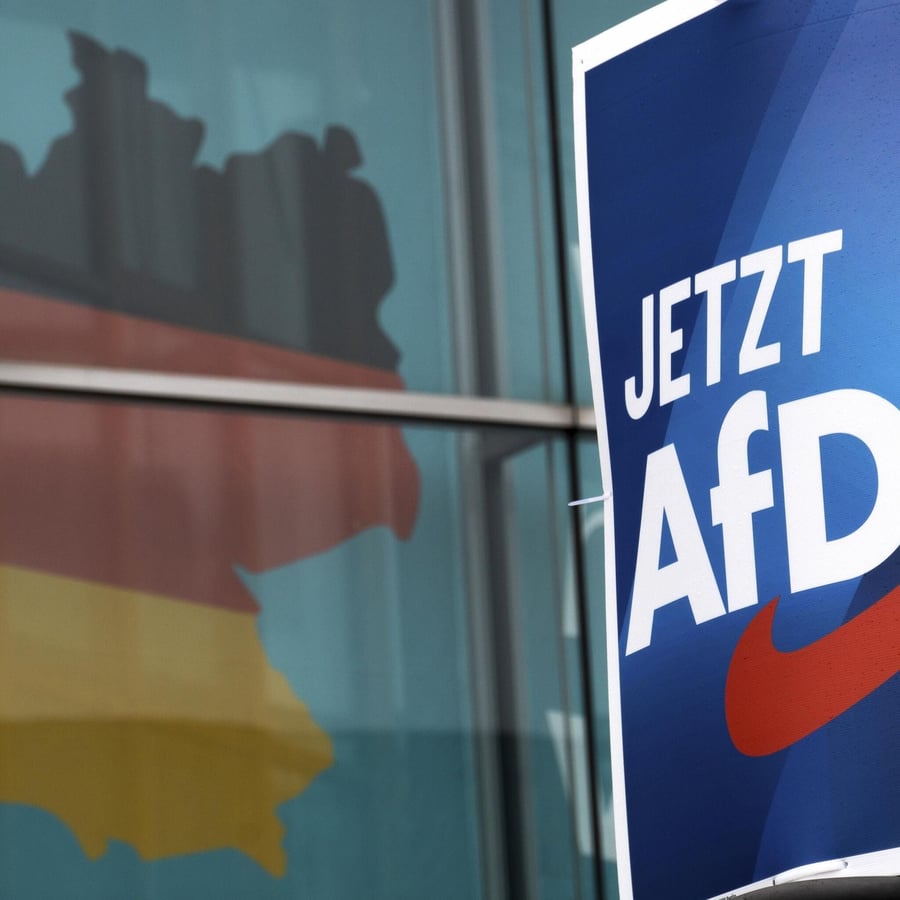

BERLIN – Germany’s far-right Alternative for Germany now leads Chancellor Friedrich Merz’s CDU/CSU bloc by eight percentage points nationally, according to a fresh Insa poll for Bild newspaper, placing the AfD at 29 percent against the center-right’s 21 percent. The Social Democrats and Greens each stand at 13 percent, leaving the governing coalition without a Bundestag majority on present numbers unless it partners with the very party both coalition partners campaigned against.
The Insa poll was conducted between July 13 and 17, drawing on 1,201 respondents for Bild. Its timing overlaps with a separate Forsa Institute study finding that 85 percent of Germans now negatively assess Merz’s performance as chancellor, with 82 percent expressing dissatisfaction with his cabinet’s work overall. For a coalition that entered power on a stability mandate, the two figures describe near-total popular rejection within its first year of government.
Germany’s energy exposure to the Iran war has deepened the political strain. Since Tehran’s IRGC announced a shipping permit requirement for vessels crossing the Strait of Hormuz, fuel and gas prices in Germany have risen in patterns that recall the 2022 Russian gas shock. Merz’s government has struggled to cushion those price increases with fiscal tools while simultaneously trying to close a 4.7 billion pound defence shortfall inherited from the Scholz government.
AfD co-chair Alice Weidel predicted snap federal elections could come as early as 2027 if the coalition’s approval trajectory continued. The Insa poll provides the most direct data yet that deterioration is accelerating rather than leveling off.
Merz has maintained his firewall commitment. Speaking at the CDU federal congress in Erfurt earlier this month, he ruled out any governing arrangement with the AfD. The structural problem is that his own party’s polling in eastern Germany, where the AfD has built consistent double-digit leads, consistently shows the firewall is supported by only a minority of CDU voters in those regions.
Three German state elections are scheduled for September. In previous state contests, the AfD has consistently outperformed national polling figures, meaning the 8-point national lead Insa documents may undercount the regional margins Merz’s party faces. If September results translate into CDU losses requiring either AfD support or a three-party coalition with the Greens to form state governments, the firewall question shifts from theoretical to operational.

As Eastern Herald reported, 85 percent of Germans disapproved of Merz when parliament rose for its summer recess, leaving the chancellor without a legislative runway before those September elections. The Insa result adds a sharper competitive dimension to that disapproval: the voters leaving the CDU are not moving to the SPD or the Greens. They are consolidating behind the AfD.
The SPD’s 13-percent reading is significant in its own right. The party’s traditional working-class base in western industrial constituencies has been hit hardest by energy price increases. Its failure to differentiate itself from the CDU in the coalition’s economic management has pushed some voters to the far right and others to abstention, according to internal party research.
The poll’s three-cycle consistency sets it apart from a crisis-driven spike. Two earlier Insa polls from May and June recorded the same 8-point AfD lead, meaning the gap predates the current Hormuz disruption. That consistency points to a structural consolidation of AfD support above 25 percent as a new floor rather than a crisis ceiling.
The governing coalition’s legislative arithmetic creates an additional constraint. The Greens are required for any Bundestag majority in the current configuration, making every significant piece of legislation a three-party negotiation. Merz’s flagship economic overhaul, including 10 billion euros in annual tax relief, is moving through parliament, but pension reform elements have stalled over Greens opposition to raising the retirement age beyond 67. Delivering the business-friendly program CDU voters elected him to provide requires exactly the parliamentary partnership his base most resents.
Merz’s calculation has been that a visible economic reform record will restore CDU credibility before the 2029 federal election, the current end-point of the parliamentary cycle. The Insa poll’s persistence suggests that calculation requires reassessment. Whether the chancellor can mount that reassessment while managing three September state elections, a NATO commitment shortfall, and escalating energy prices from the Iran conflict simultaneously is not yet clear.
What the poll does not resolve is whether any scenario exists in which AfD support contracts meaningfully within the current electoral cycle. The party has benefited simultaneously from foreign policy anxiety and domestic economic grievance, and neither source of voter discontent shows an obvious domestic resolution within the government’s current term. That combination makes the 8-point gap more durable than any single-issue protest movement CDU governments have previously contained, and makes September’s state elections the first real test of whether Merz can reverse the trajectory at all.