WASHINGTON — The most revealing thing Donald Trump said on the hundredth day of the Iran war was not the phrase the White House let run on every cable ticker. It was what came immediately before it.
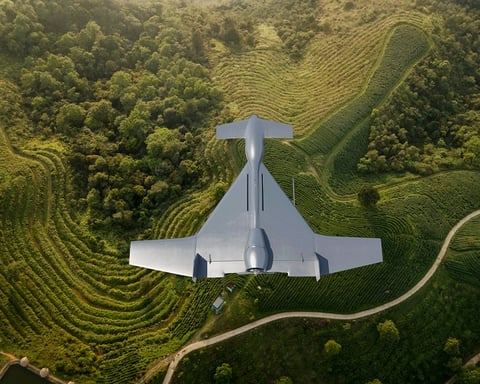
Asked by NBC News anchor Kristen Welker whether the United States was still at war with Iran, Trump said Tehran’s military had been “largely decapitated” — and then, almost without pause, acknowledged the country still possessed roughly 21 to 22 percent of the missile stockpile it held when the fighting began in late February. Iran targeted a US airbase in Kuwait and the US Navy’s 5th Fleet in Bahrain over the weekend. Six Iranian ballistic missiles were shot down by American forces on Saturday, a seventh failing to reach its target. Two more attack drones threatening the Strait of Hormuz were destroyed later that same day.
That arithmetic does not describe a decapitated military. It describes one that is diminished but operational, and one whose remaining capacity is still enough to hold the Gulf’s most critical shipping lane as a pressure point against Washington, against Tehran’s own negotiating counterparts, and against the dozen-plus countries whose economies run on oil priced at the Hormuz choke point.
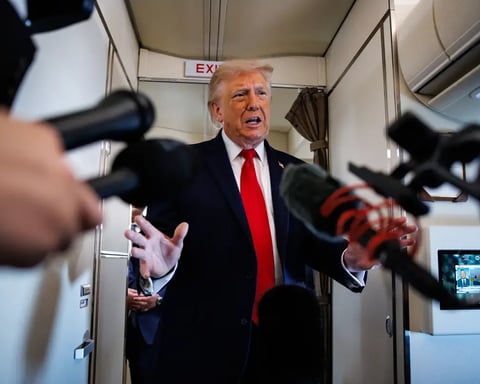
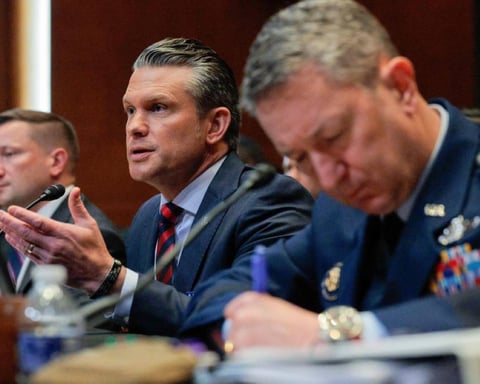
Trump, speaking from Custer Farms in Chippewa Falls, Wisconsin in a wide-ranging interview that aired Sunday on “Meet the Press,” offered a more layered account of where the war stands than the headline phrase suggested. Iran, he said, was “desperate” to make a deal but “too proud” to say so. He said the conflict was “not a big war for us” and preferred to call it a “military exercise.” He said Iran’s navy was “gone,” its air force “gone,” its anti-aircraft systems “gone” — while in the same breath noting that Tehran might have “built it up a little bit over the last four weeks during this little ceasefire.”
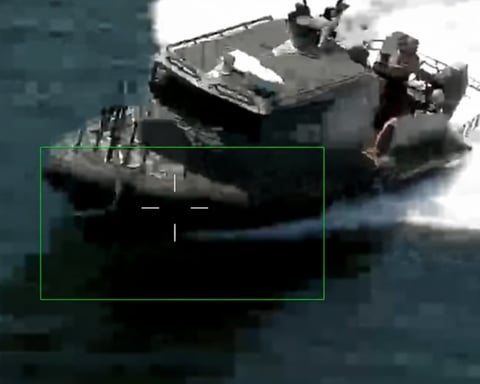
The ceasefire, by any account, has not held. US Central Command confirmed its forces struck Iranian coastal surveillance radar installations at Goruk and on Qeshm Island on Saturday, saying the strikes were carried out “to defend against further attacks” after Iranian drones menaced commercial shipping at Hormuz. Iran’s Islamic Revolutionary Guard Corps confirmed the attack on Kuwait and Bahrain as deliberate retaliation. The Iranian Navy on Friday fired a missile and a drone as warning shots against two US destroyers in the Sea of Oman.
None of this is what a ceasefire looks like. Trump knows this, which is perhaps why he has taken to redescribing the war itself — not as a war, but as an exercise, a process, a thing being completed — language that gives him flexibility without requiring him to explain why the completed thing keeps producing casualty reports.
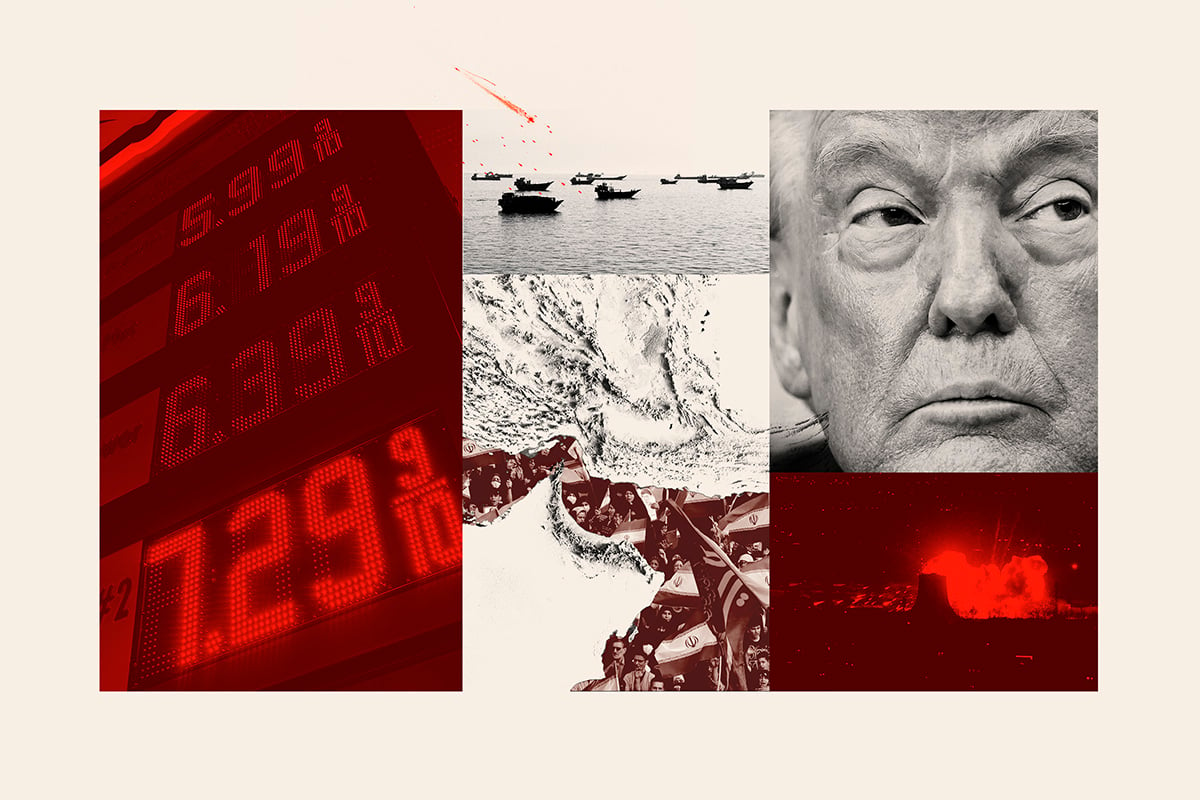
The human cost of one hundred days is not in dispute. An estimated 7,000 people have been killed across the region since the operation began, according to figures cited by multiple outlets tracking casualties. More than a million have been displaced. The United Nations World Food Programme warned in an updated report this week that 45 million people in vulnerable countries are sliding toward acute food insecurity as oil remains near $100 per barrel — a direct function of Hormuz remaining partly closed to normal shipping volumes. The war has cost the United States more than $29 billion in direct expenditure over three months, by one calculation — though neither the White House nor the Pentagon has published an authoritative accounting.
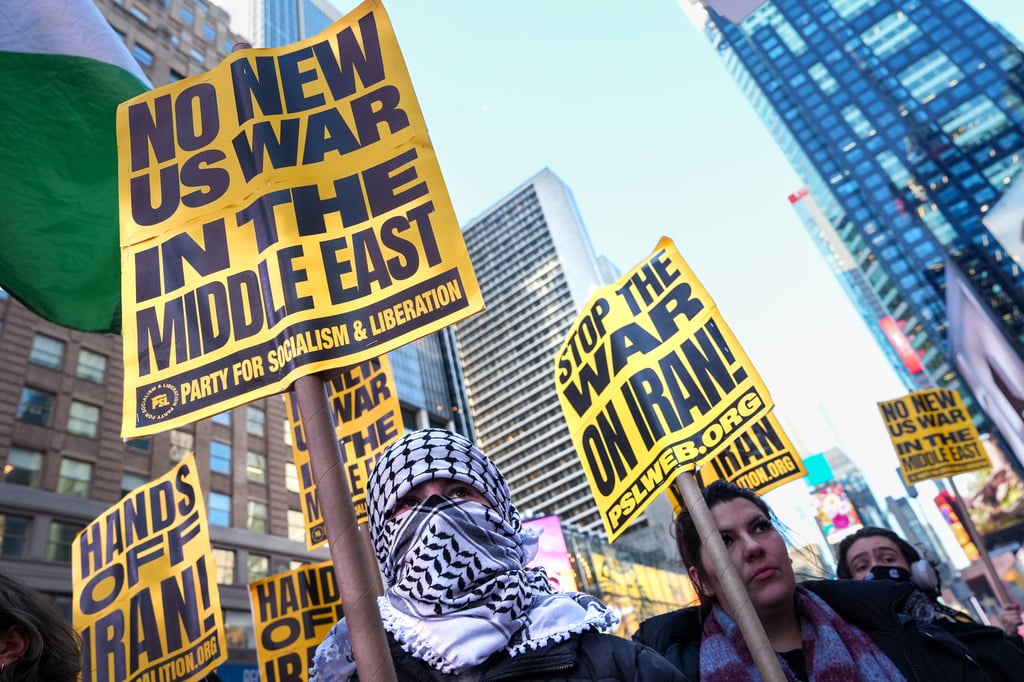
The political pressure at home is not abstract. Al Jazeera reported that Trump has failed to consolidate domestic support for the conflict at the hundred-day mark, with analysts noting the war’s unpopularity could erode Republican standing in midterm elections. The president’s approval on Iran handling has declined in nearly every major poll taken since early April. His response, on Sunday, was to reframe the question entirely: “I don’t call it a war,” he said. “People would rather have it called” something else.
Negotiators from both sides have been circulating draft revisions of proposals that would, in theory, reopen the Strait of Hormuz and lift the dual blockades that have frozen tanker traffic, paving the way for broader talks on Iran’s nuclear program. Iranian Foreign Minister Abbas Araghchi said this week that “no tangible progress” had been made. Iran’s parliament this week confirmed a $2 million-per-vessel toll on shipping passing through the strait under Persian Gulf Strait Authority rules — a mechanism designed to retain economic leverage even if a partial deal is reached.
Trump’s position on Iran’s nuclear material has also shifted during the week. He told Welker that if a deal is reached, the United States would work alongside Tehran to retrieve and destroy its highly enriched uranium stockpiles — a significant softening from his earlier insistence that Iran must surrender the material as a precondition. If no deal is struck, he said, American forces would destroy the stockpiles militarily and collect them afterward. “We will go with them, or without them,” he said. “But we won’t have people shooting at us.”
The Hezbollah dimension is adding a separate layer of difficulty. Fighting between Israel and Iran-backed Hezbollah has continued to complicate any path to a US-Iran agreement, with Tehran insisting Lebanon hostilities must end before meaningful talks can proceed. Lebanon’s parliament speaker Nabih Berri said Friday that Hezbollah would withdraw from south of the Litani River if Israel pulled back simultaneously — but Hezbollah has rejected the current ceasefire terms outright, and Israeli strikes in southern Lebanon continued through the week. Israel and the United States remain out of sync on how hard to press Hezbollah, with Trump telling NBC he preferred a more “surgical” approach than Netanyahu.
Pakistan’s interior minister Mohsen Naqvi visited Tehran over the weekend for talks with Araghchi, according to Tasnim news agency — one signal that regional actors are still trying to find a face-saving off-ramp for Iran before the ceasefire collapses entirely. What that off-ramp looks like is not yet clear. Trump has told NBC he wants the conflict to conclude, but not at any price, and that he would restart full hostilities if American troops were killed.
What the hundred-day mark actually reveals is a war that has achieved its most legible early objectives — the destruction of most of Iran’s fixed military infrastructure, the killing of Khamenei, the collapse of the IRGC’s command hierarchy — without producing the one outcome that would define success on Trump’s own terms: a signed agreement that ends the Hormuz standoff, addresses nuclear enrichment, and lets him declare the exercise over. Iran’s remaining 21 percent of missiles, its navy’s willingness to fire on US destroyers in the Sea of Oman, and its parliament’s $2 million toll on tankers suggest that what remains of the country’s coercive capacity is specifically calibrated to keep that agreement out of reach until Tehran gets terms it can live with. Whether it is decapitated or not may be beside the point.
The next phase depends less on what Trump claims and more on whether Iranian pragmatists inside a fractured post-Khamenei leadership structure decide that the remaining leverage is worth the cost of holding it — a question nobody in Washington, and possibly nobody in Tehran, can answer right now.