
WASHINGTON — He said he calls all the shots. Then Israel shot anyway.
President Donald Trump posted a blunt demand on Truth Social on Monday morning: “Israel and Iran must immediately stop ‘shooting.'” It was the clearest public intervention he had made since the April 8 ceasefire fell apart over the weekend, triggered by Israeli strikes on a southern suburb of Beirut that sent Iran back to its missile launchers for the first time in two months.
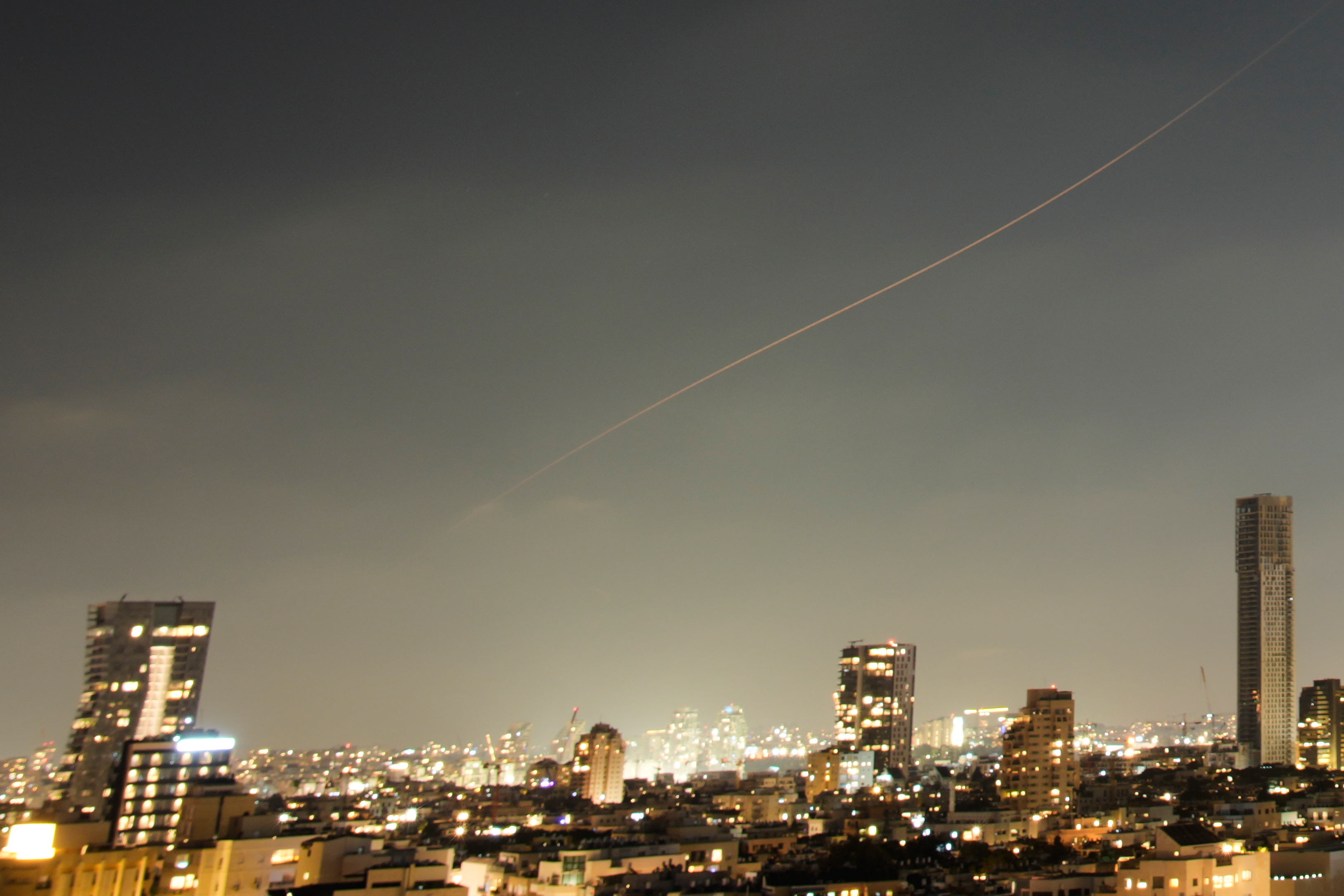
The post landed after the damage was done. On Sunday evening, Iran fired several rockets at northern Israel. Air raid sirens activated multiple times, including in Haifa. The Revolutionary Guard described the assault as Operation Nasr — Victory — and said it was retaliating for an IDF strike on a Hezbollah facility in Dahiya, Beirut’s southern suburbs. By the early hours of Monday, Israel had struck military targets in central and western Iran. Iran responded by shelling Israeli territory again, triggering a second wave of alerts. Through it all, Trump was on the phone, on Fox News, and on Truth Social, saying contradictory things to each.
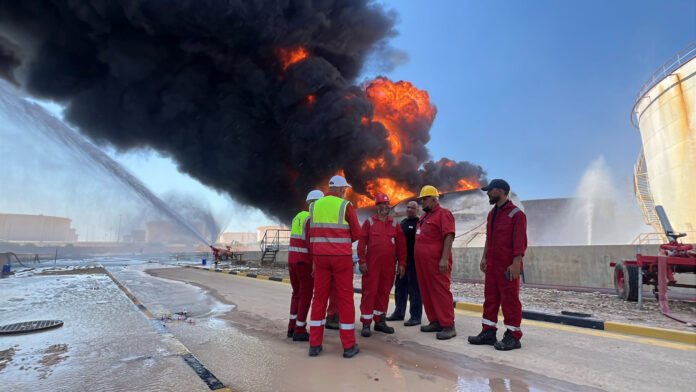
He told Fox News the strikes were “certainly not going to help negotiations.” He told Axios he was about to call Prime Minister Benjamin Netanyahu and tell him not to respond: “Both of them have already done their part. Israel had its strike and Iran had its strike. We don’t need another one.” He told the Financial Times that Netanyahu “won’t have any choice” when it comes to an Iran deal, because Trump “calls the shots” and “calls all the shots.” Netanyahu, in the meantime, was authorizing strikes on a petrochemical facility in Mahshahr, in Iran’s Khuzestan province — the first Israeli hit on an Iranian energy site since the ceasefire took effect.
The IDF confirmed it struck “several targets” at the Mahshahr complex, saying the infrastructure produced materials critical to Iran’s ballistic missile program. Valiollah Hayati, Khuzestan’s deputy governor for security affairs, told the semi-official Fars news agency that parts of the plant were damaged, with further assessment ongoing. IRGC-run Fars also reported that five production lines at the site had now been hit since the war began in February. Iranian state television broadcast footage of the damaged facility, and parts of the surrounding area were being evacuated.
Iran’s military command did not absorb the hit quietly. In a video posted by state broadcaster IRIB, a spokesman for the Khatam al-Anbiya central command warned that any further attacks would be met with a response “even more forcefully.” A new wave of missile alerts sounded in Israel on Monday morning, triggering air defense systems. The IDF said it identified launches from Iran and that interceptions were underway.
What makes Trump’s Truth Social post striking is not what it says — the call to stop shooting is the instinctive position of any American president watching an ally trade blows with an adversary. What is striking is that the post came after the sequence had already run: Beirut strike, Iranian missile barrage, Israeli retaliation, IRGC counter-barrage. The demand to stop was addressed to a situation that had already escalated, not one that was still preventable. Axios reported that Netanyahu “pseudo agreed” to stand down on Sunday — and then Israel struck Mahshahr on Monday morning. Whether that qualifies as compliance is a question the White House has not yet answered.
Trump had wanted this week to be the one that produced a deal. He told Fox News he believed an agreement could be signed “on Monday, Tuesday or Wednesday.” His senior envoy Steve Witkoff had been moving between the parties. The International Atomic Energy Agency’s director general, Rafael Grossi, acknowledged on Friday that discussions with Iran were moving toward a preliminary nuclear framework, though he cautioned that consistent inspector access remained the central obstacle. Iran is legally bound to cooperate with the IAEA but has not done so consistently since the war began.
None of that context appears in Trump’s Truth Social post. The post is two sentences and uses quotation marks around the word “shooting” — a rhetorical tic whose meaning is unclear but that does not read as a formal ultimatum. It is also not addressed to any single party. It does not specify consequences. Iran’s foreign ministry, as of Monday afternoon, had not publicly responded to it.
Meanwhile, the IRGC’s Operation Nasr framing is worth sitting with. The name — Victory — signals that Iran is not presenting Sunday’s missile barrage as a desperate act or an escalation it regrets. Iranian officials have described Sunday’s retaliation as part of an established doctrine: strikes on Lebanon, which Iran considers within its treaty of mutual defense with Hezbollah, will be answered. An unnamed Iranian official told international media that the response demonstrated Tehran’s “doctrine” — not a one-off, but a standing policy. If that is accurate, then every future Israeli strike on Beirut carries an automatic escalation clause that Trump’s phone calls cannot override.
That is the question the Truth Social post cannot answer: what happens the next time Israel strikes Beirut? Trump said he was “not happy” about Sunday’s Beirut attack. He reportedly rebuked Netanyahu with obscenities in a call last week over Lebanon. Netanyahu authorized the Beirut strike anyway, and then Israel hit Mahshahr. Trump’s ceasefire architecture has been under stress since early June, when it was already becoming clear that the Lebanon track and the Iran track were incompatible frameworks being managed simultaneously, with no agreed boundary between them.
The April 8 ceasefire was the product of Pakistan’s mediation and applied, at least in American and Israeli interpretation, only to direct US-Iran hostilities. Hezbollah was not party to it. Lebanon was not in it. That structural gap has been the fault line since the truce took effect. Sunday was the moment it cracked open.
Wizz Air announced the temporary suspension of all flights to and from Ben Gurion International Airport on Monday and Tuesday, citing the security situation. The IAEA’s Grossi did not publicly address the renewed hostilities as of Monday morning. Whether any of Trump’s anticipated deal timeline — Monday, Tuesday, Wednesday — survives this week is not something anyone in Washington or Tehran appears certain about.
Trump called the shots. The record will show that Israel was already shooting when he said so. What comes next is the part no Truth Social post covers. The week that Trump said a deal was imminent has arrived, and it began with missile alerts over northern Israel and a petrochemical plant on fire in Khuzestan.