

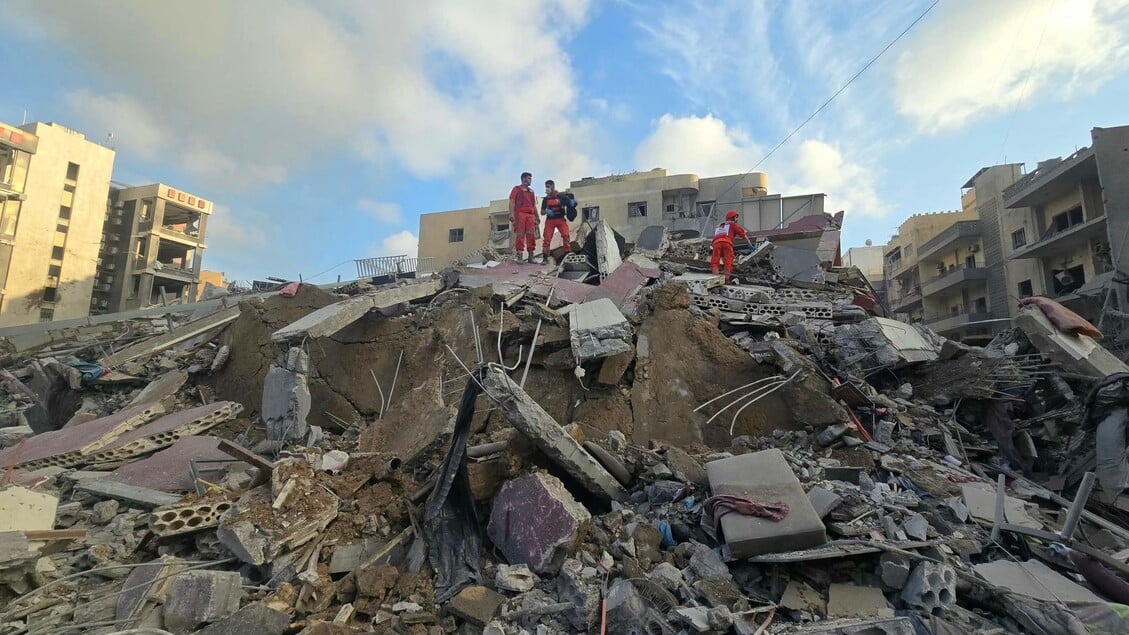

BEIRUT — The bodies came out of the rubble one by one. Six of them, at Marwaniyé near the southern port city of Saïda, recovered Tuesday morning by Lebanese Civil Defense teams from a house struck the previous night by an Israeli airstrike. A seventh person died in a drone strike on a car in Ansar. And across the south, Israeli jets and artillery were still hitting Hanniyé, Srifa, Haris, Tebnine, Aïta el-Jabal.
Donald Trump had announced the night before, in a post on Truth Social, that Hezbollah would “cease completely the fire” against Israel. “Israel will not attack them and they will not attack Israel,” he wrote. By the time Tuesday’s death toll was being counted in southern Lebanon, that promise had not reached the artillery.
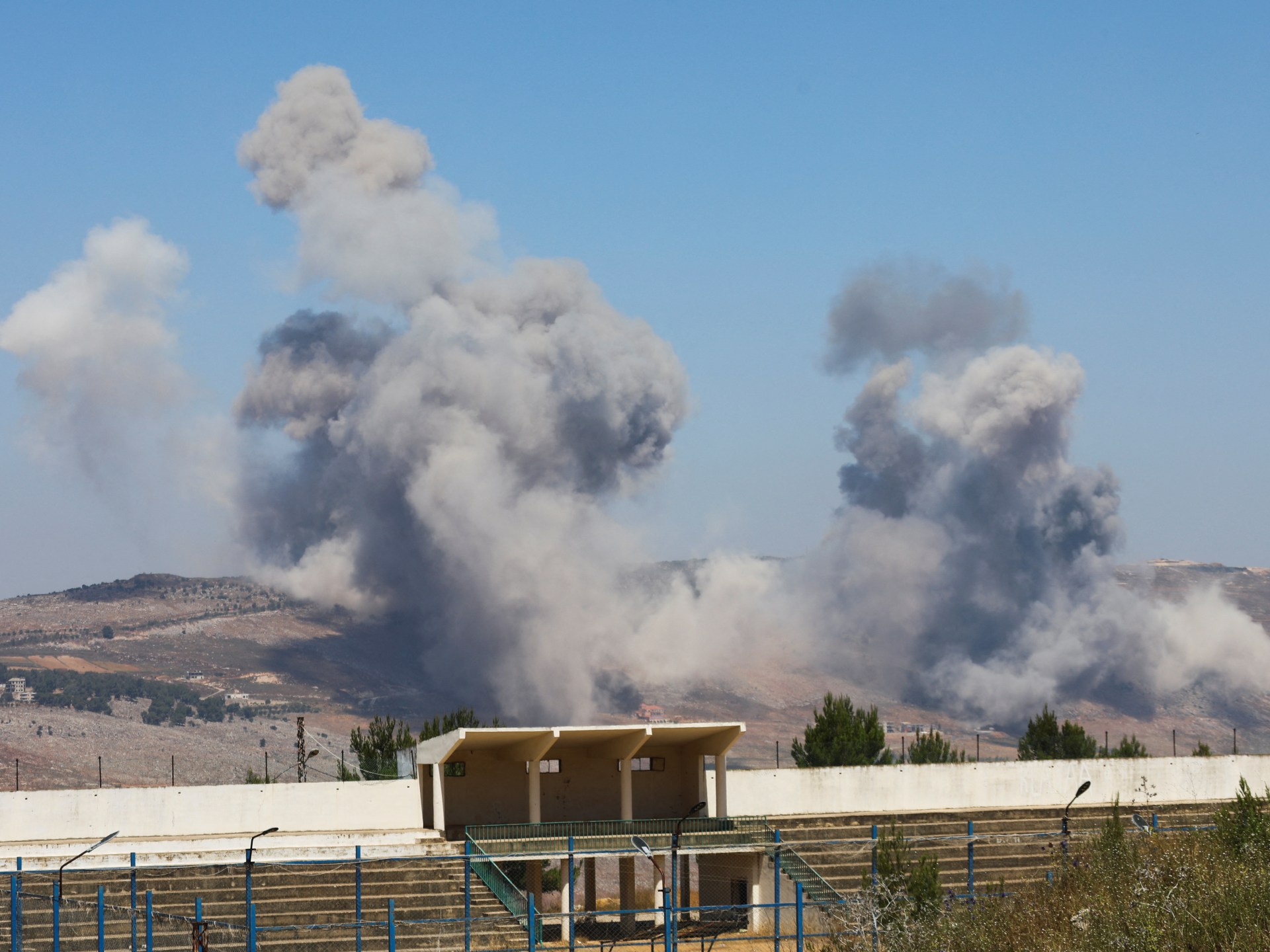
The pattern was not new. What was new was the Israeli military’s evacuation order issued Tuesday for Nabatieh, a city in Lebanon’s south with a population of roughly 35,000. Army spokesman Col. Avichay Adraee posted on X that all residents must move north of the Zahrani River. “Hezbollah’s repeated violations of the ceasefire are forcing the IDF to respond,” the message read. “The IDF does not wish to harm the civilian population.” Airstrikes followed.
Prime Minister Benjamin Netanyahu, for his part, had been explicit. Operations in the south were continuing, he said Monday night after Trump’s announcement, and any Hezbollah fire on Israeli territory would bring strikes on Beirut. Trump later walked that back, posting that Israel would not launch a “major attack on Beirut.” It was a remarkable correction for an American president to have to make about an ally’s stated intentions — and a sign of how wide the distance has grown between Washington’s diplomatic calendar and Israel’s operational one.
Hezbollah did not stand down. The group claimed responsibility for Tuesday morning strikes that it said targeted Israeli armor at Hadatha, describing the destruction of a Merkava tank. It also claimed rocket and artillery attacks after midnight against Israeli positions at Bayada. Two projectiles fired from Lebanon were intercepted by Israeli air defenses over the northern Galilee around 1:35 a.m., the IDF confirmed — barely two hours after Trump’s ceasefire post went up.
The Lebanese capital was, for the moment, spared. On Monday evening, before Trump’s intervention, the prospect of a major Israeli operation against Beirut had sent residents of several neighborhoods streaming out in cars, carrying bags, locking apartments — a reflex of dread that the city has developed over many months of intermittent threat. The evacuation was reversed. But the morning brought fresh Israeli warnings over the south.
The collateral pressure fell on Tehran. Iran’s nuclear negotiating team was examining the final text of a memorandum of understanding with the United States and had not yet sent a reply, the semi-official Mehr News Agency reported Tuesday, citing a source described as close to the negotiating team. Washington’s history of broken commitments — most pointedly, the Trump administration’s 2018 withdrawal from the JCPOA — had led Tehran to adopt “a very rigid approach” to the text, the source said. Iran was pressing for “concrete advantages” before committing.
Trump, speaking to ABC, said a deal with Iran could happen “the next week” and might prove “even better than a military victory.” But what he would accept from Tehran in writing — and what Iran would actually sign — remained unresolved. Iran’s chief nuclear negotiator and parliamentary speaker, Mohammad Bagher Ghalibaf, drew a direct line between Israel’s Lebanon campaign and the nuclear track: if Israeli strikes on Lebanon continued, he posted on X after a call with Lebanese parliamentary speaker Nabih Berri, Iran would “not only halt the dialogue process but firmly oppose it.”
Iran’s Islamic Revolutionary Guard Corps made its own statement Tuesday. IRGC spokesman Hossein Mohebi told reporters the corps was “fully prepared for all possible enemy scenarios.” Any return to the battlefield, he added, would produce Iranian operations different in type, geography and weaponry from what had come before. He also invoked the Strait of Hormuz, saying Iran’s “sovereignty” over the waterway had been “fully affirmed” — a reference to contested naval signaling that Washington and Tehran have been engaged in for weeks. What the IRGC will actually do if talks collapse is something neither side has publicly answered.
Iran’s deputy foreign minister, Kazem Gharibabadi, sharpened the charge against Washington in a separate post, writing that Trump’s admission of having restrained Netanyahu from striking Beirut was not a sign of American peace-seeking — it was proof of direct American involvement in managing Israeli aggression. He called on the UN Security Council to move beyond “general appeals” and adopt “punitive and binding decisions” against Israel for its operations in Lebanon, Syria, and the Palestinian territories. The council has not done so.
The United States and Lebanon were scheduled to hold political-level talks at the State Department on Tuesday and Wednesday, with separate security discussions at the Pentagon continuing in parallel. Whether those talks proceed as fighting continues in the south is the question the Lebanese government has not yet answered publicly, and the one Washington has not yet been forced to answer either.
Trump, for his part, offered a different framing on Truth Social Tuesday morning. He imagined a scenario in which Iran surrendered entirely — navy sunk, air force gone, army disbanded, leaders signing documents of capitulation — and concluded that the New York Times and CNN would still report it as an Iranian victory. The post revealed less about Iran than about his certainty that the press will not credit whatever outcome emerges. That confidence in preemptive grievance has become a feature of how this administration approaches diplomacy: the result, whatever it is, is already contested before it arrives.
In Marwaniyé, Tuesday morning, the Civil Defense pulled the sixth body from the rubble and announced three wounded. The village had been placed under an Israeli evacuation order in the early hours of Monday along with fifteen others. By Tuesday it was a scene of collapsed masonry and recovery work. Whether it was a Hezbollah structure or a residence is something the Lebanese government says was a residence. The IDF has not addressed Marwaniyé specifically. That gap — between what each party claims about what was struck and why — is not one the current diplomatic framework has any mechanism to close.
The full Lebanese civilian toll from the current phase of Israeli operations remains difficult to verify as access to the south is restricted and independent monitoring is limited. What is known, as of Tuesday, is that seven people died in southern Lebanon on a day that was supposed to mark the beginning of something different.














