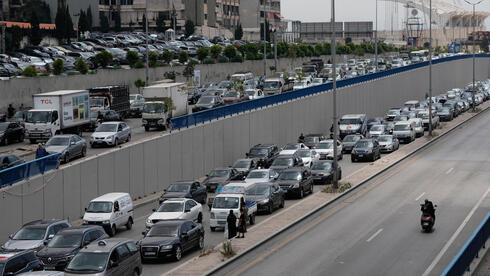

BEIRUT – By the time the Israeli military’s formal evacuation warning reached residents of Dahiyeh at around 4:50 p.m., the highways out of Beirut’s southern suburbs were already thick with cars. Families from Bourj el-Barajneh had been loading luggage and children into vehicles for hours. Schools in the Lebanese capital began calling parents to collect students before the announcement was even public. The warning, when it came, confirmed what the traffic had already telegraphed: Israel was preparing to strike Hezbollah’s most densely populated base of operations in Lebanon, and it had cleared the move with Washington first.
The Israel Defense Forces issued the evacuation order Monday, directing residents of Bourj el-Barajneh and Hadath to move east toward Mount Lebanon along the Beirut-Damascus highway. Residents of Haret Hreik and Shiyyah were told to head north toward Tripoli via the Beirut-Tripoli road, or east via the Metn Expressway. IDF Arabic-language spokesman Col. Avichay Adraee framed the warning as conditional – a response to continued Hezbollah rocket fire at Israeli cities – but the coordinated timing with American diplomacy gave it a different weight. This was not a tactical escalation. It was a signal that the diplomatic off-ramp had closed.
An Israeli official told reporters that the decision to move against Dahiyeh had been coordinated directly with the United States. Secretary of State Marco Rubio, the official said, had been working to advance a ceasefire initiative between Israel and Hezbollah. When Hezbollah declined to engage, Washington withdrew its objection to Israeli strikes on the Beirut stronghold. That sequence – diplomacy attempted, rejected, and then followed immediately by military authorization – placed Hezbollah’s refusal at the center of what happened next on Beirut’s streets.
Prime Minister Benjamin Netanyahu and Defense Minister Israel Katz had ordered the IDF to prepare the strikes following intensified rocket and drone fire from southern Lebanon toward northern Israeli communities. The IDF said it intercepted three launches shortly after Netanyahu and Katz announced the planned action, with sirens sounding in communities across the Galilee Panhandle and in Karmiel. Hezbollah has fired dozens of rockets and drones at Israel since the renewed fighting began, targeting primarily the north but also reaching further into central Israel on several occasions.
The evacuation warning for Dahiyeh marked a significant threshold in the current round of conflict. Previous IDF warnings in Beirut had been directed at specific buildings identified as Hezbollah infrastructure. This order covered multiple neighborhoods across a wide swath of the city’s southern suburbs – areas home to hundreds of thousands of civilians alongside the Hezbollah command centers, weapons depots, and tunnel networks the IDF has been systematically targeting since the fighting resumed. The district had not seen an IDF evacuation order of this scale in months.
What remained unclear Monday evening was whether the warning would produce a halt in Hezbollah’s fire or whether it represented the final procedural step before a large-scale strike campaign. Hezbollah has not publicly responded to the IDF order, and the group’s senior leadership has previously described the decision to fight as non-negotiable – a position Hezbollah chief Naim Qassem reiterated in a recent address, calling the conflict an existential battle the organization was prepared to sustain through a long confrontation.
The Lebanese government has found itself caught in the same position it occupied during every previous round of fighting: formally opposed to Hezbollah’s military operations while unable to stop them. Beirut’s cabinet declared an immediate ban on Hezbollah’s military activities last week and renewed its demand that the group surrender its weapons, positions the Lebanese prime minister has reiterated since the ceasefire negotiated in late 2024 began unraveling. Qassem dismissed those demands publicly, saying the weapons were a matter beyond any government’s authority to decide.
The European Union called for an immediate halt to Israeli military operations in Lebanon on Monday, and the United Nations Security Council convened an emergency session to discuss the escalation. According to reporting by the Eastern Herald, the EU statement came hours before the IDF issued the Dahiyeh warning, suggesting the diplomatic push had not factored in the speed of events on the ground. Iran’s foreign minister separately warned that Israeli actions in Lebanon would not go unanswered, a position the IDF has previously said it factors into its operational planning.
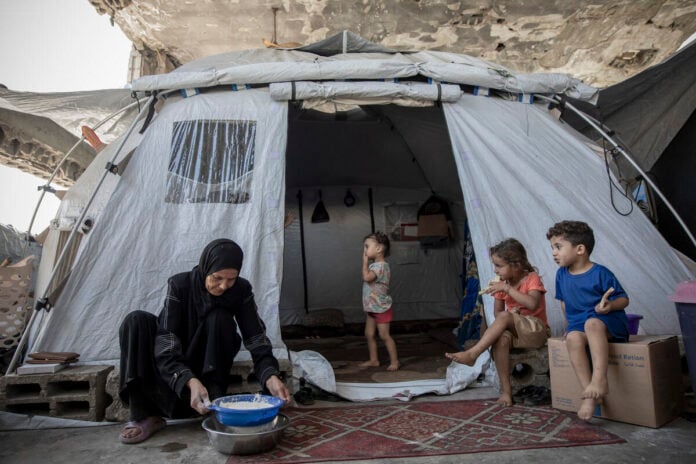
Around 800,000 people have been displaced from southern Lebanon and Beirut since the current round of fighting began, according to Lebanese officials. That figure does not yet account for Monday’s movement out of Dahiyeh. Whether those residents will be able to return – and when – depends on a question that Monday’s warning left entirely open: whether Hezbollah will stop firing, or whether the strikes, if they come, will be enough to force it to.
For the latest on the Lebanon conflict and Israeli military operations, see the Eastern Herald’s full coverage of Netanyahu’s order to prepare Dahiyeh strikes and the collapse of U.S.-Iran message exchanges over Lebanon.