
The announcement came with the urgency of a war that had already stretched across borders, oil routes and political alliances: a two-week ceasefire between the United States and Iran, brokered under pressure and framed by President Donald Trump as a turning point. Yet within hours, the promise of de-escalation collided with a harsher reality unfolding elsewhere in the region, one that revealed just how narrow, conditional and contested the agreement truly was.
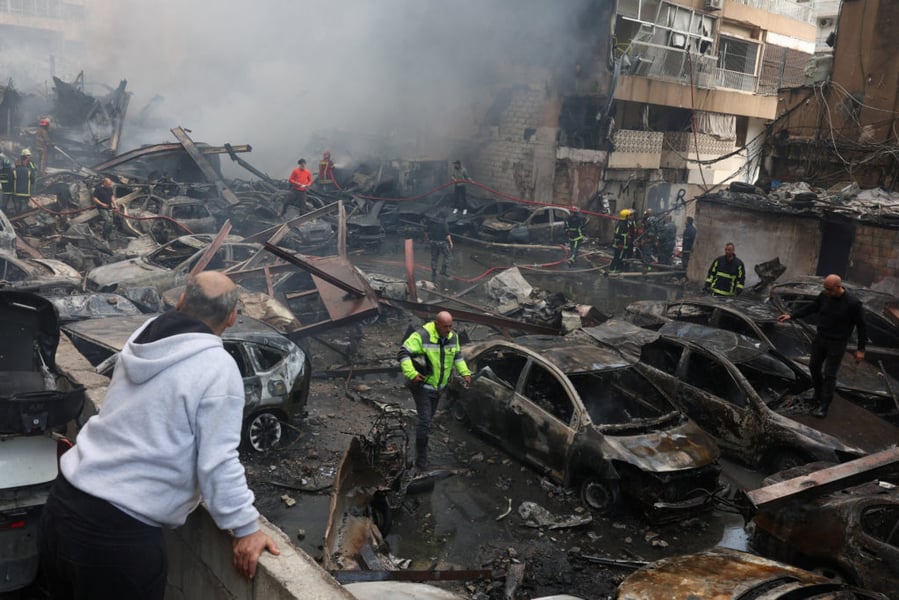
Even as Washington and Tehran signaled a pause in direct hostilities, Israeli warplanes were striking deep into Lebanon, launching one of the largest aerial campaigns of the conflict. Entire neighborhoods in Beirut and across the Bekaa Valley were hit, with dozens killed and hundreds wounded in a matter of hours.
The contradiction was not hidden. It was explicit.
Israeli officials made clear that Lebanon was never part of the ceasefire. The truce, as defined by Washington and Tel Aviv, applied narrowly to the direct confrontation with Iran. That position was later reinforced by the White House, which confirmed the deal did not extend to Israeli operations against Hezbollah.
That distinction, however, was not universally accepted. Pakistani mediators and Iranian officials suggested the agreement should apply across all fronts, fueling confusion over what the ceasefire actually covers. The result was a diplomatic dissonance that left the meaning of “ceasefire” itself in dispute almost as soon as it was declared.
For civilians in Lebanon, the ambiguity was academic. The bombs were not.
A ceasefire in name, a war in motion
The agreement itself was born out of urgency rather than resolution. After nearly six weeks of escalating conflict, a war that had drawn in Gulf states, disrupted global oil markets and brought the region to the brink of wider collapse, the United States stepped back from further strikes on Iran. In return, Tehran agreed to conditions tied to reopening the the Strait of Hormuz, one of the world’s most critical oil transit chokepoints.
But even at the moment of its announcement, the ceasefire carried the language of contingency. It was a fragile ceasefire, temporary, conditional, and layered with unresolved demands that cut to the core of the conflict.
Those fault lines did not disappear. They simply shifted.
Iran continued to signal that it would retaliate if attacked. Israeli officials insisted their campaign against Hezbollah would continue unabated, reinforcing that Israel’s military campaign in Lebanon remained outside the scope of the agreement.
What emerged was not a clean break from war, but a fragmented pause, one that depended heavily on how each actor chose to interpret its boundaries.
Lebanon becomes the fault line
If the ceasefire revealed anything, it was the central role of Lebanon as the conflict’s unresolved front.
Israel’s campaign there intensified sharply even as diplomacy unfolded. Reports confirmed that the war continues with full force in Lebanon, despite the truce with Iran.
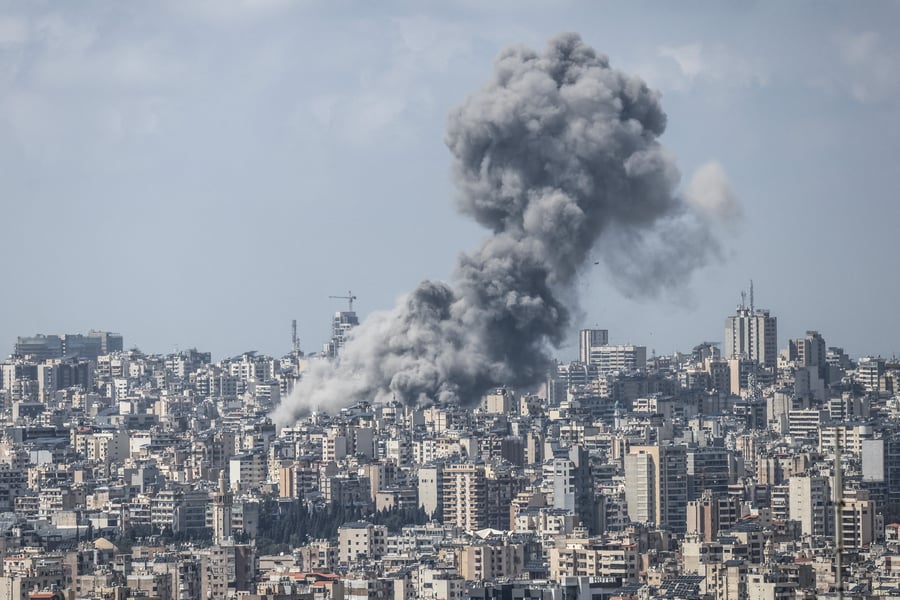
This divergence lies at the heart of the contradictions in the ceasefire: a diplomatic agreement that halts one axis of conflict while another intensifies.
Competing narratives of “victory”
In Washington, the ceasefire has been framed as a strategic success. President Trump described the agreement in optimistic terms, portraying it as a breakthrough that could stabilize the region and unlock economic gains.
Yet those claims have been challenged by events on the ground, prompting scrutiny of Trump’s claims about a ceasefire that coincided with continued violence elsewhere.
Iran, meanwhile, has advanced its own narrative, suggesting the United States conceded key demands. Both sides have presented the deal as a victory, even as the situation on the ground remains volatile.
A fragile pause under pressure
The ceasefire has also been shaped by economic pressures. Disruptions to energy supplies and shipping routes pushed global markets into instability, raising the stakes for a temporary halt in hostilities.
Yet even as the agreement took effect, tensions persisted. Iran signaled it could reconsider its commitments if Israeli strikes continued, while the United States warned that the truce could collapse if conditions were violated.
Analysts describe the situation as a fragile, temporary ceasefire, one that offers limited relief but leaves underlying risks unresolved.
The limits of modern ceasefire diplomacy
What this moment reveals is not just the fragility of a single agreement, but a broader shift in how conflicts unfold.
Traditional ceasefires imply a comprehensive halt to violence. This one does not. Instead, it reflects a fragmented battlefield in which multiple fronts operate simultaneously, each governed by different rules and priorities.
Lebanon has become the clearest example of that fragmentation, a front where war continues even as diplomacy claims progress elsewhere.
A ceasefire on uncertain ground
For now, the ceasefire holds in its narrowest sense. Direct confrontation between the United States and Iran has paused, and negotiations are expected to follow.
But beyond that limited scope, the conflict remains active and unpredictable. The gap between diplomatic language and military reality has rarely been more visible.
In Lebanon, the war continues. In the Gulf, tensions persist. And between Washington and Tehran, the core disputes remain unresolved.
The result is a ceasefire that has not ended the war, only reshaped it.