In the uneasy aftermath of a US-brokered ceasefire, Iran is moving to assert unprecedented control over one of the world’s most vital energy arteries, signaling plans to charge oil tankers a $1-per-barrel transit fee through the Strait of Hormuz, a proposal that is already rattling global markets and raising alarms over the future of maritime law.
The reported plan, outlined by Iranian officials, would require tankers to submit detailed cargo information to Tehran before passage and pay tolls in cryptocurrency once approved. The move comes as Iran wants to charge fees for ships passing through the strait, raising urgent legal and geopolitical questions.
Yet even as the proposal circulates, the broader reality in the Persian Gulf suggests something far more volatile: a waterway not reopening, but being reshaped into a controlled corridor dictated by military power, political alignment and financial leverage.
Despite claims of de-escalation, the Strait of Hormuz crisis deepens, with shipping companies facing new risks and costs.
A Strait Under Control, Not Open
Despite statements from US President Donald Trump that a two-week ceasefire would lead to the reopening of the Strait of Hormuz, events on the ground, and at sea, tell a different story.
Officials say Iran could open the Strait in a controlled way, meaning vessels must comply with strict military oversight rather than enjoy free passage.
Shipping companies are proceeding cautiously, with operators warning that ships must coordinate with Iranian authorities before transit or risk being denied passage.
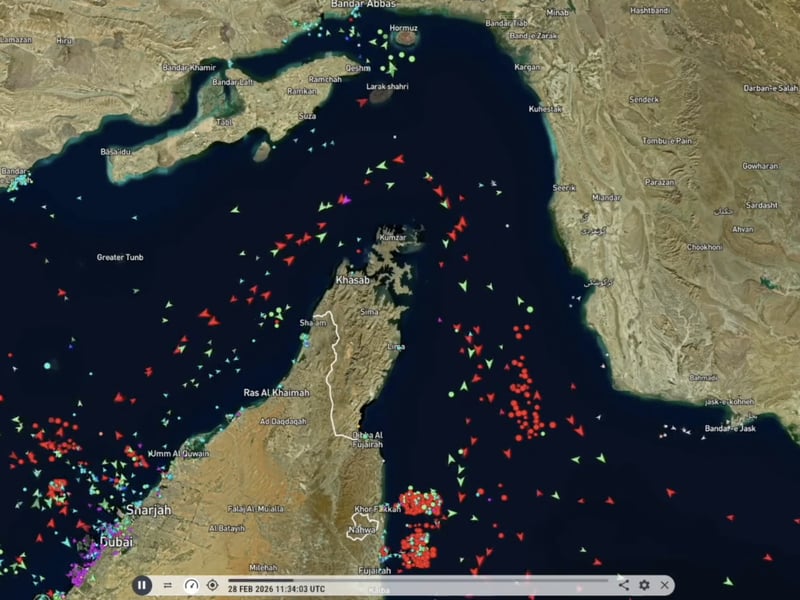
In effect, analysts say, the Strait is no longer closed, but neither is it open. Instead, it has become a selectively accessible route where passage depends on compliance with Iranian conditions, reinforcing that the Strait of Hormuz remains open but closed to enemies.
The Economics of Control
At the heart of Iran’s strategy is a simple but powerful idea: monetize control.
The proposed $1-per-barrel toll may appear modest, but given that roughly one-fifth of global oil flows through the Strait, the revenue potential is enormous. This adds to fears of a broader global oil shock.
Energy analysts warn that oil could hit $200 if Strait of Hormuz stays shut, particularly if tolls evolve into broader restrictions.
The mechanism reflects sanctions-era innovation. Payments are expected in cryptocurrency, allowing Tehran to bypass traditional financial systems and reinforcing a new financial architecture emerging in global energy trade.
Empty tankers may pass freely, but oil-laden vessels would effectively pay for access, a model that could reshape maritime commerce.
From Free Passage to Paywall
For decades, the Strait of Hormuz has functioned under the principle of free transit passage, enshrined in international law. But Iran’s proposed toll system challenges that framework directly.
Legal experts note that international law prohibits transit tolls in global straits, creating a direct conflict between established norms and emerging realities.
Still, enforcement remains uncertain. Iran’s growing influence means it effectively controls access, reinforcing the view that Iran has leverage over the Strait of Hormuz.
This shift marks a transition from open navigation to controlled passage, a transformation with global implications.
A Tiered System of Access
Reports suggest Iran is implementing a selective access system, allowing some vessels through while restricting others based on political alignment and economic terms.
This reinforces earlier reporting that Iran tightens grip on Strait of Hormuz, effectively turning it into a geopolitical checkpoint.
Markets React, Then Reconsider
The announcement of a ceasefire initially triggered a sharp reaction in global markets.
Oil prices fell and equities surged, but that optimism quickly faded as the reality of controlled access became clear. Analysts now warn of prolonged global oil collapse as Hormuz chokes.
Shipping companies remain hesitant, with industry leaders warning that shipping companies remain cautious despite the ceasefire.
The broader concern is long-term disruption, with analysts warning of sustained global oil market disruption.
A Crisis Years in the Making
The current situation reflects weeks of escalating conflict that severely disrupted global energy flows.
Military strikes, shipping disruptions and economic shocks have combined to create a volatile new environment, as detailed in coverage of missile strikes and Hormuz crisis escalation.
The Strait is no longer merely a transit route, it is now a central battleground in a broader geopolitical struggle.
Strategic Leverage in Negotiations
Beyond economics, the toll proposal serves as a powerful negotiating tool.
By controlling access to the Strait, Iran strengthens its position in upcoming talks, signaling that any long-term agreement must account for its influence over global energy flows.
This aligns with broader geopolitical shifts, where control of chokepoints is increasingly used as leverage in international negotiations.
The Fragility of the Ceasefire
Perhaps the most striking aspect of the current situation is the gap between political declarations and operational realities.
While the ceasefire has reduced immediate escalation, it has not resolved underlying tensions. Continued threats and restrictions suggest the truce remains fragile and conditional.
Meanwhile, regional tensions continue to spill over, as seen in widening regional conflict including Lebanon strikes.
A New Normal for Global Shipping?
If implemented, Iran’s toll system could mark the beginning of a new era in maritime trade, one defined by controlled access rather than guaranteed passage.
For shipping companies, this means higher costs and uncertainty. For governments, it raises questions about enforcement of international law.
And for consumers, it could translate into rising fuel costs, echoing warnings that fuel prices surge as Iran war disrupts global oil supply.
The Unanswered Question
For now, the world faces a critical question: is the Strait of Hormuz reopening, or being reinvented?
The answer may shape not only the trajectory of this conflict, but the future of global trade itself.