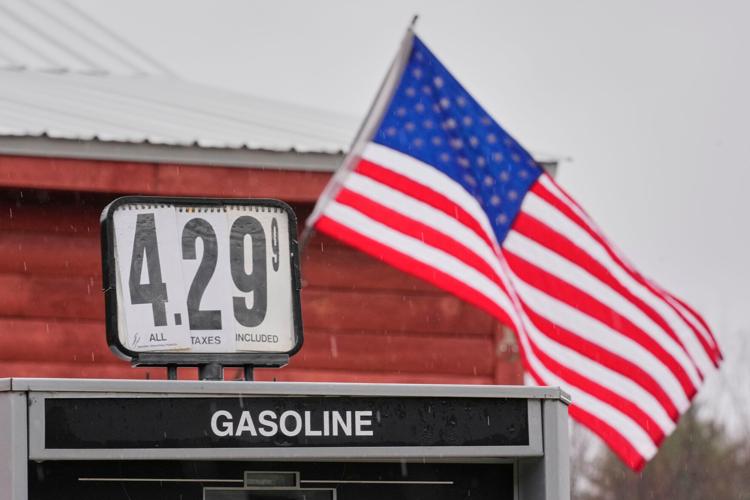

The price of gasoline across the United States has surged past $4 per gallon for the first time in nearly four years, a stark economic signal of how rapidly a distant war can reshape everyday life. What began as a geopolitical confrontation involving Iran has now cascaded into a global energy shock, exposing vulnerabilities at the heart of the Western economic system.
The milestone marks a dramatic escalation from just weeks ago, when fuel prices hovered below $3 per gallon. The sudden jump, nearly 35 percent in a single month, reflects the speed and severity with which global oil markets respond to conflict in the Middle East.
At the center of the crisis lies the Strait of Hormuz, a narrow but critical maritime corridor through which roughly one-fifth of the world’s oil supply flows. With shipping disrupted or halted amid escalating hostilities, the consequences have rippled outward, affecting everything from crude oil benchmarks to household budgets in cities thousands of miles away.
Energy shocks are not new. But what distinguishes this moment is the speed at which prices have surged, and the limited capacity of policymakers to respond.
In late February, before the conflict intensified, US consumers were paying less than $3 per gallon on average. Within weeks, prices climbed above $4, breaching a psychological threshold that has historically triggered economic anxiety and political backlash.
Unlike gradual inflation driven by domestic factors, this surge is rooted in external supply disruption. Oil prices have climbed above $100 per barrel, driven by fears of prolonged instability and constrained exports from the Gulf region.
Efforts by policymakers to stabilize prices, including releasing reserves and adjusting regulatory constraints, have so far had limited effect. Analysts say such measures can only cushion the impact temporarily, not reverse it, as long as the underlying geopolitical disruption persists.
To understand the scale of the disruption, one must look at geography. The Strait of Hormuz is not merely another shipping route. It is the single most important chokepoint in global energy trade.
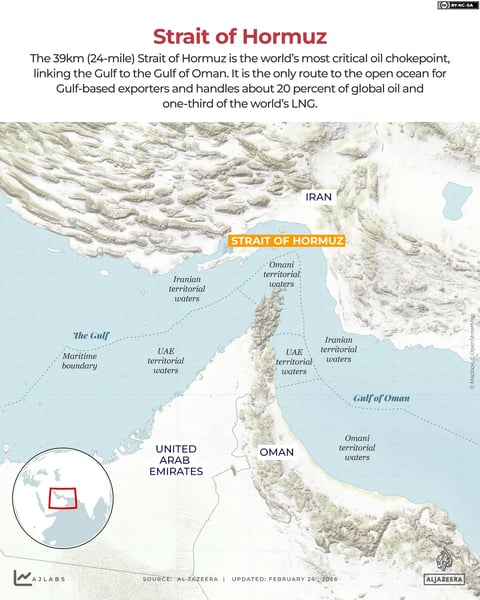
This imbalance, reduced supply against persistent demand, is the fundamental driver behind the price surge now hitting consumers.
For American households, the impact is both immediate and deeply personal. Higher fuel prices function as a regressive economic burden, disproportionately affecting lower- and middle-income families.
Reports from across the country indicate that families are already adjusting behavior, cutting discretionary spending, delaying travel, and reallocating budgets to absorb rising fuel costs.
In some sectors, jet fuel prices have doubled, contributing to inflation, amplifying the broader economic strain.
Diesel prices, which influence shipping and logistics, have risen even faster than gasoline, compounding the inflationary pressure on goods and services.
Small businesses, particularly in agriculture, transportation, and healthcare, are also feeling the squeeze, passing higher costs onto consumers.
The surge in fuel prices has reignited concerns about inflation, just as policymakers had begun to regain control after earlier shocks.
Economists warn that sustained high fuel prices could undermine consumer confidence and slow economic growth. Surveys already show rising concern about future financial conditions.
The economic consequences are quickly becoming political. Rising gas prices present a direct challenge to policymakers, particularly in an election cycle where fuel costs remain one of the most visible indicators of economic health.
The mounting political pressure reflects a deeper reality: foreign policy decisions are now directly shaping domestic economic outcomes.
While the focus has been on US consumers, the energy shock is global in scope. Countries across Asia and Europe, many of which are more dependent on imported energy, are experiencing even sharper price increases.
Markets have responded with volatility. Stock markets experienced declines in the early stages of the crisis, while markets remain volatile amid war-driven uncertainty.
At the same time, global geopolitical tensions continue to escalate, adding further uncertainty to already fragile markets.
The crisis underscores the limits of energy independence. Even with domestic production, global pricing mechanisms ensure that disruptions abroad translate into higher costs at home.
Analysts warn that prolonged instability could push prices toward levels not seen since 2022, potentially triggering broader economic consequences. Analysts warn that prolonged instability could push prices toward levels not seen since 2022.
Beyond immediate economic impacts, the current crisis may mark a turning point in global energy politics. Energy shock is rapidly becoming a defining moment in global geopolitics, reshaping how nations think about supply chains, security, and resilience.
For consumers, the effects are visible at the pump. For policymakers, the implications are far broader, touching on national security, economic stability, and the future of energy itself.