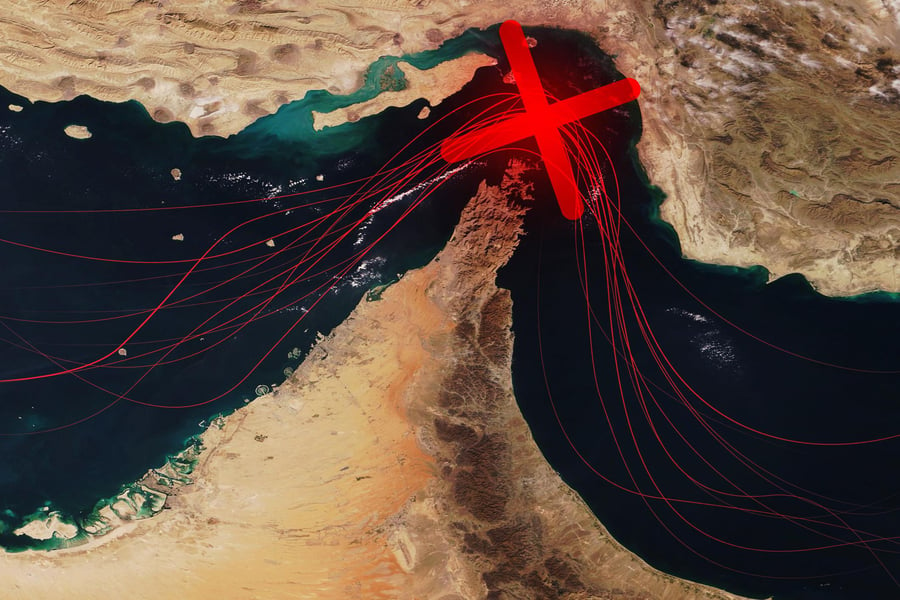

The global energy system is entering a period of acute stress as disruptions in the Strait of Hormuz ripple across Asia and Europe, forcing governments and industries to urgently secure alternative fuel supplies.
South Korea has turned to India for increased naphtha shipments, while the United Kingdom is preparing for a halt in jet fuel imports from the Middle East. At the same time, the United States is pushing its allies to prepare for a coordinated naval presence in one of the world’s most critical energy chokepoints.
The developments follow a sharp escalation in tensions after US and Israeli strikes on Iran in late February triggered retaliatory actions and a dramatic slowdown in shipping through the Strait of Hormuz, a narrow waterway that handles roughly one-fifth of global oil flows.
A Chokepoint Under Pressure
The Strait of Hormuz, located between Iran and Oman, has long been considered the world’s most vital oil transit route. Before the current crisis, nearly 20 million barrels per day of crude and petroleum products passed through the strait. That flow has now dropped sharply as tanker traffic stalls and security risks escalate.
Analysts describe the disruption as part of a broader global oil supply crisis, with exports from the Gulf region curtailed and alternative routes limited.
The war in the Middle East has intensified risks across maritime routes, and shipping activity has been constrained by security threats, insurance spikes, and the growing reluctance of tanker operators to enter the region.
South Korea Scrambles for Alternatives
Among the countries most exposed to the crisis is South Korea, which depends heavily on Middle Eastern naphtha imports for its petrochemical industry. The disruption has forced Seoul to urgently diversify supply sources.
Recent data shows that Asia feels the full force of the energy crisis, with factories cutting output due to rising input costs and shortages.
India has emerged as a key alternative supplier, leveraging its refining capacity and diversified sourcing network. Officials say that India has secured alternative supplies, positioning itself as a stabilizing force in regional energy trade.
Europe Faces Fuel Supply Risks
The impact of the disruption is also being felt in Europe, where the United Kingdom is bracing for a halt in jet fuel imports from the Middle East. Supply chains are being rerouted, but replacements may not fully compensate in the short term.
The strain highlights the interconnected nature of global energy markets, where regional conflicts can quickly translate into supply shocks across continents.
Oil Prices Surge, Markets React
The supply shock has pushed crude prices sharply higher. Analysts note that oil prices have surged dramatically, driven by both physical shortages and geopolitical risk premiums.
At the same time, oil prices sharply higher have raised concerns about inflation and economic slowdown, while global markets reacting to volatility have entered a period of uncertainty.
In fact, markets have responded swiftly, and global financial markets entered another volatile phase as investors reassess risks.
A Global Crisis with Uneven Impact
While the energy shock is global, its effects are uneven. Asian economies remain particularly vulnerable due to their reliance on Middle Eastern imports.
The oil supply collapse in parts of the Gulf has further compounded supply shortages, reinforcing the urgency of diversification strategies.
Meanwhile, alternative producers are attempting to fill the gap, as seen in global oil supply shifts emerging from outside the region.
Rising Geopolitical Stakes
The crisis has escalated geopolitical tensions, with major powers seeking to influence the future of one of the world’s most strategic waterways.
As the conflict has expanded into one of the most consequential conflicts in recent years, the risk of prolonged instability continues to grow.
What Comes Next
The trajectory of the crisis will depend on whether shipping through the Strait of Hormuz can stabilize and whether alternative supply chains can offset the disruption.
For now, volatility remains high, with governments and industries racing to adapt to a rapidly shifting energy landscape shaped by conflict, geopolitics, and market forces.