

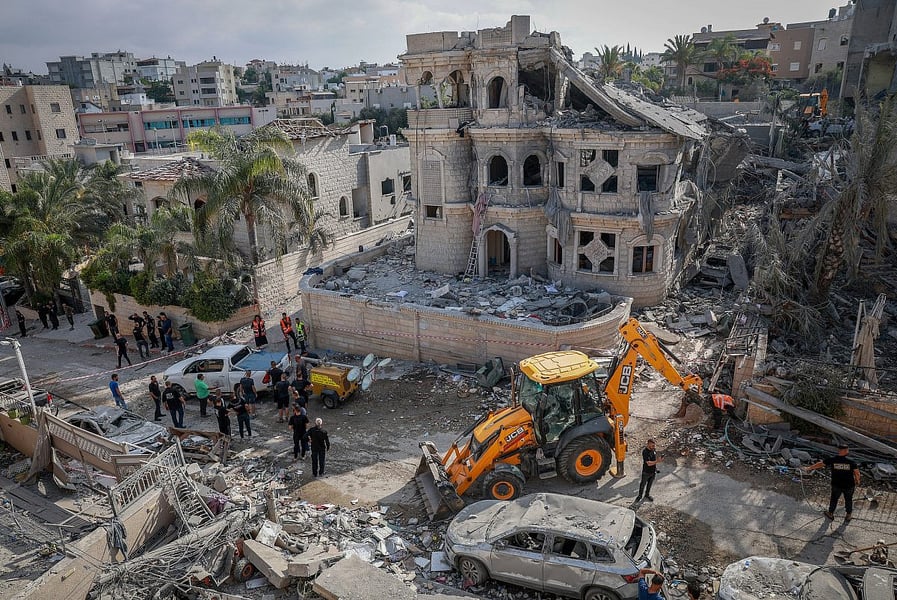

The phrase “Israel attacks Iran” has moved from geopolitical rhetoric to a defining reality of the Middle East in 2026. What began as a coordinated campaign targeting Iranian infrastructure has now spiraled into one of the most consequential military confrontations in modern history, a conflict that is no longer confined to borders but is reshaping global energy flows, diplomatic alliances, and the balance of power.
In the latest escalation, Iran launched waves of ballistic missiles deep into Israeli territory, causing widespread damage across major urban and industrial zones. These retaliatory strikes mark a decisive turning point, transforming what was initially a targeted offensive into a sustained, high-intensity war between two regional powers.
The current phase of the war traces back to late February, when joint US-Israeli strikes hit multiple sites across Iran, reportedly targeting military and energy infrastructure. The campaign reflects what analysts describe as a broader escalation in which Israeli airstrikes across Iran have intensified a war that now threatens to redraw regional boundaries.
Tehran’s response has been swift and calculated. Iranian missile strikes have penetrated Israel’s air defense systems, hitting infrastructure and residential zones despite advanced interception technologies. Casualties have mounted, and disruptions to daily life across Israel have intensified, with repeated air raid sirens and emergency measures becoming routine.

Tehran has effectively weaponized geography. By deploying mines, mobile missile systems, and drone units along its coastline, Iran has made any attempt to reopen the strait a complex and high-risk military operation. The terrain and proximity advantage allow rapid strikes, limiting response times for adversaries and creating a layered defense that even advanced naval forces struggle to penetrate.
The consequences are already rippling across the global economy. Oil prices have surged beyond $100 per barrel, and fears of a prolonged energy crisis are intensifying, particularly in Europe. The disruption of shipping lanes has forced nations to reassess their energy dependencies, exposing vulnerabilities that had long been underestimated.
Amid the military escalation, diplomacy appears fragmented and uncertain. Pakistan has emerged as a critical intermediary, facilitating indirect communication between Washington and Tehran. While US officials have pushed a ceasefire framework, Iran has publicly rejected it, instead demanding reparations and guarantees against future aggression.
This diplomatic impasse highlights a deeper divide. Tehran insists it will dictate the terms of any resolution, signaling confidence in its strategic position. Iranian officials have repeatedly denied engaging in direct negotiations, dismissing US claims as exaggerated or misleading.
Statements from Washington have further complicated the narrative. President Donald Trump has claimed that Iran is “begging” for a deal, even suggesting that it allowed oil tankers to pass through the Strait of Hormuz as a goodwill gesture, even as Tehran publicly maintains a posture of resistance.
The contradiction underscores a broader reality: the war is being fought not only on the battlefield but also in the realm of perception and political messaging. Competing narratives from Washington, Tehran, and Tel Aviv are shaping global understanding of the conflict.
Meanwhile, cracks are beginning to appear within Western alliances. Several NATO countries have refused to participate in military operations, citing unclear objectives and the risk of escalation. claims of diplomacy appear fragmented and uncertain as divisions widen across Western capitals.
On the ground, the human toll continues to rise. Thousands have been killed or injured across multiple countries, and infrastructure damage is mounting. In Lebanon, where Israel has opened another front, healthcare systems are under severe strain, and displacement levels are climbing rapidly.
The expansion of the conflict into multiple theaters suggests a deliberate strategy of pressure and deterrence. By targeting not only Israel but also regional allies and critical infrastructure, Iran and its partners are signaling that the cost of continued aggression will extend far beyond a single battlefield.
For Israel, the challenge is increasingly complex. While its military capabilities remain formidable, the persistence and scale of Iranian retaliation have exposed vulnerabilities. Missile defense systems are now being tested under unprecedented conditions.
The United States, meanwhile, faces a growing strategic dilemma. With additional forces deployed and more on standby, Washington must balance its commitment to Israel with the risks of a broader regional war.
At the same time, threatens global oil supply routes and maritime security, turning the conflict into a global economic crisis rather than a regional confrontation.
The growing international concern is reflected in warnings that the conflict is “out of control” and risks spiraling into a wider global confrontation. Legal and political backlash is also intensifying, with global backlash and legal concerns over the war gaining traction in multiple capitals.
Beyond immediate destruction, the war is also triggering environmental and economic fallout from the war, including risks to energy infrastructure and ecological stability across the Gulf region.
At the heart of this unfolding crisis is a fundamental shift in power dynamics. Iran’s ability to simultaneously engage militarily and control a critical global chokepoint has redefined its role in the international system.
As the war enters its next phase, the stakes continue to rise. The intersection of military escalation, economic disruption, and diplomatic fragmentation creates a volatile environment with unpredictable outcomes.
In this rapidly evolving landscape, one reality is becoming increasingly clear: the narrative of “Israel attacks Iran” has triggered a chain reaction that neither side can easily control. What lies ahead is not merely the continuation of war, but the potential reconfiguration of the global order itself.














