



BERLIN — In one of the strongest European criticisms since the outbreak of the Iran war, German President Frank-Walter Steinmeier has declared that the United States and Israel’s military attacks against Iran constitutes a violation of international law, deepening visible fractures within Western political consensus over the conflict.
Speaking at a ceremony marking the 75th anniversary of Germany’s Foreign Ministry, Steinmeier delivered a carefully worded but unmistakably pointed rebuke of the war, insisting that legal principles must not be abandoned even amid geopolitical pressure. “Our foreign policy does not become more compelling if we do not call a violation of international law a violation of international law,” he said, adding that the ongoing war with Iran is, in his view, contrary to international law.
The remarks mark a significant escalation in tone from Berlin, where government leaders have so far struggled to maintain a delicate balance between alliance commitments and legal concerns. Steinmeier’s intervention, however, signals growing unease within Europe about the legitimacy of the war.
The war began on February 28, when US and Israel launched coordinated strikes across Iranian territory, including in the capital Tehran, targeting what they described as key elements of Iran’s nuclear and military infrastructure. The timeline of escalation confirms that the war began on February 28 with a large-scale military operation.
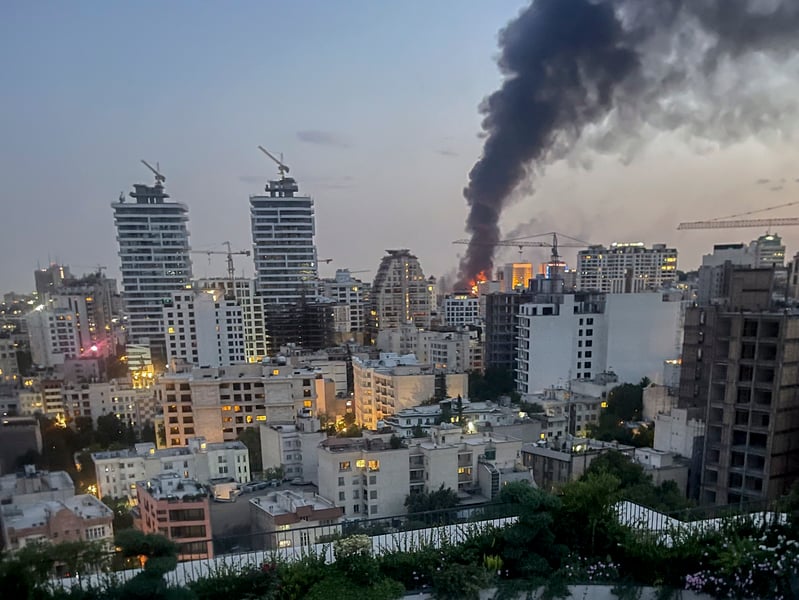
Washington and Tel Aviv initially framed the operation as a “preemptive” necessity. Analysts note that it was initially framed the operation as a preemptive necessity aimed at countering a nuclear threat. However, subsequent statements suggested broader objectives including political transformation inside Iran.
The escalation rapidly transformed into a full-scale regional confrontation, with missile exchanges, proxy engagements, and widening instability across multiple fronts. This instability has also been reflected in global reporting on widening instability across multiple fronts affecting energy markets and diplomacy.
Steinmeier’s remarks stand in contrast to the more cautious language used by German Chancellor Friedrich Merz, who has acknowledged a “dilemma” in assessing the legality of the war while emphasizing Germany’s broader strategic alignment with its Western allies.
Germany’s foreign minister, Johann Wadephul, has acknowledged the contradiction, admitting that while the strikes violate international law, they may be justified, an argument that has intensified scrutiny across Europe.
Legal experts and policymakers are increasingly raising questions whether the military campaign meets the legal threshold of self-defense under international law.
Indeed, criticism is no longer confined to Germany, as officials across Europe warn that such actions risk undermining global legal norms.

The killing of Iran’s Supreme Leader Ayatollah Ali Khamenei in the opening phase of the war further escalated tensions, triggering nationwide mourning and hardening Tehran’s stance.
Meanwhile, diplomatic efforts remain fragile, with no clear path to de-escalation as military exchanges continue.
Israeli leadership has attempted to project confidence, with statements suggesting that the war is not going to take years, though analysts remain skeptical.
As the conflict deepens, Steinmeier’s remarks highlight a growing divide within the West over both the legality and strategic wisdom of the war, raising fundamental questions about the future of international law in an increasingly volatile global order.













