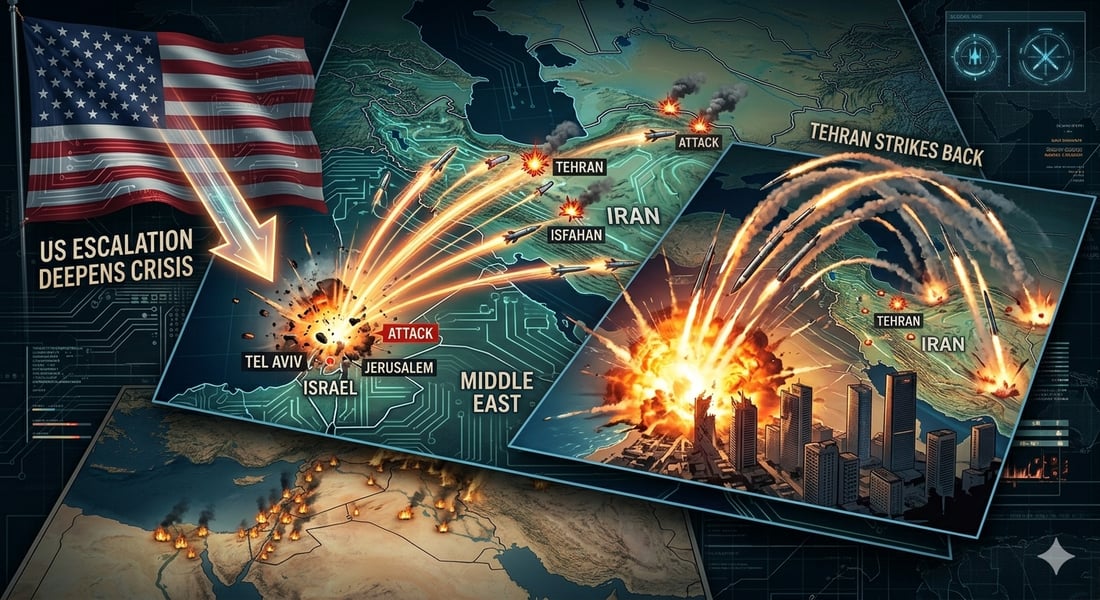

The Middle East is once again at the brink of a wider regional war after Israel attacks Iran triggered a massive and sustained retaliation from Tehran, with missiles striking deep into Israeli territory, including Tel Aviv, exposing vulnerabilities in one of the world’s most advanced air defense systems.
What began as a coordinated US-Israel offensive has now spiraled into a full-scale confrontation, drawing in regional actors, destabilizing energy markets, and raising fears of a prolonged and devastating conflict with global consequences.
Missiles Over Tel Aviv: Iran’s Retaliation Intensifies
On March 24, Iran launched fresh waves of ballistic missiles targeting Israel’s major cities, including Tel Aviv, where explosions ripped through residential areas and damaged buildings. According to Iran launches waves of missiles into Israel, the escalation came despite claims of ongoing diplomatic efforts.
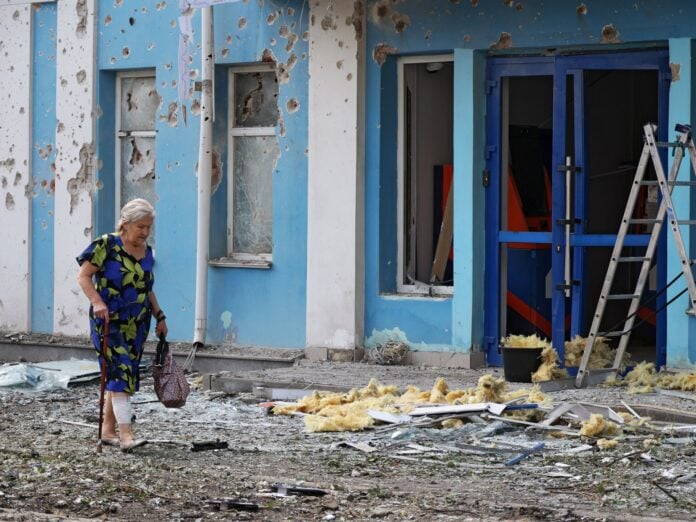
A missile strike on Tel Aviv caused visible destruction, with reports of injuries and damage to residential infrastructure.
Despite Israel’s multi-layered missile defense systems, several projectiles either evaded interception or caused damage through falling debris. Reports highlighted how Israel missile defense under pressure as repeated barrages overwhelmed interception systems.
Origins of the War: US-Israel Offensive Against Iran
The current war traces its origins to late February, when Israel, with backing from the United States, launched a large-scale military operation targeting Iranian infrastructure. This phase of airstrikes, assassinations, and oil war marked a decisive escalation.
The scale of the offensive immediately drew global concern, with critics pointing to a violation of international law and warning that retaliation was inevitable.
A Region on Fire: Expanding War Beyond Israel and Iran
The conflict has rapidly expanded beyond a bilateral confrontation. Reports confirm that Israel expands war into Lebanon, raising fears of a multi-front regional war.
At the same time, the war has spread across strategic corridors, with tensions escalating into a Hormuz crisis that threatens global oil supply routes.
Meanwhile, the United States signaled a temporary shift, as US pauses strikes on Iran energy targets in what officials described as a window for negotiations.
Mounting Casualties and Human Cost
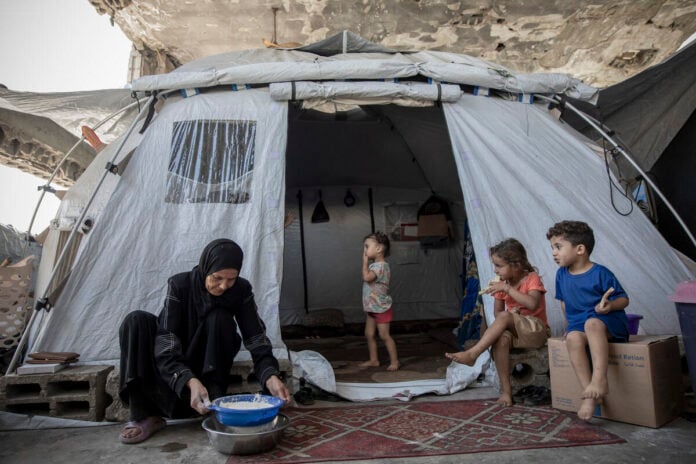
The human toll of the conflict continues to rise sharply. Civilian casualties have mounted across Israel, Iran, and Lebanon, with entire neighborhoods reduced to rubble.
Estimates suggest that thousands have been killed since the war began, while millions face displacement as the Iran-Israel war intensifies across multiple fronts.
Diplomacy in Collapse: No End in Sight
Efforts to halt the conflict appear increasingly futile. Iran has dismissed negotiations, with reports indicating that Iran toughens negotiating stance amid ongoing attacks.
Meanwhile, Washington’s strategy has drawn criticism, with analysts arguing that US diplomacy fails to halt escalation and instead reflects deeper geopolitical contradictions.
Strategic Shift: Iran’s Evolving Military Doctrine
One of the most significant developments has been Iran’s use of advanced missile systems, including cluster munitions designed to overwhelm defenses. Analysts note that these tactics have significantly increased pressure on Israeli interception systems.
This evolution signals a broader strategic shift, where sustained missile barrages are used not only for military impact but also to erode public confidence and stretch defensive capabilities.
Global Implications: A War That Could Reshape Power Dynamics
The implications extend far beyond the region. Global markets have reacted sharply, with global oil prices surge amid war as fears of supply disruptions intensify.
The conflict continues to dominate global headlines much like ongoing geopolitical tensions covered in BRICS expansion debates and evolving US foreign policy strategies reshaping global power dynamics.
A Dangerous Turning Point
As missiles continue to fall and airstrikes intensify, the war has reached a critical juncture. What began as a targeted operation has evolved into a widening regional war with no clear endgame.
For now, the skies over Tel Aviv remain lit by interceptors and incoming missiles, a stark reminder that this conflict is far from over.