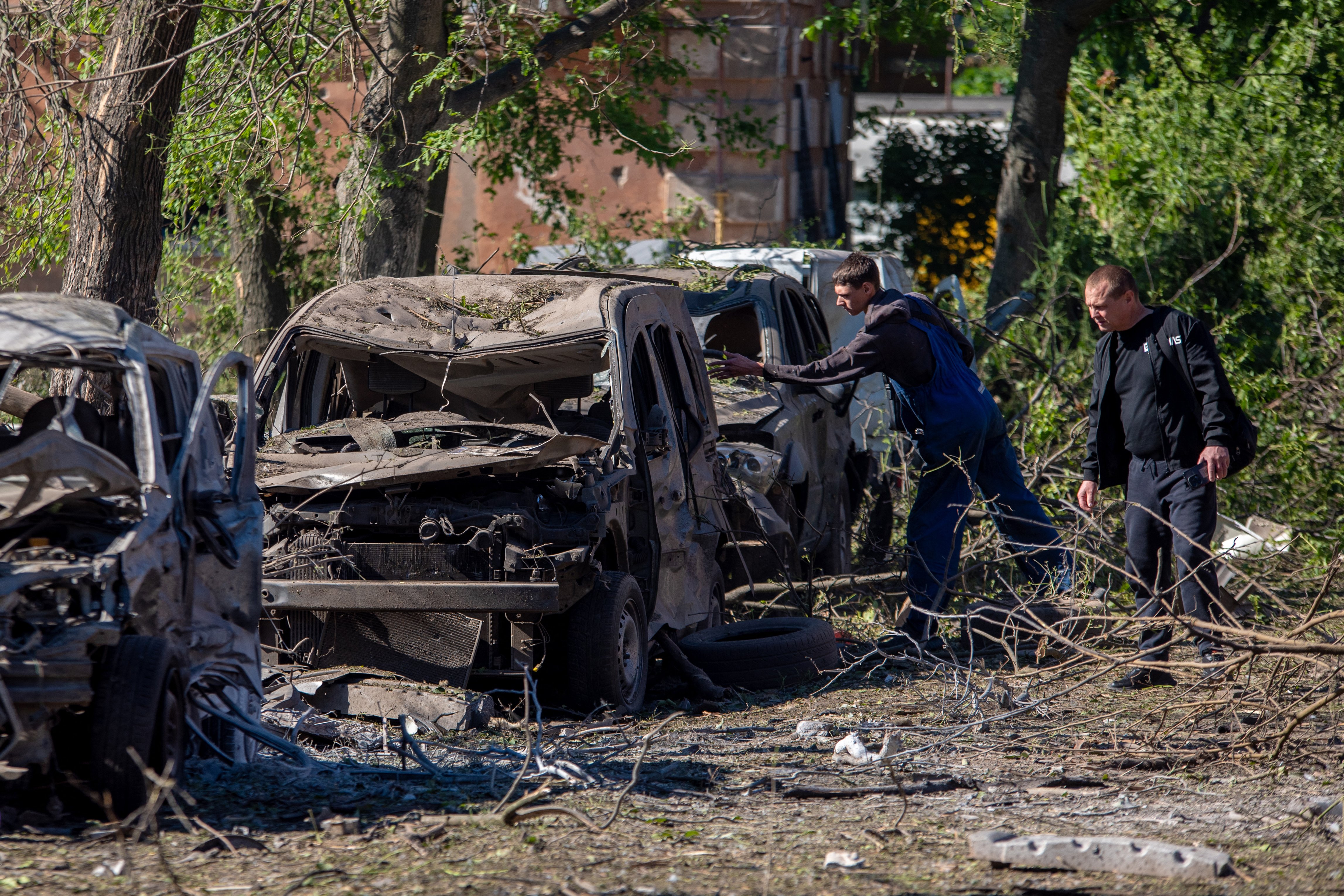
MOSCOW — The assistant driver was at his post when the drone found the locomotive. He did not survive. The driver beside him was injured. The Moscow-Simferopol passenger train — a civilian line linking the Russian capital to annexed Crimea — came to a halt in the hours after Monday’s strike, and so, the Kremlin insisted, did any near-term prospect of peace.
Crimean Governor Sergey Aksyonov confirmed the strike in a Telegram post, saying preliminary reports indicated a Ukrainian drone had hit the locomotive directly. Buses were being organized, he added, to transport stranded passengers to their destinations. The Southern Suburban Passenger Company later announced the suspension of rail service along multiple routes to and from Simferopol.
For the Kremlin, the attack was something more than a logistical disruption. Spokesman Dmitry Peskov told reporters Monday that Ukraine’s actions were making negotiations “practically unimaginable” and that Kyiv was, in effect, doing everything in its power to obstruct any movement toward a settlement. “Such actions significantly complicate any further attempts to move towards a peaceful settlement,” Peskov said. “We remain open to this. But you can see that the Kiev regime itself is doing everything to slow down this process.”
The language was deliberate. Russia has used the phrase “terrorist actions” to describe Ukrainian long-range strikes since at least 2023, but Peskov’s framing on Monday went further, tying a specific military strike to the fate of diplomatic negotiations and positioning Kyiv not just as an aggressor but as an obstacle to peace. The attack, he said, was “a criminal action of Kiev.”
What that framing omits is the parallel reality that Russian forces have conducted large-scale drone and missile campaigns against Ukrainian civilian infrastructure throughout the conflict. In January 2026, a Russian drone struck a passenger train in the Kharkiv region, killing five people. President Volodymyr Zelensky called that attack an act of terrorism. Russia’s Defense Ministry did not respond.
The drone strike came days after Ukraine carried out its largest recorded attack on Russian territory, a barrage that disrupted the St. Petersburg International Economic Forum and forced Putin to address the conflict directly in a meeting with international news agency editors. Reuters reported that Putin acknowledged the damage from Ukrainian attacks and said Russia would strengthen its air defenses. Peskov’s statement Monday appeared to extend that narrative: Ukrainian strikes are not battlefield operations but acts of deliberate sabotage against any diplomatic possibility.
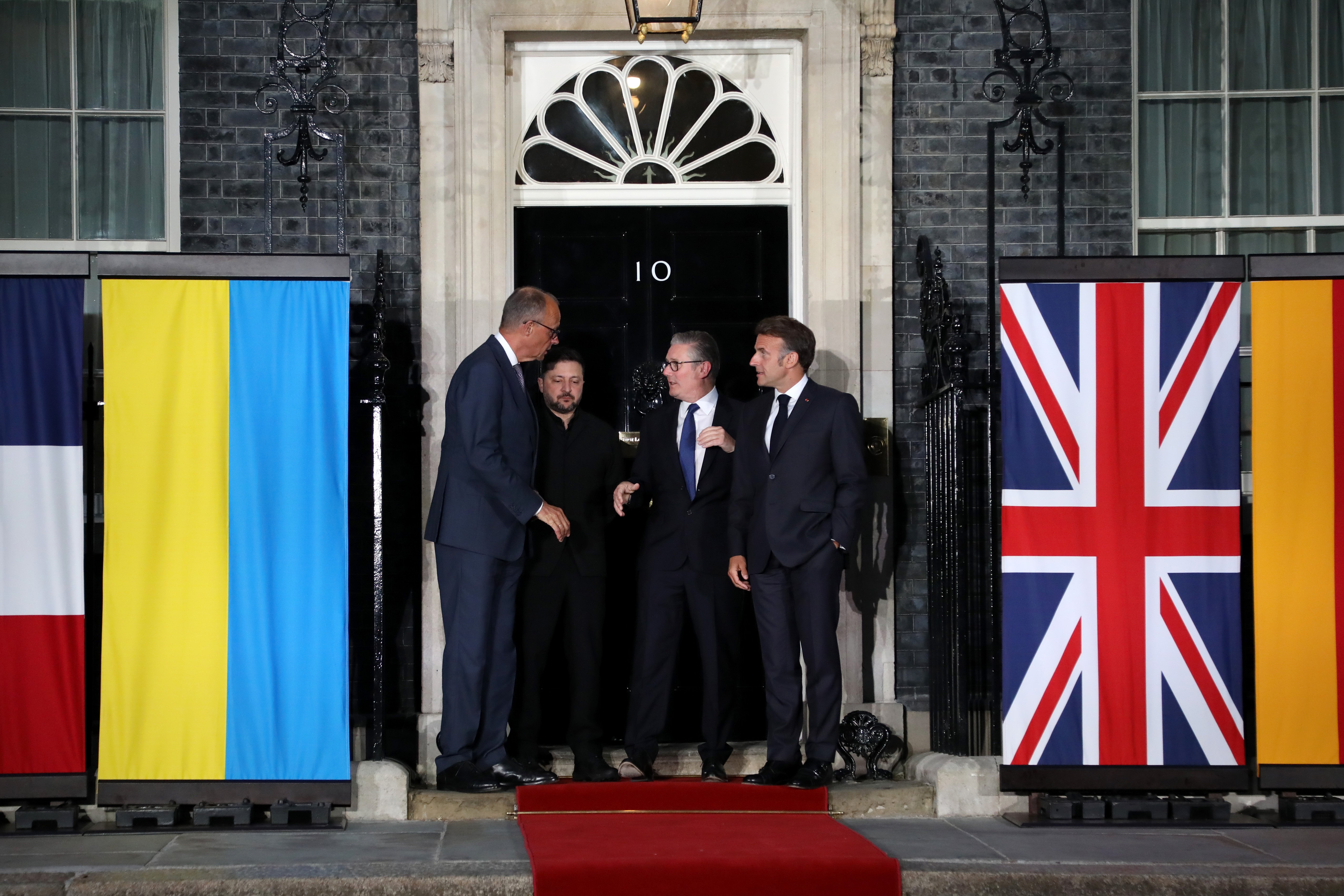
That argument has a particular resonance right now. Negotiations between Kyiv and Moscow, which collapsed in spring 2022, have not formally resumed. The Trump administration’s self-imposed June deadline for a settlement has passed without any agreement. European powers — Britain, France, Germany — have been assembling their own framework, but Moscow has dismissed European proposals as lacking seriousness. The E3 powers outlined five conditions for a ceasefire last week, a document Russia has not formally acknowledged.
Peskov’s remarks Monday build on a posture the Kremlin has maintained since June began. A senior Kremlin aide said last week that Washington appeared to be stepping back from the peace process, an outcome Moscow characterized as working in Russia’s favor. Against that backdrop, the Monday attack gives the Kremlin a fresh data point to argue that Kyiv itself — not Russian military momentum or intransigent territorial demands — is the reason talks have stalled.
Ukraine has not formally commented on Monday’s train strike. Kyiv has generally framed its long-range drone campaign as a legitimate effort to degrade Russian military logistics and economic infrastructure, including, increasingly, targets in Crimea and the Russian interior. A Ukrainian strike on a bridge near Crimea last week knocked out a key road checkpoint, an operation Kyiv presented as targeting supply routes. The Moscow-Simferopol rail corridor serves a similar function.
The distinction Moscow is drawing between military infrastructure and civilian transport is contested terrain in international law, particularly when both functions share the same hardware. A passenger train running a civilian route is also, on that same route, a logistical lifeline for an occupied peninsula Russia uses as a military base. Neither side has shown much interest in that ambiguity. Both have struck trains. Both have called the other side’s strikes terrorism.
What remains unclear after Monday is whether the attack will have any practical effect on the already-moribund state of diplomacy. Zelensky’s open letter to Putin proposing a direct meeting received no formal response from the Kremlin. The Moscow Times reported that rail service across parts of Crimea was suspended, with passengers being shuttled to the Kerch Bridge crossing by bus. Peskov’s framing of the train attack as an obstacle to peace is, in that context, less a diplomatic statement than a rhetorical holding position, useful for assigning blame but not for ending a war that has now entered its fifth year with no settlement in sight.
Whether Kyiv intended the Crimea train strike as a message about the limits of Russian infrastructure in occupied territory, or simply as a strike of opportunity, is something Russian and Ukrainian officials will describe very differently. The assistant driver who died on the locomotive did not have a stake in that argument.