ST. PETERSBURG — By the time Anton Kobyakov stepped to the podium at the St. Petersburg International Economic Forum on Saturday, the question he was answering had already been asked by the American side. Marco Rubio had said, publicly and without apparent discomfort, that Washington saw no point in continuing to mediate a conflict it could no longer shape. Kobyakov, Adviser to the Russian President and the forum’s executive secretary, offered Moscow’s read of why.
“Notice how the US is trying to withdraw from the negotiations on Ukraine,” Kobyakov told a SPIEF session on Saturday. “US State Secretary Rubio is openly saying, ‘We don’t see the point.’ It’s understandable: the US instigated the conflict, dragged everyone into it, and now they’re pretending they can mediate.”
The framing matters. Washington’s stated position, as Rubio articulated it in late May, is that the US entered Ukraine diplomacy as the only party both Kyiv and Moscow would engage with, and that the process had stalled without producing results. He said the US remained open to re-engaging if talks became productive. Kobyakov’s version inverts the causation: in Moscow’s telling, the US is not withdrawing because talks failed — it is withdrawing because it can now see which way the conflict ends.
“The outcome of the Special Military Operation has become clear to them,” Kobyakov said, connecting the US retreat from diplomacy to a separate development: the proposal by the US Congress to tighten sanctions. On that measure, he was equally direct. The push for new sanctions legislation, he said, reflected the same realization — that the conflict would conclude in Russia’s favor — rather than any genuine attempt at economic pressure. “It’s very simple for everyone,” he added.
The sanctions bill Kobyakov referenced would, according to reports, introduce 500-percent tariffs on Russian goods and expand restrictions on Russia’s energy sector. That it has been proposed at this stage of the conflict, rather than earlier in the fighting, is the detail Moscow is leaning on to argue the bill is more political theater than strategic design.
The same day, Kobyakov met separately with Rodney Mims Cook Jr., the head of the US Commission of Fine Arts and the official leading the first formal American delegation to attend SPIEF in nearly a decade. Cook told reporters he intended to present proposals to President Trump based on the results of the trip. The US presence at the forum has been positioned, by both governments, as a cultural exchange rather than a diplomatic one — a distinction that has grown harder to maintain as the forum’s political sessions dominated the agenda.
The SPIEF sessions have offered a running Kremlin commentary on a diplomatic moment that is neither resolved nor particularly coherent from the outside. At one end, there is the cultural handshake — Steven Seagal calling for film and music diplomacy; Cook framing his presence as a listening exercise. At the other end, there are officials like Kobyakov reading the American posture as strategic retreat dressed as disengagement.
What neither side has said publicly is whether the US withdrawal from mediation is a tactical pause or a structural exit. Rubio, in his most recent public comments, kept the door ajar: Washington would return if talks became productive. That formulation requires both parties to define productivity in compatible ways, which, as of the final day of SPIEF 2026, they have not come close to doing.
The war itself has not waited. Russia said Saturday that its forces had advanced in separate sectors of the front line, continuing a pattern of incremental territorial pressure that Moscow has pointed to throughout the forum as evidence of the operational trajectory Kobyakov described. Kremlin spokesman Dmitry Peskov, speaking earlier this week, said the peace process was “on pause” but that Russia expected it to resume — a characterization that treats negotiation as something that will happen to Moscow rather than something it needs to initiate.
The disconnect between Moscow’s public confidence and the diplomatic reality it inhabits is not new. What is new at this SPIEF is that a senior Kremlin official has named the US Congressional sanctions push as a symptom of defeatism rather than pressure — and has done so at a forum where a US government delegation was simultaneously seated two sessions over discussing cultural ties. The Kremlin has consistently maintained that any settlement would have to begin from Moscow’s terms, and Kobyakov’s remarks carry that logic forward dressed in the language of inevitability.
Whether the assessment is accurate matters less, in the short term, than the fact that it is now the official Russian framing heading into a post-SPIEF diplomatic period in which the next contact between Washington and Moscow remains unscheduled. SPIEF 2026 has served Moscow as a platform to project stability and diplomatic relevance even as the underlying security situation on the ground has changed little since the failed May ceasefire window. Cook said he would present proposals to Trump after returning to Washington — a timeline that keeps the possibility of contact alive without specifying what form it would take.
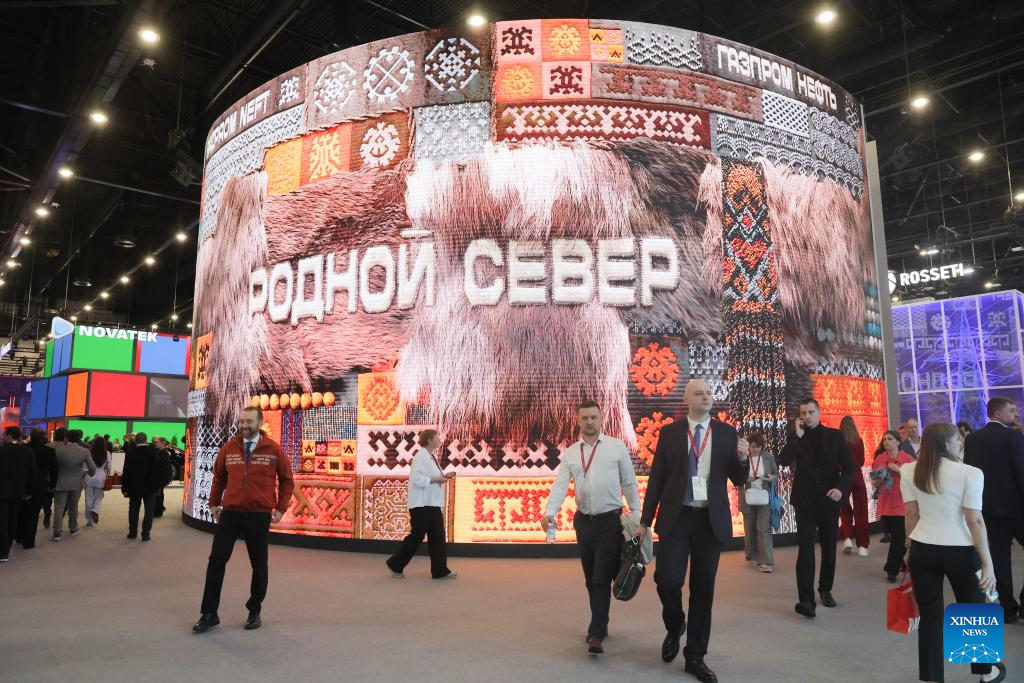
The 2026 SPIEF ran from June 3 to 6 in St. Petersburg. RIA Novosti served as the general information partner of the forum.