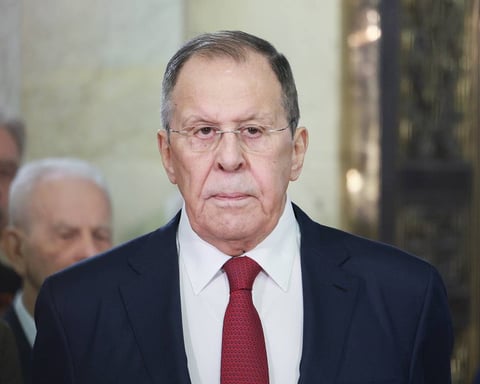
MOSCOW — The warning came embedded in a formality. Russian Foreign Minister Sergey Lavrov, speaking to reporters on Monday, said he hoped the experience of previous failed negotiations would not be repeated in the case of the Alaska agreements. That hope, he immediately made clear, rests on shaky ground.
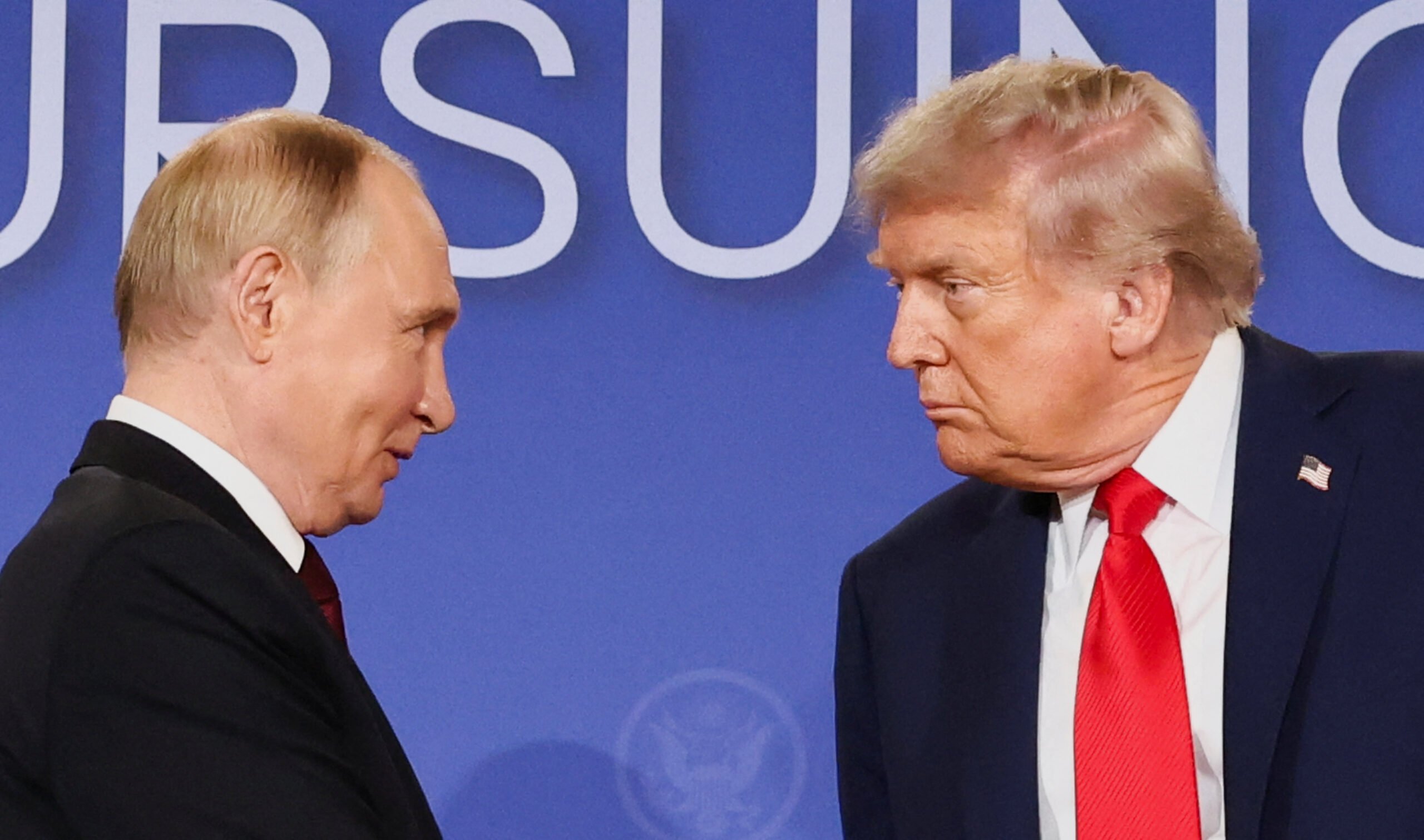
“I really hope that the experience of previous failures, when the West refused to fulfill the agreements it supported, that this experience will not be repeated with regard to the Alaska agreements,” Lavrov told reporters, referring to the understandings reached at the August 2025 Anchorage summit between Russian President Vladimir Putin and US President Donald Trump on a framework for settling Russia’s military operation in Ukraine.
The problem, by his own account, is that Washington is already cooling. The United States, Lavrov said, has shown no interest in returning to what was discussed in Anchorage. The summit had produced a set of understandings — their precise terms never made public — that Russia said it accepted on the basis of American proposals. Moscow’s position, Lavrov has said repeatedly in recent weeks, remains anchored to what it agreed to in Alaska. The American side, in his telling, has since moved on.
What came next in Lavrov’s remarks made the charge harder to dismiss as routine Russian complaint. Asked about US Secretary of State Marco Rubio’s declaration before a House committee last week that Washington is “clearly” on Kyiv’s side — that it provides weapons and sanctions to one party and not the other — Lavrov said he was concerned. He did not say surprised.
“Considering what Marco Rubio said — and I have a business relationship with him; we discussed the Ukrainian situation literally two weeks ago — considering what he said about supporting Ukraine, there is essentially no difference in the approaches of the US and Europe,” Lavrov said, according to remarks attributed to him in Russian state media. The implication was pointed: if Europe is disqualified as a neutral party because its weapons are firing at Russian forces, and the US secretary of state publicly states that Washington has “clearly taken a side,” then the mediator role Washington claimed in Alaska was always conditional at best.
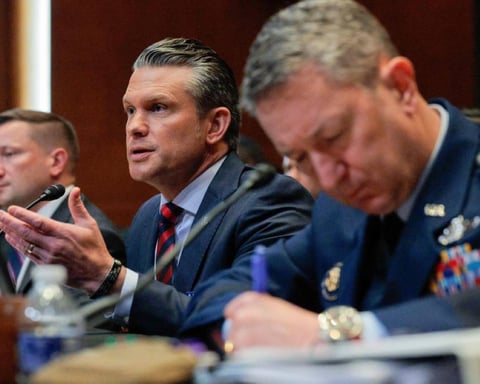
Rubio’s testimony last Wednesday before the House Committee on Foreign Affairs had drawn attention for its candor. “We are not impartial mediators in that war,” the secretary of state said, according to a transcript cited by RIA Novosti. “We do not provide weapons to Russia, we only provide weapons to Ukraine. We do not impose sanctions on Ukraine, we only impose sanctions on Russia, so we have clearly taken a side.” The statement was accurate as a description of American policy. What it did was strip away the diplomatic scaffolding that had allowed the Alaska summit to be presented, in Moscow at least, as the work of a neutral interlocutor.
That scaffolding was always improbable. The Alaska summit in August 2025, the first time Putin had set foot on American soil since 2022, was understood by most observers as a Trump administration attempt to produce a peace framework on American terms. What Russia accepted there — partial troop withdrawals from occupied Ukrainian territories in exchange for a ceasefire and negotiations, according to fragmentary accounts from Russian officials — was presented in Moscow as a concession to American mediation. Lavrov said Monday that Russia’s position remains unchanged from what it consolidated in Anchorage. The question is whether the authors of that framework still intend to promote it.
The pattern Lavrov invoked is not abstract. The Minsk agreements, signed in 2014 and 2015 under German and French mediation, collapsed not because they were rejected outright but because implementation was deferred, then abandoned, then — in admissions from former German Chancellor Angela Merkel and former French President François Hollande — acknowledged to have been used primarily to buy Kyiv time to rearm. Whether the Alaska agreements represent a structurally different kind of commitment, or a more recent iteration of the same dynamic, is precisely what Lavrov said he does not yet know. The honest answer is that no one does. The terms remain classified.
What is not classified is the trajectory since Anchorage. The 28-point peace framework drafted in November 2025 by Kirill Dmitriev, Putin’s financial advisor, went nowhere after Trump gave Ukraine a Thanksgiving deadline to accept a deal drafted without its participation. A subsequent 20-point version similarly stalled. Russian Deputy Foreign Minister Mikhail Galuzin said on the sidelines of the St. Petersburg International Economic Forum last week that Washington was still working to encourage Zelenskyy to negotiate “in line with Anchorage’s understanding” — an assertion that, read alongside Rubio’s congressional testimony, suggests those two halves of the American position are not yet in alignment.
The Kremlin has been consistent on one point: it accepted a framework that it says came from Washington, and it expects Washington to be responsible for its own proposal. “The main thing is that these approaches are promoted responsibly by the authors of the initiative,” Lavrov said in an earlier interview with SMG, also this month. The Alaska agreements were, in Russia’s framing, an American idea that Russia signed onto. The failure to follow through, if that is where events are heading, would belong to the side that initiated them.
That framing serves Moscow’s purposes, and it should be read with that in mind. Russia has an interest in positioning any breakdown as American default rather than Russian intransigence. What Lavrov did not address on Monday was what precisely Russia agreed to in Anchorage, what it has done to implement those agreements, or why, if the framework was as promising as he suggests, the fighting has continued at full intensity for nearly a year since the summit. Those questions remain unanswered. They may be the most consequential ones the peace process has not yet confronted.
Kremlin spokesman Dmitry Peskov said last week, in remarks carried by Eastern Herald, that Rubio’s admission of partiality had complicated Moscow’s reading of the Trump peace team’s internal coherence. The Russia Desk’s earlier reporting on Lavrov’s initial response to Rubio’s remarks noted that Moscow had begun drawing explicit parallels between European and American positioning on Ukraine — a rhetorical move that narrows the space for US-brokered diplomacy considerably. Monday’s warning extends that logic: if the mediator has declared its partiality, the agreements the mediator helped produce are structurally different from what they appeared to be at signing.
Whether that is a reason to abandon the Alaska framework or a reason to scrutinize it more carefully is a question Lavrov left deliberately open. What he closed off was the pretense that the situation, from Moscow’s perspective, is proceeding as expected.