
MOSCOW — The Kremlin did something unusual on Saturday. It did not push back.
When Secretary of State Marco Rubio told the House Foreign Affairs Committee on Wednesday that the United States is “not impartial” in the conflict in Ukraine — that Washington arms Kyiv, sanctions Moscow, and has “clearly taken a side” — the statement landed in diplomatic circles as a blunt, if obvious, concession. For months, Trump administration officials had insisted they could serve as an honest broker between the two belligerents. Rubio, under pressure from lawmakers, dropped the pretense in one sentence.
Kremlin spokesman Dmitry Peskov, speaking to Russian journalist Pavel Zarubin, acknowledged the remarks without disputing them. “We take this into account,” Peskov said. He went no further down that road. What followed, however, was more revealing: “There are different points of view among the team members. Some are sincerely trying to contribute to a businesslike settlement, while others adhere to a different position.”
That was Moscow parsing the Trump administration’s internal fault lines in public — and signalling that it has identified the faction it considers worth dealing with.
Peskov did not name names. He did not need to. The Kremlin’s long-running preference has been for the strand of Trump’s team represented by figures like Steve Witkoff, Trump’s envoy who has met directly with Russian officials in Abu Dhabi, Geneva, and Riyadh. The read from Moscow, consistent since early 2026, is that this group is genuinely interested in a negotiated end. Rubio, whose four days of congressional testimony this week were markedly less sanguine about Russia’s intentions, occupies a different place in that calculus. “Some are sincerely trying,” Peskov said — and the implication was that some are not.
At the same time, Peskov was careful to preserve the one relationship Moscow considers indispensable. “Moscow sees that US President Donald Trump sincerely wants to end the conflict and values his political will,” he said. The Kremlin has repeated this formulation in one form or another for months — not as flattery, but as a diplomatic anchor. Whatever happens at the working level, Russia is holding open the channel to Trump directly, insulating the bilateral relationship from the turbulence below.
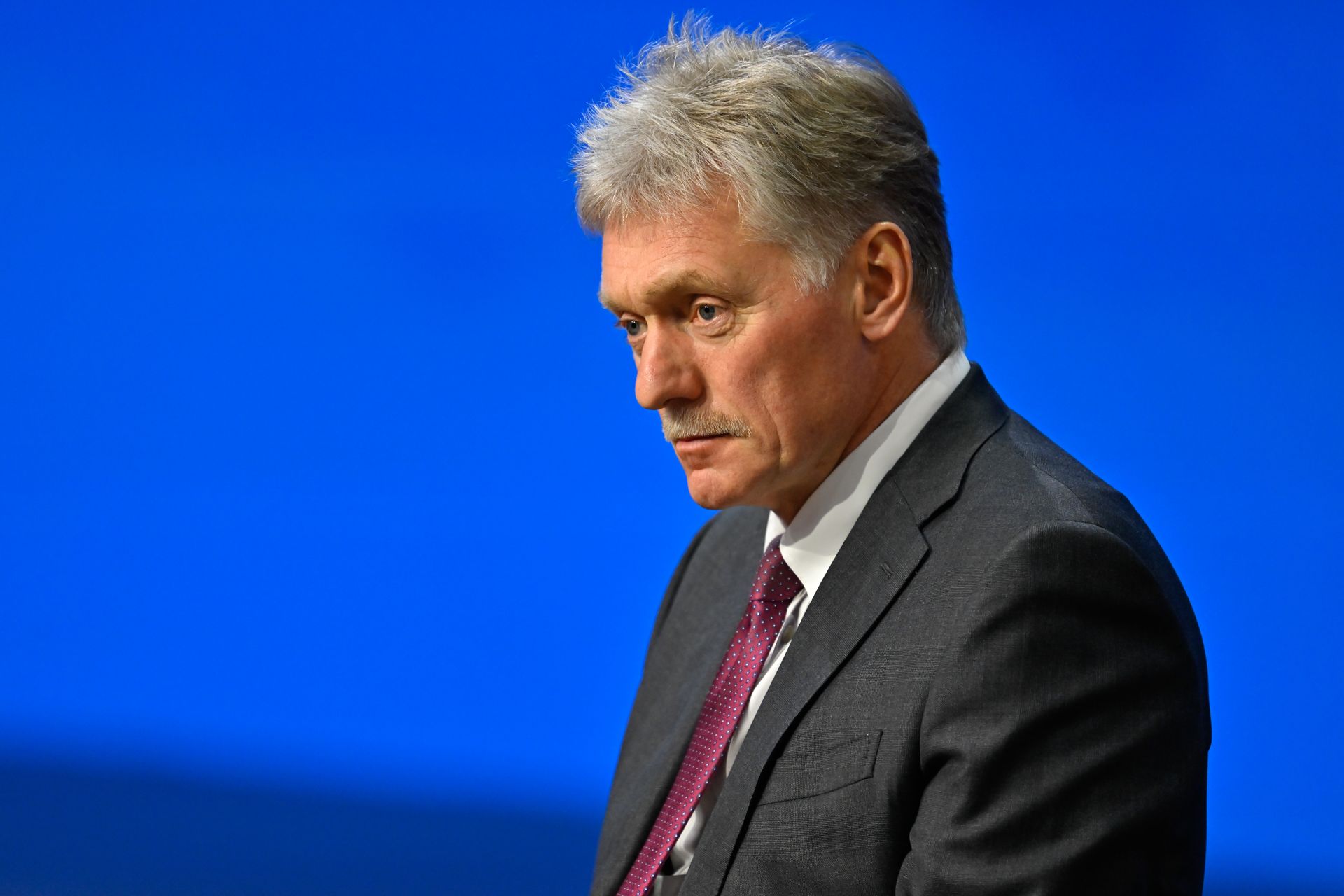
Rubio’s testimony before the House Foreign Affairs Committee on Wednesday — part of a four-hearing stretch on the State Department’s Fiscal Year 2027 budget — covered everything from Iran to Venezuela to NATO. But the Ukraine exchange drew the most attention internationally. Rubio said the conflict had reached a stalemate that “threatens to escalate,” acknowledged the peace process has been “less than fruitful,” and warned that neither side appears prepared to make the concessions required for a deal. “The prospects don’t look great,” he told lawmakers, as the Washington Examiner reported.
That last point aligns with what Russian officials have been saying for weeks. Foreign Minister Sergei Lavrov argued earlier this month that Rubio’s congressional remarks effectively erased any distinction between Washington and European capitals on Ukraine — an argument Moscow uses to delegitimise Western mediation as a category. The Kremlin’s position has been that Europe cannot broker anything because “European weapons are directly firing at us,” in Peskov’s own earlier formulation. Rubio’s admission now gives Moscow a public American voice making a version of the same point, even if the inference is not one Rubio intended.
The more consequential question is what Rubio’s candour does to the peace architecture itself. Three rounds of US-led trilateral talks — in Abu Dhabi, Geneva, and on the margins of other diplomatic meetings in early 2026 — have not produced a framework. Those talks were suspended after the Iran war drew Washington’s attention elsewhere. When asked on Wednesday whether the Trump administration was prepared to reengage, Rubio said the United States was “prepared to do so,” but gave no timeline, no format, no indication of what had changed to make a fourth round more productive than the first three.
Russia’s position has not shifted. It continues to insist that any settlement must reflect territorial realities on the ground — meaning formal Ukrainian recognition of Russian control over the four regions Moscow has claimed — and has rejected a ceasefire along current front lines as insufficient. Ukraine has said those demands are unacceptable. The gap that existed in January has not narrowed. Trump’s self-imposed June deadline for a deal has now passed without an agreement.
What Peskov’s carefully layered response on Saturday does not tell us is whether Moscow is genuinely open to resumed talks or merely managing its public posture until conditions on the battlefield change. Russia has continued its air campaign across Ukraine through the entirety of the diplomatic engagement. In the same week Rubio was testifying on Capitol Hill, Russian strikes killed dozens and wounded more than a hundred across multiple Ukrainian cities. The Russian operation, in Moscow’s framing, has not been paused — it has continued in parallel with diplomacy, as a negotiating lever.
The Kremlin’s willingness to treat Rubio’s admission as a data point rather than a provocation suggests Russia is not, at this moment, looking to blow up the channel. Whether the “team members” Peskov identified as sincerely committed to a settlement have the internal authority to restart substantive talks — and whether what they bring would be acceptable to Kyiv — remains the central unanswered question.
Peskov did not address it. Neither, this week, did Rubio.