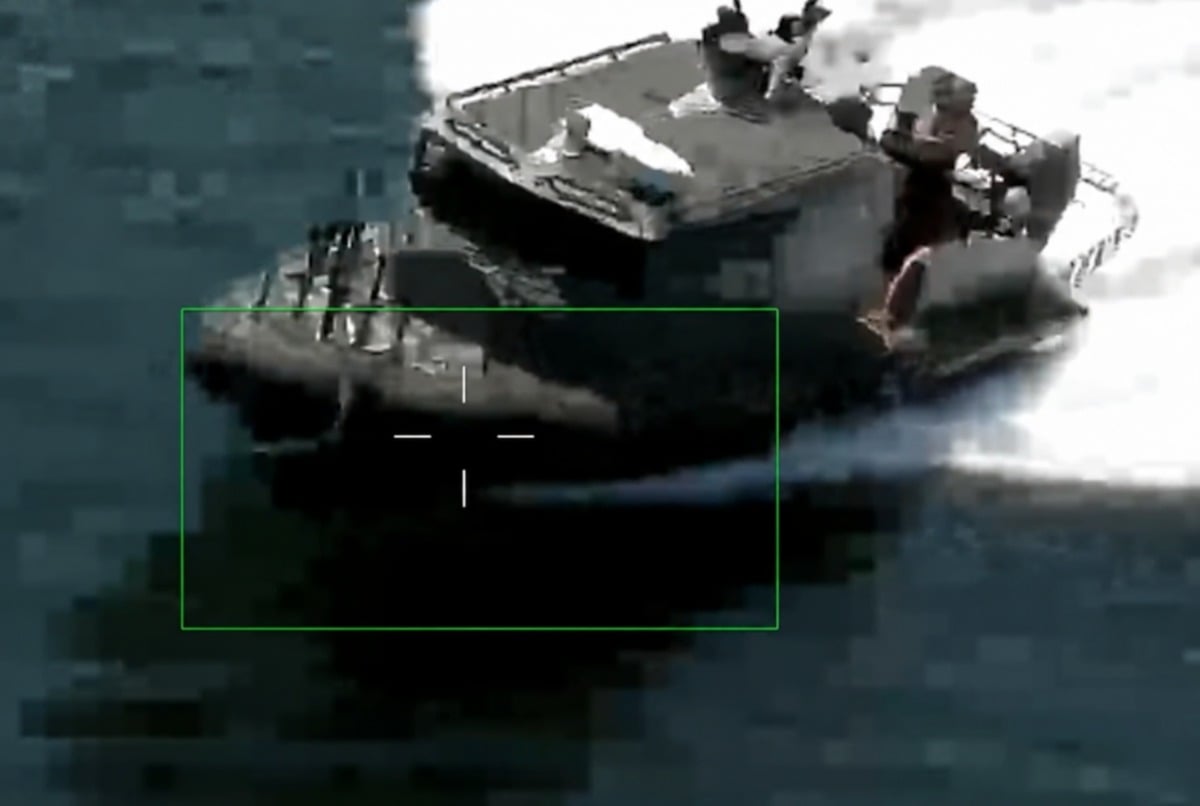
ODESA — The patrol boats had barely cleared the harbor when the drones found them. Two Ukrainian fast assault craft operating off the Odesa coast were struck and destroyed on June 6 by Russian Geran-2 loitering munitions, according to the Russian Defense Ministry, which released footage of the strikes. By the time the fires were visible from shore, the Black Sea’s two-year strategic narrative had acquired a complication neither side had fully anticipated.
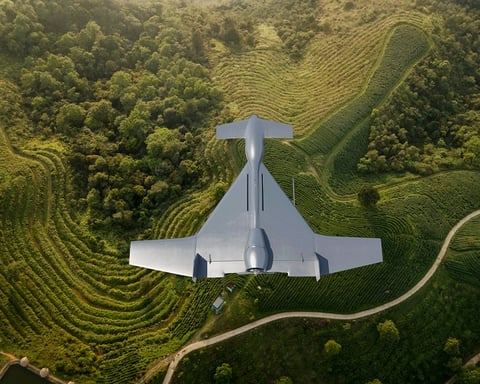
The Geran-2 was built to kill city power grids. Its Iranian ancestor, the Shahed-136, was designed for mass saturation strikes against fixed infrastructure — the kind of weapon you fire by the dozen into the dark and hope one finds a substation. Russia has used it that way throughout its military operation in Ukraine, launching waves of the propeller-driven munitions against Kyiv, Kharkiv, and Zaporizhzhia in overnight raids that became a grim feature of the conflict’s second and third years. What the footage released by the Russian Defense Ministry documented on June 6 was something different: the same platform, reoriented against small, fast-moving surface targets on open water.
Both boats went at full speed and attempted to maneuver away from the incoming drones, according to Southfront, which published footage and analysis of the engagement. They were hit anyway. Russian military analysts described the targets as fast assault craft of the kind Ukraine has increasingly deployed in the western Black Sea for coastal patrols and, in some cases, to escort grain corridor shipping. One vessel appeared, from imagery circulated on Russian military channels, to be an assault craft consistent with Special Operations Forces configuration. The identities of the crews and their fate had not been confirmed independently as of Monday.
Ukraine has not commented on the strikes. That silence is notable but not unusual — Kyiv has consistently declined to confirm or deny Russian naval kill claims, particularly when the incidents fall near Odesa, a city that has become both a military logistics hub and a visible symbol of Ukrainian Black Sea access. The Ukrainian Navy’s general staff had not issued a statement as of the time of publication.
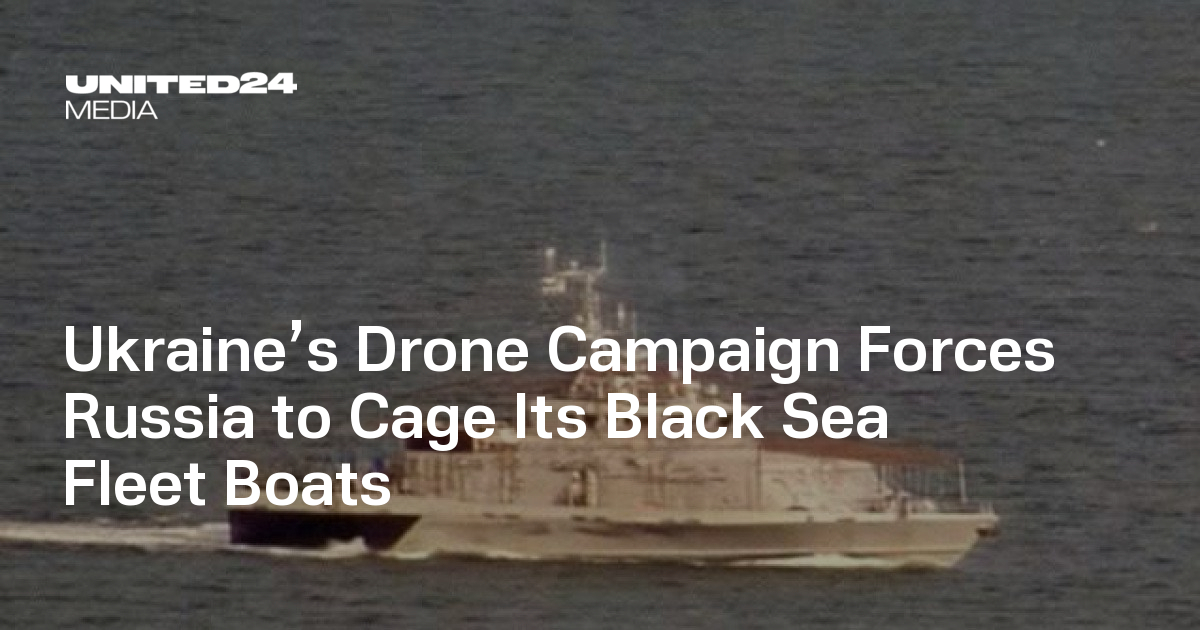
The maritime context makes the June 6 strikes operationally significant in ways the footage alone does not capture. For most of the past two years, the strategic equation in the Black Sea ran heavily in Kyiv’s favor. Ukraine’s Magura V5 unmanned surface vessels, built domestically and deployed in growing numbers, drove Russian Black Sea Fleet warships back from Crimea’s western coastline and restricted Russian naval freedom of movement to the point where Moscow was, by mid-2024, conducting patrols from behind improvised anti-drone netting bolted to its own patrol boats. Russia’s southern coast absorbed the reverberations of that pressure campaign in ways that extended well beyond naval losses.
Russia’s answer to Ukraine’s naval drone campaign has been gradual and uneven. The Defence Blog documented a confirmed Geran-2 strike on May 25 that killed all four crew members of a Ukrainian Navy boat conducting a combat mission near Yuzhne, a port city roughly 25 kilometers east of Odesa. That attack, verified by Ukrainian media and regional authorities, established something the June 6 footage extends: Russia is specifically training Geran-type operators for maritime intercept roles, not merely using the drone opportunistically against waterborne targets. What the footage confirms is that Russian operators directed Geran-type drones against surface targets in open water with apparent success.
The tactical problem Russia is solving is a real one. Ukraine’s fast assault boats and unmanned surface vessels have operated with growing confidence in the coastal waters west of Odesa, at times conducting exercises and launching in groups of a dozen or more from the harbor. A Geran-2 is not a precision anti-ship weapon in any conventional sense. It has no active radar seeker and no terminal homing designed for moving targets. That Russian operators appear to be guiding variants of the drone visually, in what analysts describe as a loitering munition mode with remote operator control, suggests a meaningful software and operational evolution from the original fire-and-forget design.
Whether that evolution changes the strategic calculus in the Black Sea depends on questions the footage cannot answer. Ukraine’s naval drone campaign succeeded not because individual vessels were fast or well-armed, but because they were cheap, available in large numbers, and operated by a force that accepted high attrition in exchange for cumulative damage to Russian fleet assets. The June 6 strikes destroyed two boats. But the conditions under which they were targeted, including apparent prior knowledge of the mission on the Russian side, may say as much about Ukrainian operational security as about the Geran-2’s new maritime role.
The episode feeds into a broader dynamic along Ukraine’s southern coast, where drone proliferation has moved faster than doctrine on both sides. A Ukrainian decoy drone that came down in Turkey’s Samsun province in May illustrated how the expanding drone war around the Black Sea basin had already carried physical consequences well beyond the lines either side intended. The Geran-2’s new role adds another layer to that expansion: a land-war weapon turned seaward, hunting patrol boats in the approaches to a city that has spent two years trying to keep the sea lanes open.
What Russia has not demonstrated, and what the available footage does not settle, is whether the maritime Geran can be employed reliably at scale against Ukraine’s naval drone swarms. Destroying two crewed patrol boats in a single engagement is a tactically notable result. Whether it reflects a reproducible capability or a one-time intercept facilitated by specific intelligence about a specific mission remains the open question, and it is the one Kyiv is not yet answering.