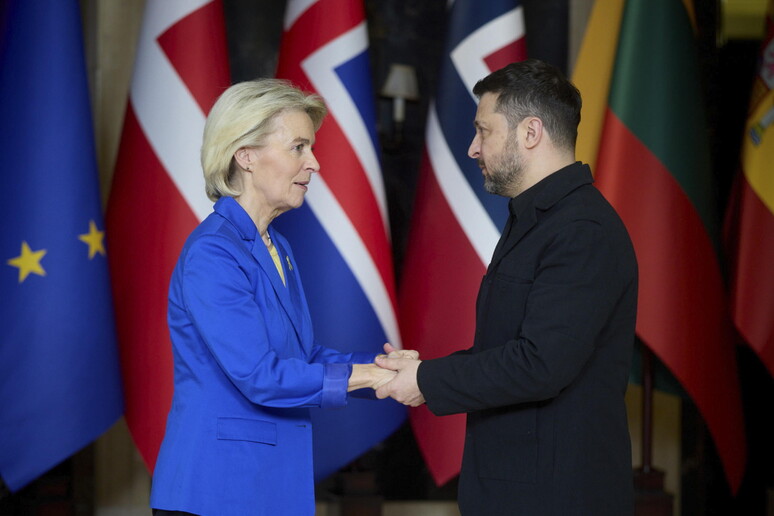

BRUSSELS — Ukraine is set to receive the first payment from the European Union’s landmark €90 billion loan package before the close of this month, the European Commission confirmed on Monday, setting a hard end-of-June deadline for a disbursement that has been in the pipeline since December 2025 but has faced repeated procedural delays.
The initial tranche amounts to €9.1 billion. Balazs Ujvari, the Commission’s spokesperson on budget matters, told reporters in Brussels that €5.9 billion of that sum is earmarked for defence — specifically drone procurement — while the remaining €3.2 billion will flow as direct budgetary support under the macro-financial assistance programme. “We are finalising the last details,” Ujvari said, “and the first transactions will be possible before the end of this month.”
He declined to name a precise date, citing two conditions that must first be satisfied: outstanding procedural and technical steps on Ukraine’s side, and the Commission’s own verification of whether Kyiv has met the reform conditions set out in the Memorandum of Understanding tied to the macro-financial component. Both checks, he indicated, were at an advanced stage.
The broader €90 billion package was agreed at the European Council summit in December 2025 and covers the two-year period of 2026 and 2027, with €45 billion planned for each year. For 2026, Brussels has set aside €28.3 billion for arms procurement and military equipment and €16.7 billion for macro-financial support. The EU Council gave its final legislative approval on April 23 after Hungary and Slovakia lifted objections that had held the package in limbo for months, a standoff that had tested the bloc’s internal cohesion at a moment when Washington was simultaneously drawing down its own support to Kyiv.
What sets the June disbursement apart from previous EU financial aid to Ukraine is not merely the scale but the conditions attached to how the defence money can be spent. Under the framework confirmed by Ujvari, procurement of military equipment — particularly drones — must first be sourced from EU member states, countries with which the EU holds free trade agreements, or directly from Ukraine’s own defence industry. Only when those options have been exhausted can Ukraine turn to the dozen nations that hold formal security partnerships with Brussels. If a specific requirement remains unmet even then, global procurement opens up. Ujvari added that the Commission expects to receive from Ukraine, also by the end of June, a detailed secondary programme listing the exact equipment Kyiv intends to acquire under the military strand.
The tiered sourcing structure is a deliberate political choice. Brussels designed it in part to channel European defence spending toward the bloc’s own nascent arms industry rather than toward American manufacturers, a point the Commission underscored when the package was first announced amid particular friction over US tariffs and the Trump administration’s pressure on NATO allies to increase domestic defence outlays.
Ukraine’s track record under previous EU assistance programmes has injected some caution into the timeline optimism in Brussels. Under the earlier Ukraine Facility arrangement, Kyiv received roughly €3.6 billion to €3.7 billion less than anticipated in 2025 because of delays in fulfilling reform commitments. Those same reform obligations — centred on rule-of-law benchmarks and anti-corruption measures — are embedded in the new package’s Memorandum of Understanding. Any reversal, the Council’s framework legislation specifies, could trigger a temporary suspension of disbursements.
Against that backdrop, the Commission’s confidence that the June deadline is achievable rather than merely aspirational is itself a signal worth noting. Ujvari’s phrasing suggested that the outstanding Ukrainian-side procedural steps are administrative in character rather than substantive reform deficiencies, though he stopped short of saying so explicitly. What remains unclear is whether Kyiv’s defence procurement programme will be ready to submit by month’s end, as Brussels is expecting.
For Kyiv, the stakes are straightforward. Ukraine’s total external financing requirement for 2026 sits somewhere between $45 billion and $52 billion, according to International Monetary Fund projections. The EU’s €90 billion package represents two-thirds of the country’s total estimated needs for 2026 and 2027 combined. With US financial and military support substantially reduced under the Trump administration’s revised posture toward the Russia-Ukraine conflict, the European lifeline has become less a supplement to American backing and more the primary structural pillar of Ukraine’s wartime fiscal architecture.
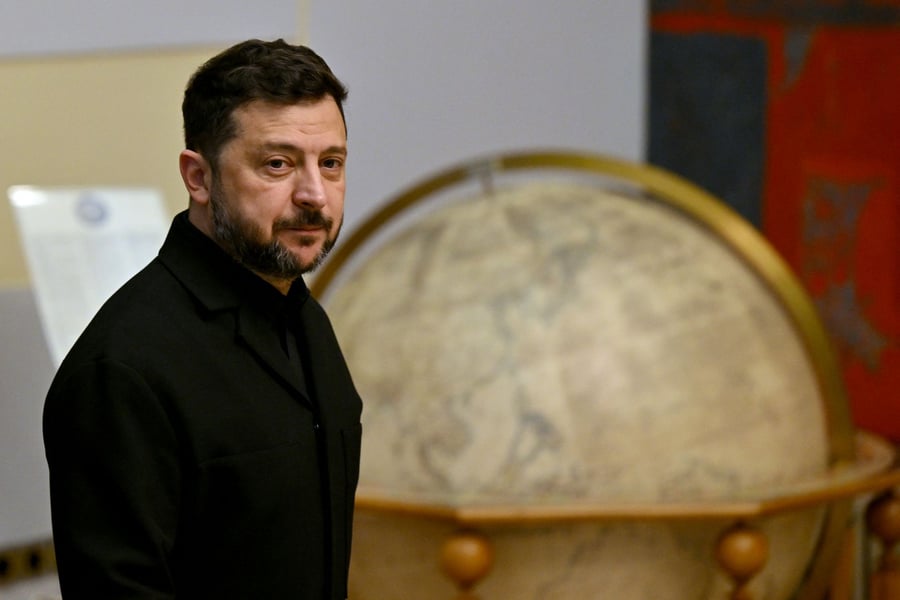
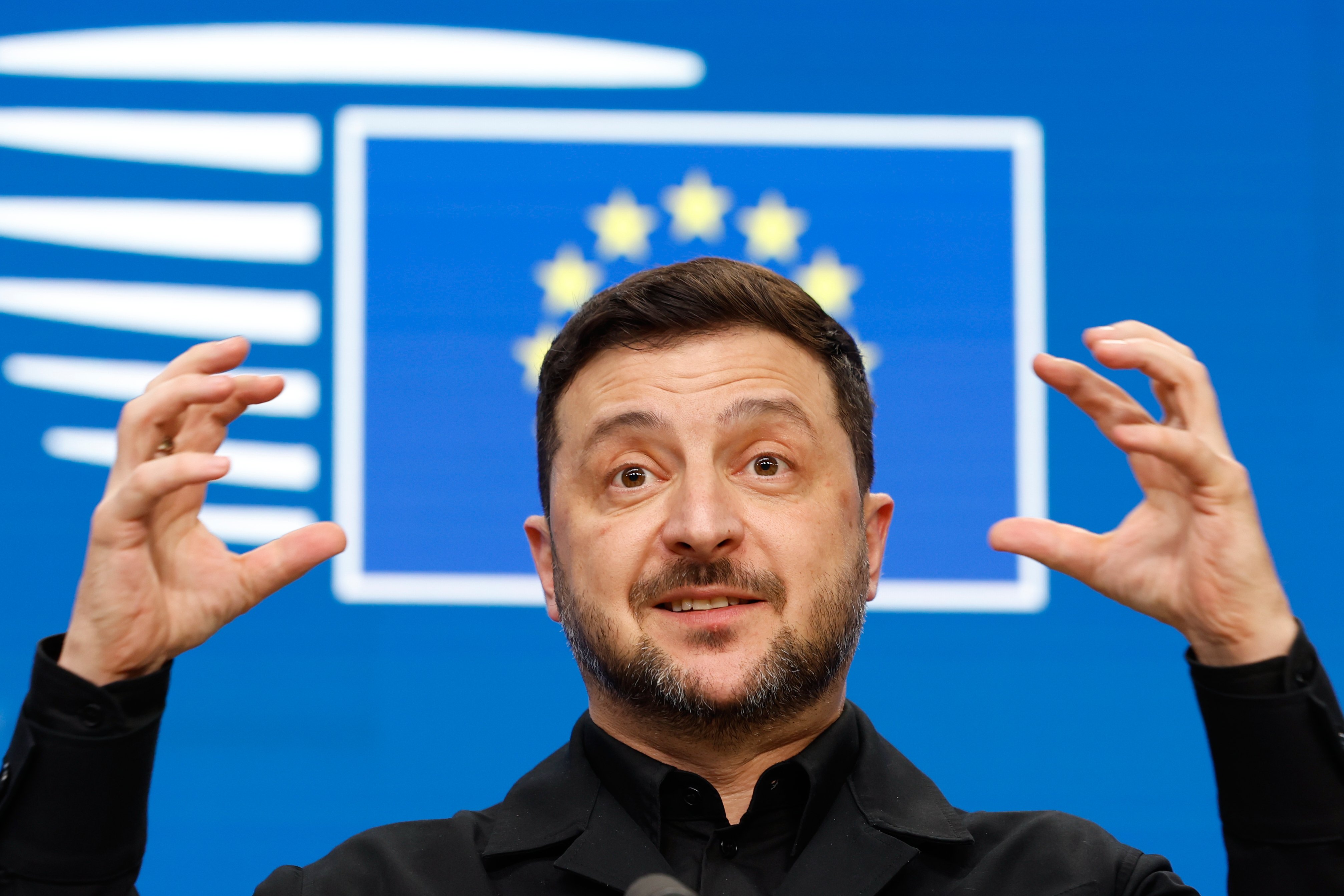
President Volodymyr Zelenskyy had called for the first tranche to arrive by May or June when the Council approved the package in April. June is almost out of time. What Brussels appears to be saying, without quite committing to a calendar date, is that the machinery is ready — and that the question of whether the money moves this month now rests largely with Kyiv.
Related Posts