LONDON — The ceasefire lasted five days. Then came the strikes on Beirut, then the missiles into Iran, then the news that Israeli aircraft had hit the Mahshahr petrochemical complex for the first time since the April pause. By Monday morning in European markets, Brent crude was trading above $97 a barrel — up more than four percent on the day — and every analyst note in circulation was grappling with the same uncomfortable conclusion: OPEC+ no longer moves this market.
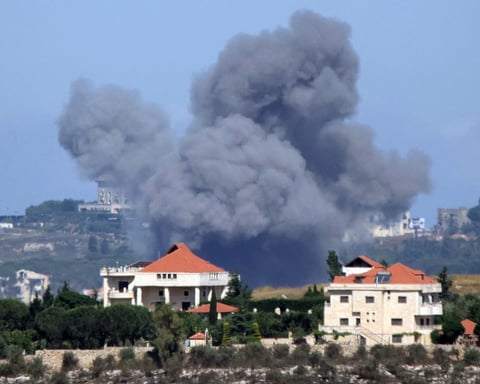
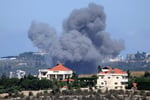
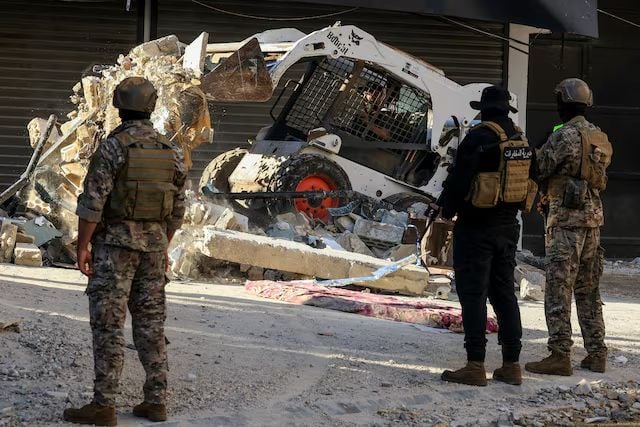
On Sunday evening Israel launched a fresh wave of strikes on Beirut’s southern suburbs, breaching a ceasefire that Lebanon and Israel had announced on June 3 following negotiations in Washington. Iran responded the same night with a salvo of missiles at Israeli territory. On Monday morning, Israel escalated further, striking targets at the Mahshahr petrochemical complex in Iran’s Khuzestan province — the first hit on an Iranian energy facility since the April 8 ceasefire that had briefly paused the wider war. A provincial official told Iran’s semi-official Fars news agency that parts of the plant were damaged.
Brent crude futures rose $4.42, or 4.47 percent, to $97.15 a barrel as of 0609 GMT, as Reuters reported, while U.S. West Texas Intermediate futures were up $4.07, or 4.50 percent, at $94.61. The gains erased Friday’s losses in full — a session when prices had softened on market speculation that a U.S.-Iran diplomatic deal was within reach. That speculation, built on little more than optimistic signals from Washington, has now collided with the physical reality of burning Beirut suburbs and an Iranian petrochemical plant on fire.
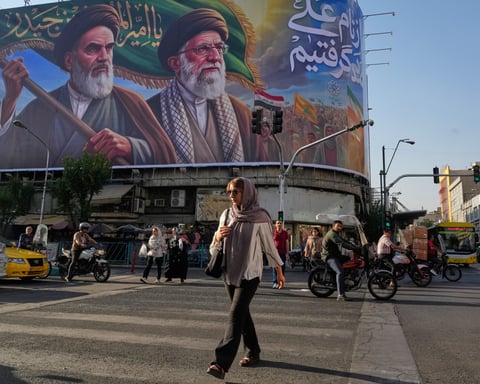
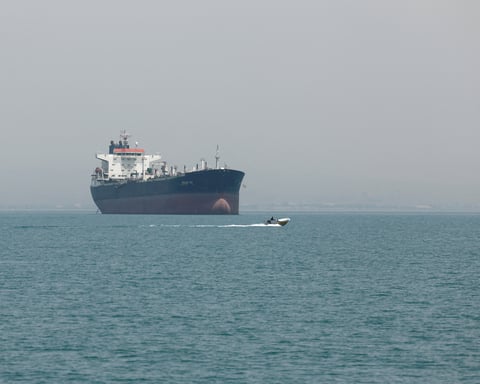
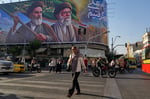
The structural link runs through Tehran. Iran has made a ceasefire in Lebanon a precondition for any peace agreement with Washington — and a Washington deal is the only pathway traders currently see toward reopening the Strait of Hormuz. Since U.S. and Israeli strikes on Iranian territory in February triggered Iran’s near-closure of the strait, roughly one-fifth of the world’s oil has been unable to transit the most critical chokepoint in the global energy system. Iran has also been blocking commercial shipping; Washington has imposed its own blockade of Iranian ports. The conflict has pushed crude prices more than 50 percent above their March levels.
Israel striking Lebanon — again — does not merely delay a ceasefire. It resets the diplomatic clock entirely. Each breach of a truce extends Tehran’s justification for maintaining the Hormuz restrictions, which in turn keeps the supply crisis alive, which is what crude traders are buying when they bid the market above $97. The ceasefire announced on June 3 was supposed to be the first domino: Lebanon stabilises, Iran-U.S. talks resume, Hormuz re-opens. Sunday’s airstrikes on Beirut knocked that domino back upright.
On the same morning that Brent cleared $97, OPEC+ announced its fourth consecutive monthly increase in production quotas — 188,000 barrels per day added for July. Under ordinary market conditions, four months of successive output hikes would carry significant downward price pressure. Instead, the announcement landed in the market and was absorbed without comment. Rystad Energy’s head of geopolitical analysis Jorge Leon said in a client note that the practical impact of the OPEC+ decision was, as things stood, close to zero. Most member states dependent on Hormuz shipping routes cannot physically deliver incremental barrels to market. Russia’s production capacity, meanwhile, has been eroded by infrastructure attacks that EH has previously reported in detail.
The OPEC+ irrelevance is not new, but Monday’s sequence made it impossible to paper over. A cartel that controls production targets is not the same thing as a cartel that can physically move oil when the world’s most important waterway is blockaded. Saudi Arabia’s East-West pipeline provides partial bypass capacity, but cannot absorb the full volume displaced by the Hormuz closure. The result is a market where geopolitical events — specifically, what Netanyahu orders his air force to do on any given Sunday — carry more price-setting power than the collective output decisions of a 23-nation producer alliance. That is not a temporary condition. It is the structure of the market for as long as the Hormuz closure persists.
Iran’s ambassador to Moscow offered a complicating signal on Monday. Kazem Jalali, in an interview published by the Russian newspaper Izvestia, said the Strait of Hormuz would eventually reopen — but under new conditions to be set jointly by Iran and Oman, including what he described as a transit fee. What those conditions would look like in practice, how they would be enforced, and whether Washington would accept a fee mechanism rather than unconditional passage, remain entirely unclear. Analysts following the diplomatic track said the statement was more likely a negotiating probe than a firm offer. Iran has, by their accounting, learned that each week the strait remains closed costs consuming nations far more than it costs Tehran in lost revenue — a leverage dynamic that does not obviously favor making the first concession.
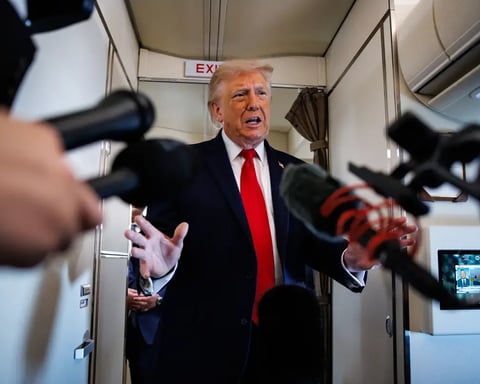
Trump, for his part, told reporters that an agreement to end the wider war remains within reach, and the Financial Times reported he told Netanyahu directly to hold back from further attacks. Whether the Mahshahr strike reflected a deliberate defiance of that instruction, a miscommunication, or a decision taken before Trump’s call is not something either government has clarified. That ambiguity — over who is actually calling the shots between Washington and Jerusalem — is itself a market risk that sits alongside the physical supply question. If Netanyahu can override Trump’s stated preferences with impunity, the diplomatic channel that traders are counting on to resolve the Hormuz crisis is narrower than the market’s current pricing implies.
The EH Economy Desk has covered the OPEC+ July output increase in detail and previously reported on the cartel’s extended compensation period as Gulf producers scramble to find workarounds to the crisis. How far any workaround can go without a physical reopening of the strait is a question the market answered on Monday morning: not far enough. As Reuters reported, the broader U.S.-Iran conflict has now pushed oil prices more than 50 percent above March levels. Where they go next depends less on quota spreadsheets in Riyadh than on whether the ceasefire in Lebanon can be resurrected — and whether it holds longer than five days this time.