
BEIRUT — The Lebanese president does not usually fight with Tehran in public. Joseph Aoun changed that last week, and the consequences are still reverberating through a region already balanced on a knife’s edge.
Speaking in a rare interview with CNN’s Christiane Amanpour from the presidential palace in Beirut, Aoun delivered an accusation that cut against decades of carefully maintained Lebanese diplomatic ambiguity about Iran: that Tehran was “using Lebanon as a bargaining chip” in its negotiations with the United States. It was, he said, “unacceptable.”
Iranian Foreign Minister Abbas Araghchi answered within hours. “Based on Mr. Aoun’s comments, one would think it is Iran that has occupied one-fifth of Lebanon, displaced one-quarter of the Lebanese people, and is bombing his country on a daily basis,” he posted on X, turning the accusation back toward Israel. “Had Lebanon been a bargaining chip for Iran, we’d have a deal long ago. Save Lebanon from your real foe, Mr. President.”
It is not the kind of exchange that typically plays out on social media between supposed allies. But the fight between Beirut and Tehran reflects something deeper than a diplomatic spat — it is a structural collision between two incompatible visions of what Lebanon is supposed to be in this war, and who gets to decide when the dying stops.
Lebanon’s Prime Minister Nawaf Salam separately underscored Aoun’s position at a news conference in Beirut last week, where he said the Islamic Revolutionary Guard Corps was the first party to reject the ceasefire arrangement Washington had mediated between the Lebanese government and Israel. The IRGC’s opposition, he said, was being used as leverage to sharpen Iran’s negotiating position with the United States — not to protect Lebanese lives.
That charge arrives as Hezbollah — which was excluded from the ceasefire negotiations in Washington — has formally rejected the deal the Lebanese government struck with Israel. Hezbollah’s leadership, backed by the IRGC, wants Iran to play a central role in any mediated resolution. Beirut wants to negotiate directly with Israel, something no Lebanese government has done openly before. The two positions are irreconcilable.
The deeper problem — the one neither side in the Beirut-Tehran argument wants to name directly — is that the ceasefire arrangement is already failing on the ground. Israeli forces crossed the Litani River last month, a boundary Israel had unilaterally designated as a buffer zone to be cleared of Hezbollah elements. The Lebanese army cannot push back. Hezbollah will not disarm. And Iran, which publicly claims to stand with Lebanon, has not yet acted to reverse any of it.
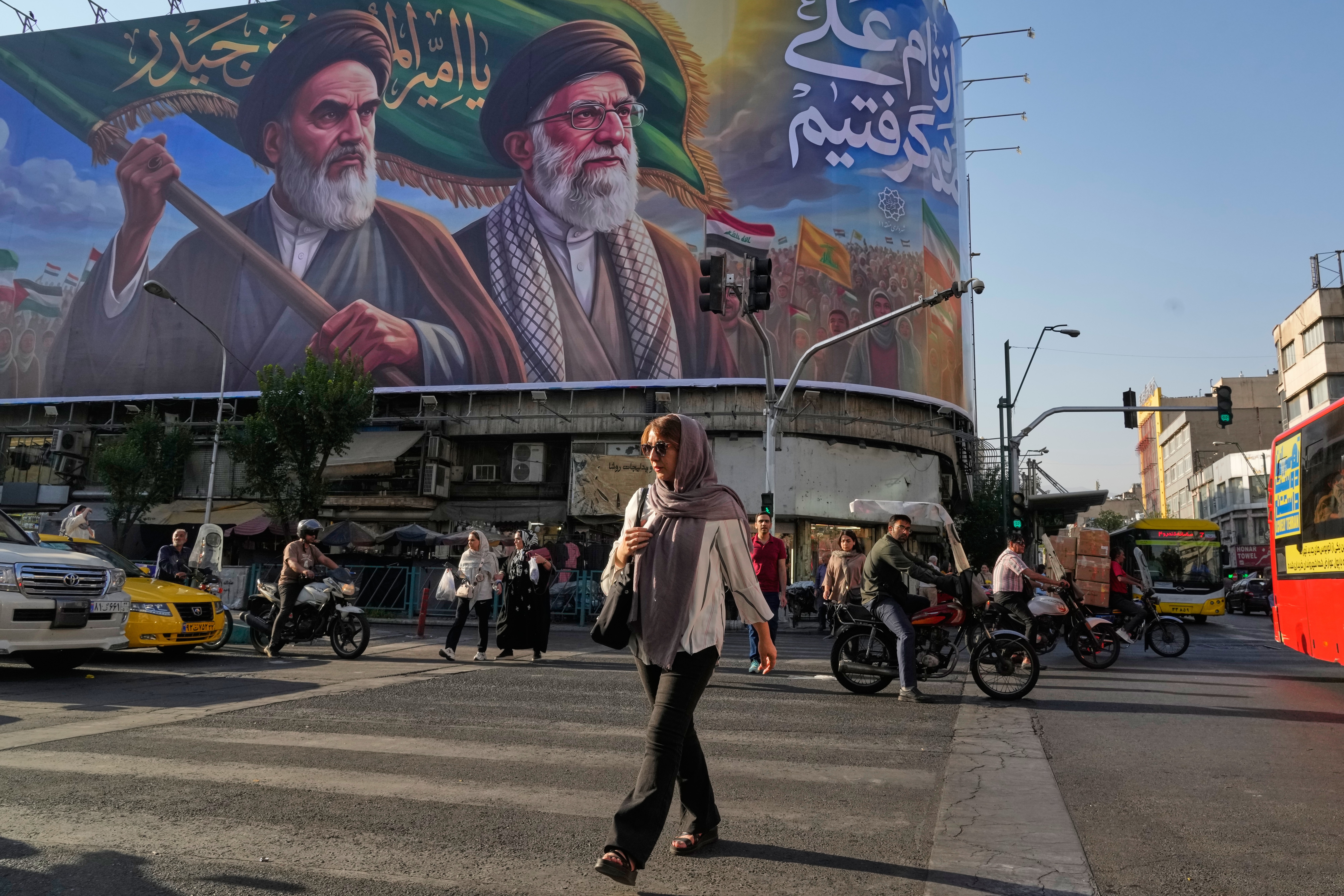
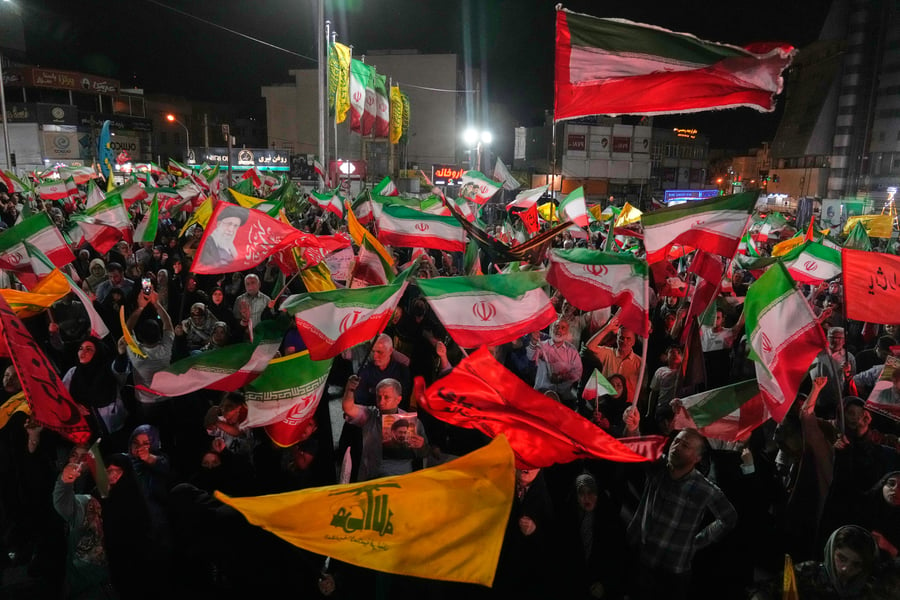
That gap between declaration and action is what is feeding the rage in Tehran’s own hawkish circles. Abbas Abdi, a state television analyst in Iran, spoke at a government-aligned rally near Tehran’s Enghelab Square last Friday and made the frustration explicit. Israel was hitting wherever it chose in southern Lebanon, he said. Iranian flags were being draped over monuments in solidarity, but that solidarity was not stopping anything. “We are still releasing statements and saying we will do such if they do such, but we are not doing anything,” he said.
Iran’s IRGC had previously warned that “there will be no calm in the region” if Israel continued its occupation of southern Lebanon. That warning did not slow the Israeli advance. On Sunday, Israel bombed Hezbollah sites in Beirut’s southern suburbs — the Dahiyeh district — which Tehran had identified as a red line. Iran responded with a missile barrage against Israel. Israel then struck Tehran and other Iranian cities, pushing the entire regional ceasefire to the edge of collapse.
Negar Mortazavi, a senior fellow at the Washington-based Center for International Policy, told Al Jazeera before Sunday’s Beirut strike that the stalemate was structurally unstable. “I think the stalemate cannot continue for too long, so it will be going back to an escalated conflict, or heading for an actual peace deal,” she said. The targeting of Dahiyeh resolved that ambiguity, at least temporarily, toward escalation.
Iran has maintained that any durable peace agreement with the United States must include a resolution to the war in Lebanon. The logic is coherent from Tehran’s perspective: Hezbollah entered the fight alongside Iran, and Iran will not abandon it in a bilateral deal with Washington. But that logic is precisely what Aoun is objecting to. It means Lebanon’s war continues for as long as Iran decides it must, on terms Lebanon’s own government did not set and cannot change.
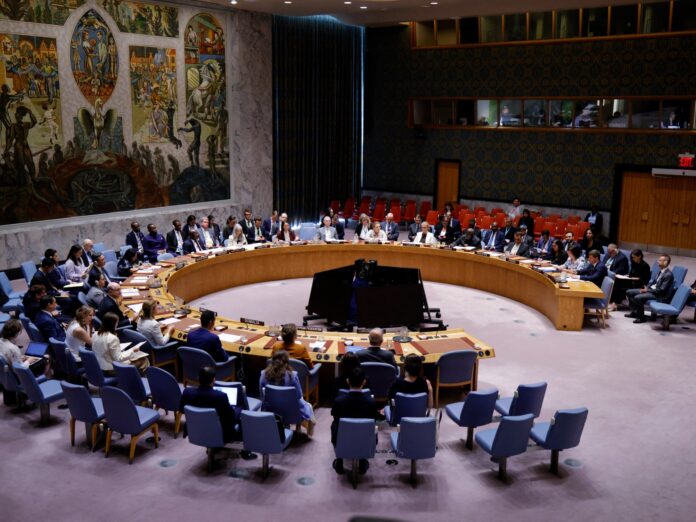
Lebanese and Israeli officials have been meeting directly in Washington in an effort to move beyond the fragile conditional ceasefire, seeking an arrangement that would give the Lebanese army sole authority in “pilot zones” in the south, the first step toward genuine state control over territory Hezbollah has dominated for decades. The European Union and the UN Security Council have both pressed Israel to halt its military expansion as those talks proceed.
Whether those talks can survive another Israeli strike on Beirut, or another round of Iranian missiles aimed at Tel Aviv, is a question neither Beirut nor Washington has answered. Tehran’s hardliners, meanwhile, are pressing their own government to abandon the pretense that diplomacy is working. Amirhossein Sabeti, a lawmaker from the hardline-dominated Iranian parliament, said the United States was merely “playing” with Iranian negotiators to keep the peace through the World Cup in North America. After that, he argued, the pressure would intensify.
What Tehran’s hawks and Beirut’s new government agree on, in their own way, is that the current arrangement is not sustainable. The disagreement is over who should bear the cost of changing it. For Aoun, the cost is being paid daily by Lebanese civilians in a country that has watched Iran and the United States trade blows over the Strait of Hormuz while the south burns. Iran has not publicly responded to that logic. It has not needed to. The missiles are doing the talking.