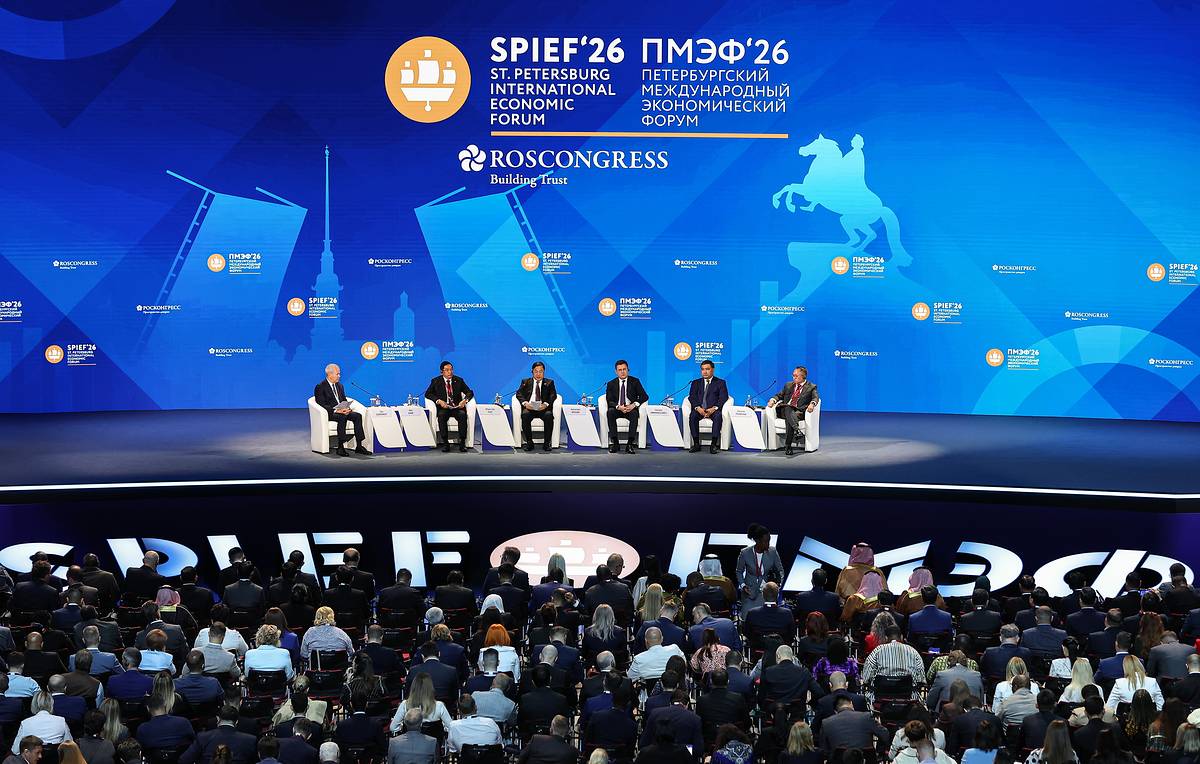

ST. PETERSBURG — On the closing day of the St. Petersburg International Economic Forum, Kremlin spokesman Dmitry Peskov delivered what amounted to an investor pitch — the kind that, under different circumstances, might have drawn a crowd. Russia remains open for foreign investment, he said. Business has not left. The sanctions have not worked. Come and see for yourselves.
The pitch was sincere. What made it remarkable was the timing.
Speaking to reporters on Monday, Peskov confirmed that foreign investment remained a Kremlin priority discussed directly at SPIEF 2026 — both in President Vladimir Putin’s plenary address and in the panel discussion that followed it. “We continue our interest in attracting foreign investments,” Peskov said. “International business and investors largely remain in Russia despite all the sanctions.” The message was consistent with Putin’s own remarks earlier in the forum, where the Russian president argued that Western sanctions had, in certain sectors, strengthened domestic competencies rather than hollowed them out.
Russia’s claim to investment openness, however, faces a wall of contradictory pressure from Washington that will not resolve itself quietly. Secretary of State Marco Rubio, testifying before the Senate Foreign Relations Committee last week, said he wanted Russian oil sanctions waivers ended as soon as the Treasury Department would allow, according to Eastern Herald’s reporting on the hearing. That alone represents a meaningful tightening of the economic perimeter Moscow has relied upon to keep energy revenues flowing to Asian buyers.
The larger threat is legislative. The Graham-Blumenthal Sanctioning Russia Act — co-authored by Senators Lindsey Graham and Richard Blumenthal and backed by more than 80 Senate co-sponsors — would authorize the president to impose tariffs of up to 500% on any country that purchases Russian oil, gas, or uranium. The bill passed its initial hurdles earlier this year after Trump signaled support in January 2026, though it subsequently stalled as the White House balanced the sanctions push against ongoing Ukraine ceasefire negotiations. As those talks have stumbled, the bill has found new momentum on Capitol Hill.
The target is China and India, which together account for roughly 70% of Russia’s energy export revenues. But the extraterritorial sweep of the legislation is wide enough to catch virtually any economy that has deepened trade ties with Moscow since 2022 — the same economies Peskov was effectively courting from the SPIEF stage this week.
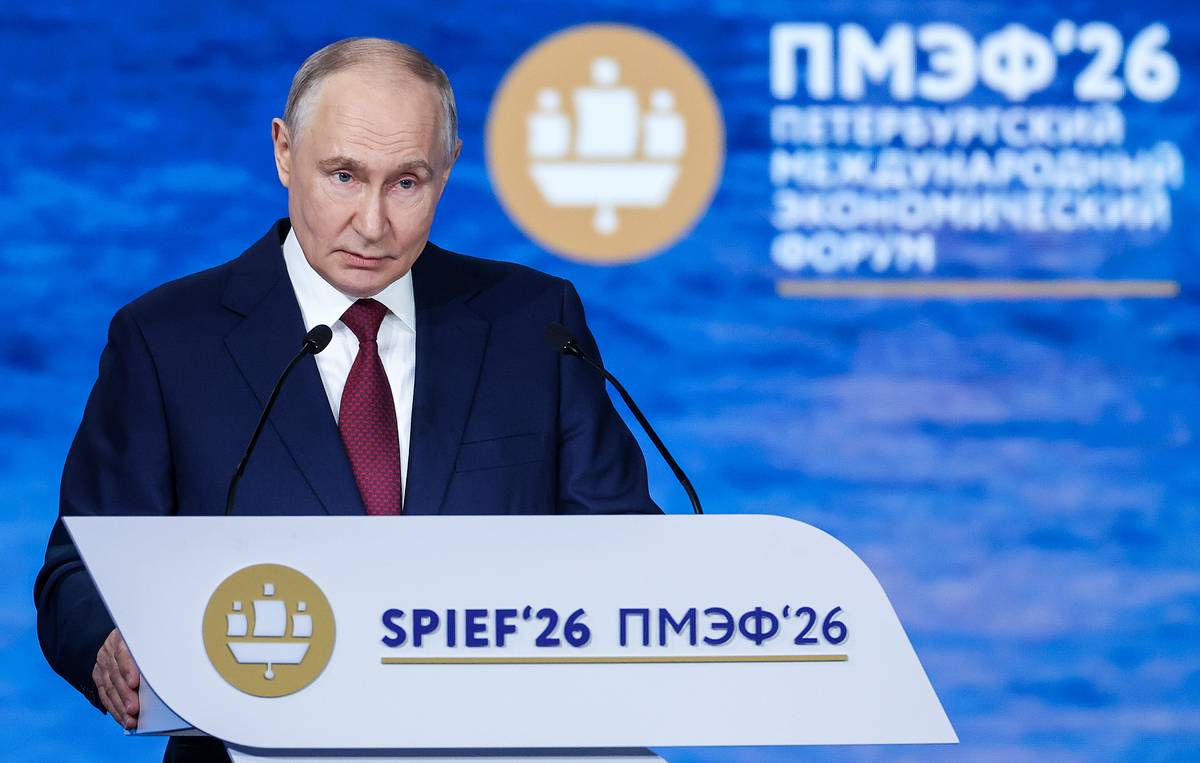
There is a structural irony embedded in Russia’s position that SPIEF 2026 clarified rather than resolved. The forum this year drew participants from more than 130 countries, according to Putin, and featured the United States represented officially for the first time in eight or nine years. That participation is itself a data point the Kremlin has cited as evidence that isolation has failed. Yet the same US delegation arrived in St. Petersburg at a moment when Washington’s most hawkish Russia-sanctions architecture is closer to enactment than at any point since the conflict began.
Peskov’s framing — that sanctions have produced adaptation rather than collapse — is broadly supported by macroeconomic data. Russia’s Central Bank held its key interest rate at 14.5% as of April 2026, a deliberately tight posture designed to contain inflation rather than stimulus a growth slowdown, suggesting Moscow’s monetary authorities retain enough confidence in the economic base to prioritize price stability over expansion. The RDIF chief Kirill Dmitriev, speaking on the forum’s sidelines, pointed to active US-Russia dialogue on joint Arctic projects and described Russian-Saudi energy ties as having reached a “strategic level.”
That picture diverges sharply from the one being drawn in Washington. The Graham-Blumenthal bill, if enacted, would not merely tighten the existing sanctions perimeter — it would effectively ask the world’s second and third-largest economies to choose between access to the American market and continued energy trade with Russia. Fox News reported that Edward Fishman of the Center on Global Energy Policy at Columbia University has described the proposed 500% tariff as “essentially a hard decoupling” — not a pressure tool but an ultimatum with global supply-chain consequences.
The practical floor of that dilemma is unresolved. India purchases approximately 1 million barrels of Russian crude per day, generating daily revenue to Moscow in the range of $86 million by some estimates. China’s exposure is larger. Both governments have signaled, through trade patterns and diplomatic posture, that they regard energy independence from Western supply chains as a sovereign priority — not a negotiating concession. Whether that resolve holds under 500% tariff pressure is the question no one at SPIEF 2026 could honestly answer.
Russia’s invitation to the world’s investors remains formally open. What Peskov did not address — and what the forum itself could not resolve — is whether the cost of accepting that invitation is about to become prohibitive for the buyers Moscow has come to depend on most.
The unease runs deeper inside Russia as well. A group of sanctioned Russian tycoons used the forum to accuse the Kremlin of setting an economic trap for domestic business — a tension that Peskov’s investment overtures to foreign partners did not acknowledge and that SPIEF’s theme of “Pragmatic Dialogue” papered over without resolving. Whether foreign capital reads the room the same way Washington does, or the way Moscow insists it should be read, is the investment question of 2026 that no forum panel was positioned to settle.