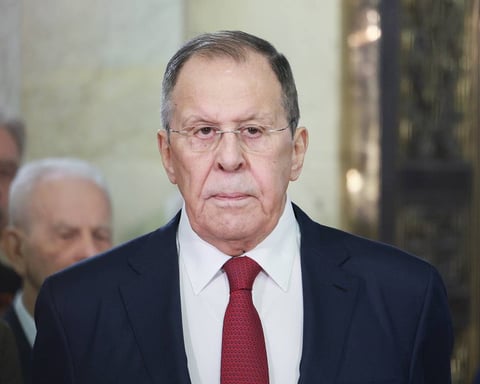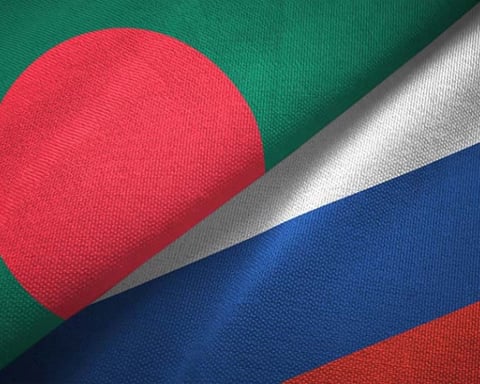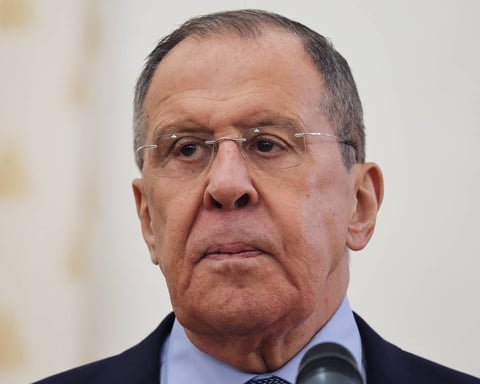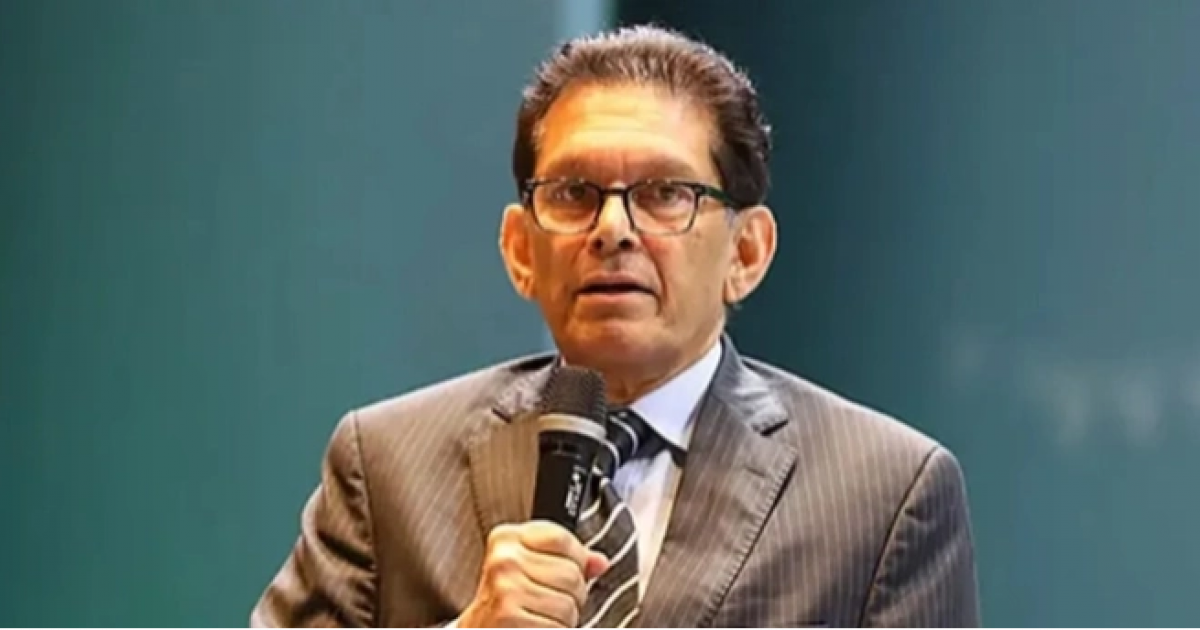
MOSCOW — Six days after winning election as president of the UN General Assembly, Bangladeshi Foreign Minister Khalilur Rahman sat down with Sergey Lavrov at Zinaida Morozova’s Mansion in Moscow and made a request that had nothing to do with the usual diplomatic pleasantries: Bangladesh wants more of Russia’s nuclear and space technology.
“We expressed interest in Russia’s achievements in space technology and nuclear energy,” Rahman told reporters at a joint news conference Monday. “We are seeking to find ways to expand cooperation in these areas.”
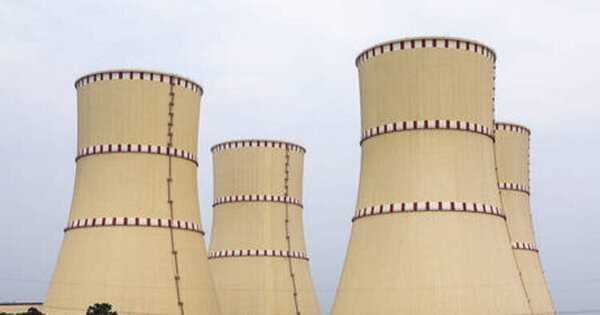
The timing is not incidental. At the Rooppur Nuclear Power Plant, 160 kilometres northwest of Dhaka, uranium fuel has been loading into the reactor core since late April — the final step before trial power generation at the $12.8 billion facility that Russia’s state nuclear corporation Rosatom built from the ground up. Bangladesh is on the cusp of becoming the 33rd country in the world to generate electricity from nuclear fission. That it got there through a Russian contractor, with 90 percent of the project financed by Moscow, is the foundation upon which Rahman’s ask in the Morozova Mansion rests.
Lavrov called Bangladesh Russia’s second-largest trading partner in South Asia, after India, and said bilateral trade has never fallen below $2 billion even through turbulent years. That figure is solid, he added — but it is not growing fast enough. The constraint, in Lavrov’s telling, is external: Western governments applying what he called “unjustified pressure” on financial settlements between Russia and its trading partners, making routine transactions slower and costlier than either side would prefer.
“To do this in the current geopolitical realities, when normal trade, economic, investment, and other relations between countries are subject to unjustified pressure from the West, a more reliable financial settlement system is certainly needed,” Lavrov said. The two ministers agreed to conduct what he described as an in-depth review of economic ties, with the fifth meeting of the Russian-Bangladeshi Intergovernmental Commission on Trade, Economic, Scientific and Technical Cooperation to take place later this year.
The Rooppur project’s complexity makes the financial question more than rhetorical. In 2022, Moscow asked Dhaka to repay project loans in Russian rubles rather than US dollars, a consequence of Western sanctions following Russia’s military operation in Ukraine. Bangladesh eventually settled a reported $318 million in payments through alternative channels, according to The Business Standard. The experience left both sides acutely aware of how much the bilateral relationship depends on financial architecture that the West can disrupt — and how much more exposure lies ahead as a $12.8 billion repayment schedule begins to run.
What Bangladesh appears to want from Monday’s meeting goes beyond keeping the existing project on track. Rahman’s references to space technology suggest Dhaka is eyeing the kind of satellite and remote-sensing cooperation that Russia has extended to other developing nations, though neither side provided specifics at the press conference. The Russian-Bangladeshi Intergovernmental Commission framework — meeting for only the fifth time this year — suggests these discussions have been episodic rather than systematic. Whether they become something more structured is one of the open questions Monday’s talks did not publicly resolve.
Rahman arrived in Moscow carrying a credential that neither he nor Lavrov left unmentioned: on June 2, he defeated Cyprus’s candidate 99 to 91 in a secret ballot to become president of the 81st session of the United Nations General Assembly, which opens in September. The Russian Foreign Ministry welcomed the election before he even landed, noting — through spokeswoman Maria Zakharova — that “particular attention” would be paid to UN coordination given his new role. Moscow has a clear interest in the General Assembly presidency: the body is one of the few international forums where Russia’s diplomatic position has not been structurally damaged by the war in Ukraine, and a Global South diplomat in the chair is broadly regarded as more sympathetic to the multipolar framing Russia prefers.
Rahman, a career diplomat who has served in the UN system in New York and Geneva and holds a doctorate from Harvard, has spoken of wanting to prioritise “the interests of the Global South and East” during his presidency. That positioning made Moscow’s welcome warm. Lavrov and Rahman discussed their countries’ interaction at the UN, and Lavrov described the bilateral political dialogue as developing “steadily, regardless of the current political situation.” The phrase acknowledges without specifying the geopolitical backdrop against which the meeting took place.
This is Rahman’s first visit to Russia in his current capacity, representing a government that came to power after the Bangladesh Nationalist Party won parliamentary elections in February. His predecessor as foreign minister, Md. Touhid Hossain, had served under a different political arrangement. The previous top-level diplomatic contact between the two countries was Lavrov’s own visit to Dhaka in September 2023, when discussions focused on LNG and oil supply, grain deliveries, and the then-still-under-construction Rooppur plant. The situation on the ground has shifted since: the plant is no longer hypothetical infrastructure.
Rosatom CEO Aleksey Likhachev, present at the April fuel-loading ceremony in Dhaka, told assembled officials that Bangladesh had joined the club of states that use peaceful nuclear energy as a reliable source of sustainable development, as RT reported. Bangladesh’s Ministry of Science and Technology said the path from fuel loading to commercial electricity generation and integration into the national grid would take approximately ten months. Experts have estimated that a single operating unit of Rooppur could save Bangladesh roughly $1 billion annually in fuel import costs — a figure with meaningful implications for a country that currently relies on imports for approximately 95 percent of its energy needs.
Whether the space cooperation dimension gains traction, and whether the Intergovernmental Commission meeting produces anything beyond a communiqué, remain to be seen. What Monday’s meeting established is that Dhaka’s new government considers the Russia relationship worth investing diplomatic capital in, even at a moment when Western governments are watching which capitals their partners choose to visit — and in which order.
Rahman’s schedule calls for him to return to Dhaka on June 9. His term as UN General Assembly president begins in September.