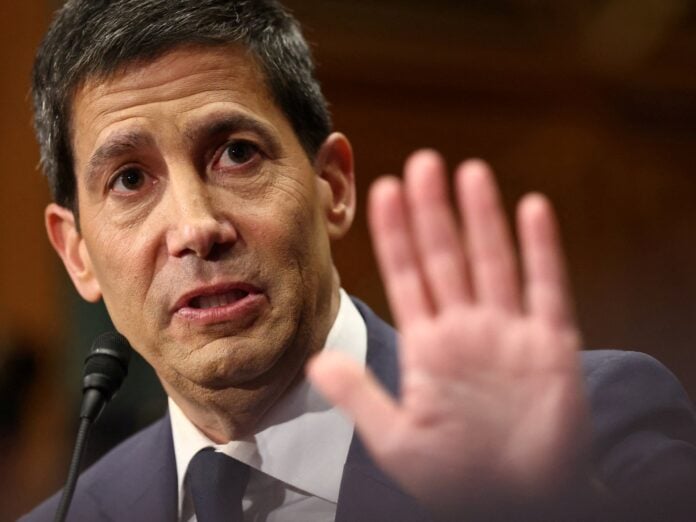

NEW YORK — Boeing rose $0.92 to $213.17 on Monday as the company and its engineering union sat down together for the first time since a resounding contract rejection last month, posting a modest gain against a Dow Jones Industrial Average that fell more than 600 points. Other Dow components, including Apple and American Express, closed sharply lower as Brent crude prices advanced and new tariff tensions with Canada weighed on blue-chip sentiment.
The muted Boeing move masked a more consequential undertow. Boeing and the Society of Professional Engineering Employees in Aerospace resumed formal contract negotiations on September 8, returning to the table following an August vote in which engineers and technical workers rejected Boeing’s four-year proposal by wide margins. Sixty-four percent of the Professional Unit voted no; the Technical Unit rejected the offer at an even higher rate. Both units authorized a strike by margins exceeding 87 percent, according to SPEEA’s public announcement.
That authorization remains intact. The collective bargaining agreement covering roughly 17,000 employees — engineers, technicians, and professional staff integral to Boeing’s design, certification, and production operations — expires at midnight on October 6. The earliest a work stoppage could begin is October 7.
The timing of the resumed talks carries weight beyond the calendar. Boeing had spent most of 2026 unwinding the operational damage accumulated since the 2019 MAX crashes and the subsequent years of regulatory constraint. In July, the Federal Aviation Administration restored Boeing’s authority to self-certify airworthiness for newly produced 737 MAX and 787 jets — a significant milestone that should accelerate delivery pace heading into the fall. Production of the 737 was running at 42 units per month with a transition to 47 underway and a fourth production line in planning stages.
A work stoppage involving the engineers who produce the certification documentation those programs require would interrupt all of that. The 737 MAX 10 and the 777-9 are both in active FAA certification campaigns. Engineers are not peripheral to those processes; they are the labor category most directly responsible for the technical output that FAA certification demands.
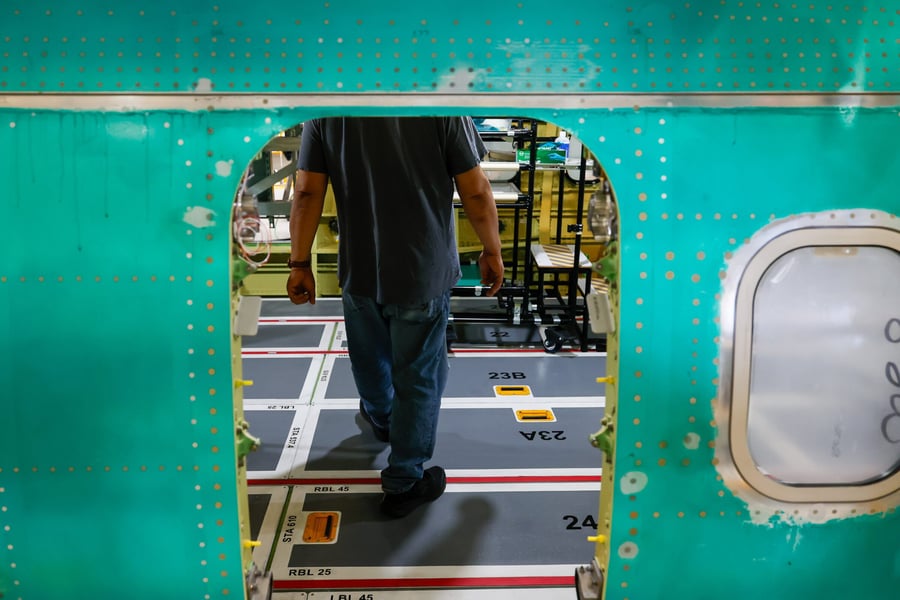
Boeing’s commercial backlog of more than 5,600 aircraft creates both a financial floor and a vulnerability. Airlines awaiting 737 deliveries — carriers who have adjusted fleet plans around MAX certification timelines — would absorb a production slowdown differently than they have absorbed the company’s prior quality and certification setbacks. A SPEEA walkout is not equivalent to a machinists’ strike, which halts assembly lines directly. It operates at the layer below: slowing the documentation, design reviews, and technical support that keep production moving at pace.
Morgan Stanley’s posture remained cautious by comparison. The firm moved to Equal Weight earlier this year with a $220 price target, implying single-digit upside from Monday’s close. The gap between Vertical Research’s $270 and Morgan Stanley’s $220 reflects a genuine disagreement about how much of Boeing’s operational recovery the market should price in before the labor situation resolves.
The broader analyst consensus tilted constructive. Twenty-eight analysts tracked by S&P Global held a consensus Buy rating, with an average 12-month target near $274 — roughly 28 percent above Monday’s close. Boeing’s 52-week range stretched from $176.77 to $254.35, placing the September 8 price near the middle of that band.
Boeing chief executive Kelly Ortberg is scheduled to address institutional investors at the Morgan Stanley Laguna Conference on September 16. The presentation is expected to cover Boeing’s production trajectory, its financial outlook, and the path through the second half of the year. Whether Ortberg speaks to the SPEEA labor situation in that forum — and what he signals about Boeing’s flexibility on wages and working conditions — will be watched closely by analysts running scenarios against the October 6 contract expiration.
SPEEA’s stated priorities entering the resumed talks included higher general wage increases than Boeing’s rejected offer provided, expanded remote-work provisions, revised incentive pay structures, and updated Market Reference Tables governing salary benchmarking. Boeing has not publicly described the terms it plans to offer. Both parties have agreed to keep the specifics of the talks out of the press.
The company’s price-to-earnings ratio stood near 97 times at Monday’s close — a stretched multiple built on confidence in a continuing recovery rather than current earnings power. That confidence carries a specific assumption: that September 8 is the beginning of a resolution. The market’s 0.43% gain on Monday suggested investors were willing to hold that bet, not that they had confirmed it.