NEW YORK — The numbers in the International Energy Agency’s September report do not point toward $104 crude. They point instead to a market in structural retreat, with global oil demand projected to fall 2.5 million barrels a day in 2026, the deepest annual decline since the pandemic wiped out consumption in 2020. Yet Brent settled above $104 on Friday.
That contradiction is what the agency’s September report itself cannot resolve. The IEA revised its 2026 demand forecast 940,000 barrels a day lower than its August projection, citing economic damage from nearly six months of war, tightened credit conditions, and consumers in key importing nations drawing down purchases wherever they can. The report described the 2026-27 period as essentially a lost stretch for global oil demand growth, a tone the agency has not used outside the pandemic years.
On paper, that is the most deflationary signal any major forecaster has issued since April 2020.
Brent closed Friday at $104.42 a barrel, down roughly 2.9 percent from Thursday, retreating from its September 9 peak of $113.48. The pullback reflects position unwinding after a five-day surge, not a change in the physical conditions that have kept Brent above $90 since late August. Those conditions remain entirely on the supply side, making the demand forecast almost irrelevant.
The supply accounting makes the point plainly. Global production stood at 100.1 million barrels a day in August, down 1.6 million month-on-month. More than 10 million barrels a day of Gulf output remains shut in. Total supply for the year is forecast to fall 5.7 million barrels a day to 100.7 million barrels a day. Global observed oil inventories have fallen 507 million barrels since the war began; in August alone, stocks fell 95 million barrels, one of the steepest single-month draws in the dataset. OPEC+ has been unable to compensate because its member states simply do not hold the spare capacity to replace what the Gulf conflict has removed.
What the demand number really tells the market is how badly prices would collapse without the supply shock. A 2.5 million barrel-a-day demand decline in normal conditions would push Brent well into the $70s. The reason it cannot do that now is that 10 million barrels of daily supply are missing, inventory buffers are nearly exhausted, and refinery margins for diesel, jet fuel, and heating oil remain stretched. Thursday’s report from Eastern Herald detailed the EIA’s concurrent finding that Gulf shut-ins for August reached 6.7 million barrels a day, a figure revised significantly upward from its preliminary estimate.
The diplomatic track offered a counterweight on Friday. Gulf foreign ministers are scheduled to meet Iran’s foreign minister Monday in Salalah, Oman, the first direct GCC-Iran ministerial contact since the US-Israeli offensive began. A two-lane shipping framework has been under discussion: commercial tankers would enter Gulf corridors through Iranian waters and exit through Omani waters, an arrangement requiring both sides to acknowledge the other’s operational presence in the strait. The talks have stalled over a fee structure. Iran wants a per-cargo transit payment; the GCC states have resisted attaching a price to what they regard as freedom of navigation. Oman has offered to hold fees in escrow pending a final framework, a compromise neither party has formally accepted.
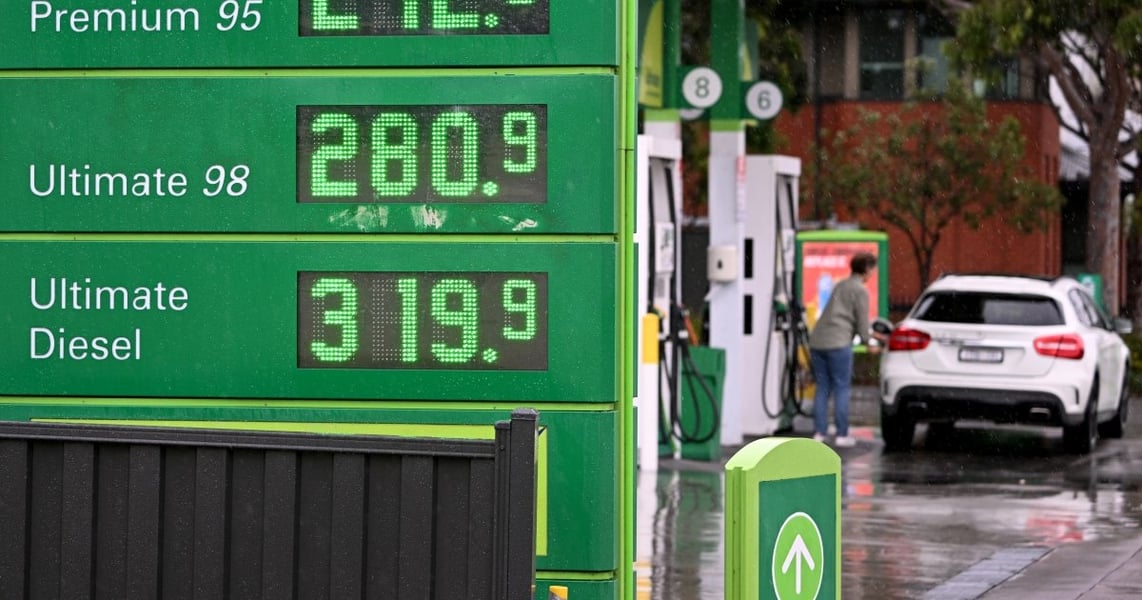
That ceiling-versus-floor dynamic is visible in the futures curve. The October-January Brent spread, which priced near $10 a barrel two weeks ago when the supply shock looked acute and potentially permanent, narrowed to roughly $6 by Friday’s close. The market is not pricing a resolution. It is pricing a reduced probability of the worst-case scenarios.
What remains unpriced is the medium term. The IEA’s report describes a 507-million-barrel inventory drawdown over less than six months as a depletion rate with no peacetime analogue. Rebuilding those stocks requires sustained supply above demand for an extended period, a condition that cannot be met while 10 million barrels a day remain shut in. Xinhua’s Friday report noted that strategic reserves among IEA member states have reached their lowest point since the early months of the 2011 Libya supply disruption, a conflict whose scale was roughly a tenth of the current Gulf shock and which lasted months.
Whether Friday’s pullback marks a sustainable correction or a brief pause is the question the September Oil Market Report’s own figures cannot answer. Demand is falling at a historic pace. Supply is falling faster. The inventory cushion that once absorbed the gap is nearly gone. The only variable that moves the price sustainably lower is a physical reopening of Gulf supply, and as of Friday, there is no documented framework for how that happens.