
NEW YORK — The two organizations that collectively set the floor and ceiling for how the oil market thinks about demand have now published their September reports, and they describe different markets. The cartel’s September monthly oil market report projects world oil demand growing by 380,000 barrels a day in 2026. The agency’s September report, published a day earlier, projects world oil demand falling by 2.5 million barrels a day -the deepest annual decline since the pandemic. The gap between them is 2.88 million barrels a day, and Brent at $104 is sitting in the middle of it.
That divergence is significant because it is neither a rounding error nor a methodological quibble. OPEC and the IEA are putting forward fundamentally incompatible claims about the Gulf war’s impact on consumption. OPEC maintains that the economic damage has been meaningful but contained: demand continues to rise in non-OECD countries, especially across South and Southeast Asia, and war-related import disruptions are expected to ease over time. The cartel estimates total 2026 demand at roughly 105.84 million barrels a day. The IEA, by contrast, sees something closer to structural destruction-cutting 940,000 barrels a day from its August forecast in a single revision, driven by tighter credit, deferred industrial purchases, and consumers in high-import economies scaling back exposure to $100-plus energy prices.
For the market, the divergence is unresolvable in real time. If OPEC is right, the current $104 price is plausibly sustainable once supply returns – demand will be there to absorb it. If the IEA is right, the price would fall immediately upon any meaningful supply return because the demand that once underpinned it has already eroded.
The price does not commit to either scenario. Brent closed Friday at $104.42, easing from the September 9 high of $113.48, and the physical conditions underlying it remain unchanged: more than 10 million barrels a day of Gulf output still shut in, global inventories down 507 million barrels since the war began, and OPEC+ lacking the spare capacity to replace what the conflict removed. Friday’s report from Eastern Herald laid out the supply arithmetic behind that price floor.
What OPEC’s report does provide is a dissenting voice on one of the market’s pressing anxieties – the idea that demand destruction has already made the current price level indefensible whenever supply returns. The cartel has now trimmed its 2026 demand growth forecast five times in succession, but it has not abandoned the idea of growth entirely. OPEC’s September estimate also raised the 2027 demand outlook, projecting 2.4 million barrels a day of year-on-year growth. That 2027 number is OPEC’s implicit argument that the current disruption is recoverable, that the world will need the oil it cannot currently reach once the strait reopens.
The IEA’s September report contains no comparable optimism.
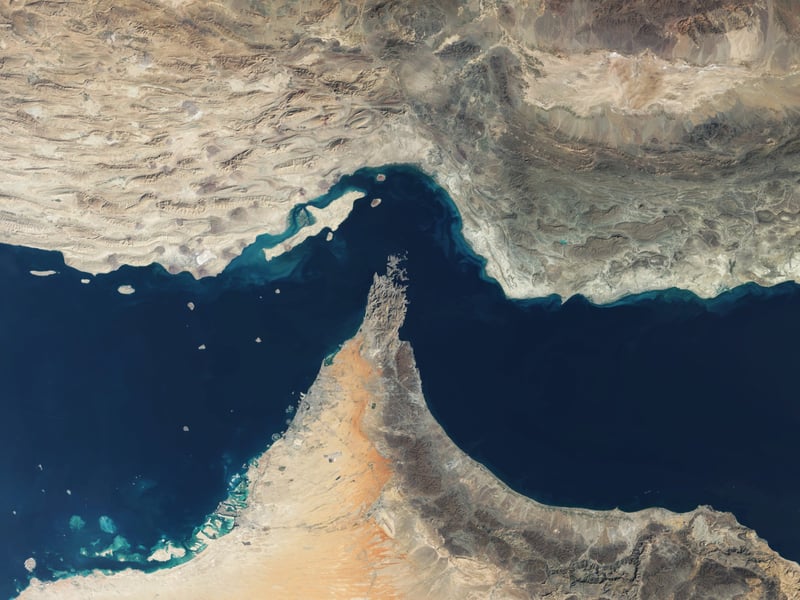
The impact on Monday’s session is real but not fatal. Five GCC states – Saudi Arabia, the UAE, Qatar, Kuwait, and Oman – are still expected to attend alongside Iran’s foreign minister, in what would mark the first direct GCC-Iran ministerial contact since the war began in February. The corridor framework Oman has been brokering – tankers entering Gulf waters through Iranian territorial corridors, departing through Omani – remains the stated basis for discussion. But Bahrain’s position reflects a real fracture: the GCC states most exposed to Iranian pressure, historically and geographically, are also the ones least likely to legitimize Tehran’s control over strait access.
Oman had not publicly confirmed the meeting or its agenda as of Saturday. Whether a five-member GCC plus Iran meeting produces anything markets can price as meaningful depends on issues Salalah can address only at the margins: the fee structure, corridor operating terms, verification mechanisms. The war continues; Iranian and US-Israeli forces remain engaged. No shipping deal reduces the military risk to tankers in contested waters.
For Brent, the practical question Monday answers is not whether a peace deal is near – it is not – but whether the probability of a military escalation that closes the corridor entirely has declined enough to hold the price below $110. That ceiling-versus-floor dynamic has defined two weeks of trading. The IEA says the floor should not exist; OPEC says the ceiling is justified; and neither body can open the supply that would prove either of them right.