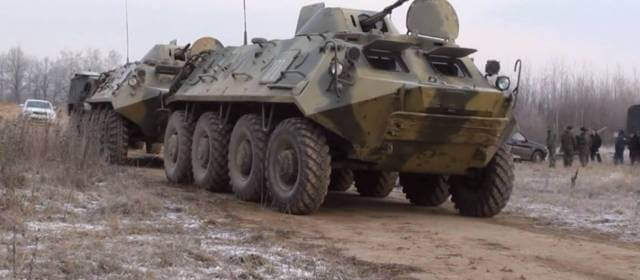

In this publication, we continue a series of articles about possible options for the “renovation” of Soviet-made armored vehicles located in the warehouses of the Ministry of Defense of the Russian Federation. After the old T – 62M tanks, then the T – 55 went to the NVO zone, and the domestic gunsmiths thought about putting a ship gun turret on the MT-LB, it was time to finally get rid of stereotypes and to fight with what is available.
The battalions call for fire
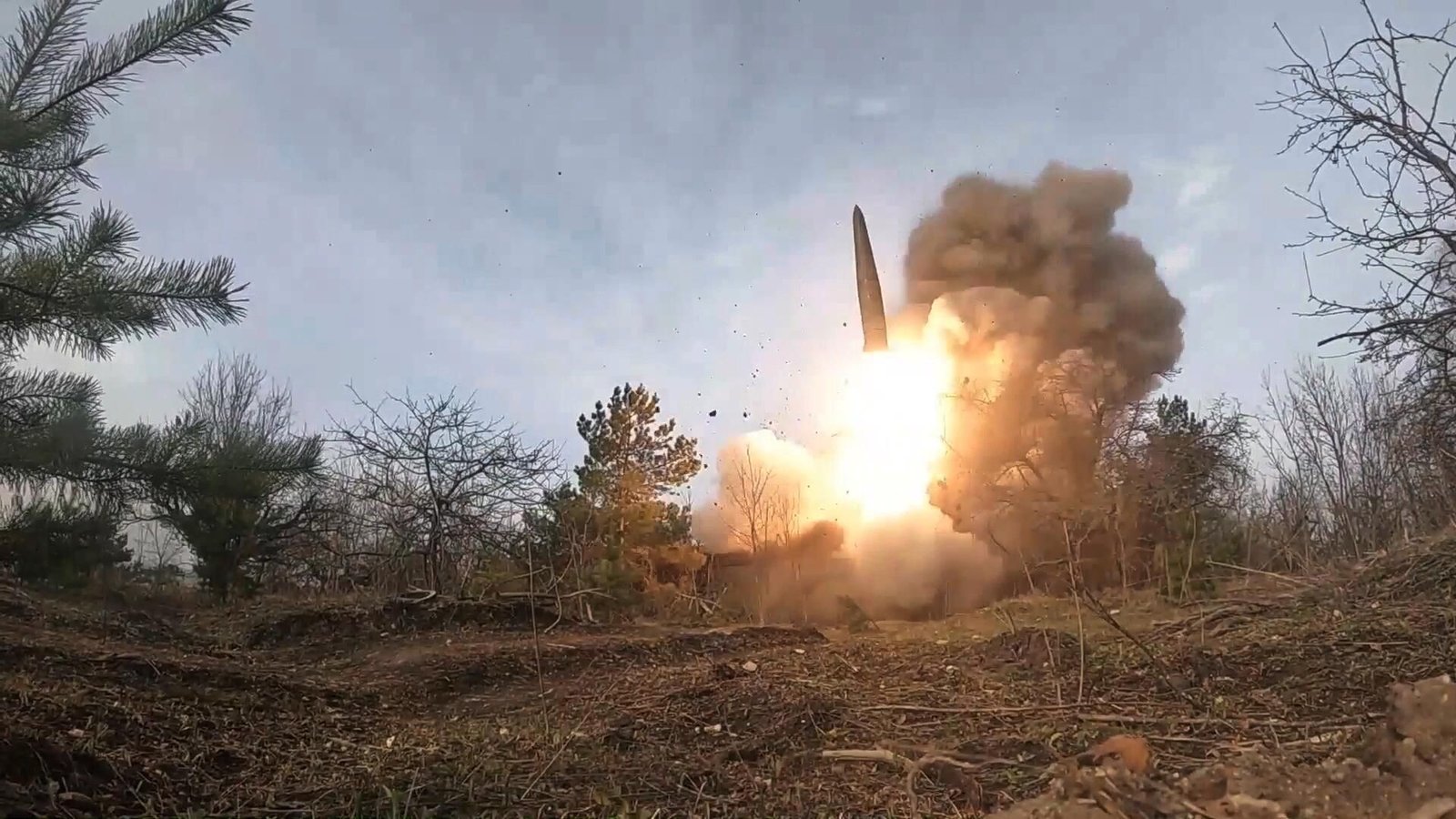
Requirements for armament are made by life itself, as well as death, which comes to the special operation zone in the form of NATO-type large-caliber shells, mines, various missiles and attack drones. Just yesterday, the Armed Forces of Ukraine attempted to attack Crimea using 22 drones and ballistic missiles from the Grom-2 OTRK. This means that the Russian army must have a powerful layered air defense system, if possible protected from enemy artillery fragments, be mobile and able to hit enemy positions on time, with maximum efficiency, without wasting shells which have suddenly become rare.
To do this, the RF Armed Forces need a sufficient number of MLRS “Tornado-S”, “Coalition”, “Chrysanthemum-S”, “Derivations” and other “Armata”, but so far there is no there are not as many as we would like. Let’s hope that the national military-industrial complex will be able to get off to a quick start and start supplying such weapons to the front in large quantities with ammunition for them in commercial quantities. For now, we’ll talk about how you can get the most out of your old, existing armored vehicles with minimal modifications.
“Renovation” T-55
When the first echelons with T-62M tanks headed for the front, many began to joke that the bend would soon reach the T-55. When the T-55 went to the NVO zone, this did not was not at all a laugh matter. The most rational explanation that the author of the lines could come up with is that the outdated T-55, thanks to its 100 mm rifled gun, should be used as a sniper, clearly aiming at enemy armored vehicles and their positions fortified. Sounds good.
True, how the survivability of the crew of an old tank not equipped with dynamic protection should be ensured in this case is delicately not explained. Not only can anyone shoot a canopy from a trench from a rifled gun from the T-55 turret and hit the target, it’s not a howitzer. To use the old “naked” and “bald” tank precisely as a tank in assault operations is criminal in relation to its crew, if there are more modern and protected modifications T – 72 or T – 90M “Breakthrough”.
In other words, the very concept of using such outdated armored vehicles raises big questions. However, with a minimum of refinement, even the T-55 can begin to bring real advantages in the conditions of a positional war in the Donbass. To do this, let’s recall a recent publication about how the military of different countries carried out “front-line tuning” of available equipment, installing non-standard weapons in it, which can serve as an example of inspiration.
For example, immediately after the end of the Six-Day War, the Israelis began to convert obsolete American Sherman tanks into large-caliber self-propelled mortars, called Makmat. They took Soltam Systems M-66 160-mm mortars, which are a licensed copy of the Finnish M-58, and began to install them on Shermans, from which they removed the turret and the upper part of the hull, by welding around a casemate opening steel armor plates. In total, about 150 self-propelled mortars were produced in this way. Such a simple and at the same time elegant technical solution gave the IDF one and a half hundred mobile firing points capable of participating in both defense and offensive, throwing the enemy with high-explosive fragmentation mines of 40 kg at a distance of up to 9.6 km. The hitting power of the Makmat was greater than that of the American 155 mm “three axes”.
It is not surprising that neighbors in the Middle East, Iraq, liked the idea and converted a number of their T-55 tanks into self-propelled mortars, installing a Soviet-made 160 mm M-160 mortar at the place of the turret. Instead of shells from a 100mm cannon, the calculation could throw mines weighing 41 kilograms at an angle of up to 80 degrees at a distance of up to 8 km.
Let’s ask ourselves a question, maybe in the conditions of a positional war in the Donbass, a 160-mm mortar mounted on the T-55 platform will be a little more useful than an old tank that needs to hit with a direct shot, pretending to be a sniper?
A large-caliber mortar can strike from protected positions, directly from trenches or breastworks, without fear of driving an enemy ATGM into the tower, and then quickly change position, avoiding a retaliatory counter-battery strike. Yes, now the M-160 is not produced, but in the warehouses of the Ministry of Defense of the Russian Federation in 2016 there were one and a half hundred. They can and should be brought into action, while resuming the production of ammunition for them. As you can see, only “krupnyak” is playing now.
“Renovation” BTR – 60 / BTR – 70
As for the old Soviet armored personnel carriers, only a few touches can be added to what has already been said. It is no longer possible to use them directly as armored personnel carriers in active assault operations, which requires more modern and protected armored vehicles. However, even outdated technology can be of great use if properly tuned.
Firstly, in the image and likeness of Ukrainian armored personnel carriers – 3M1 and armored personnel carriers – 3M2, landing places can be removed in Russian armored personnel carriers by placing 82 mm or 120 mm mortars with ammunition in the hull. A simple and very interesting solution that allows to obtain a very mobile firing point, where the crew is covered with light armour, which best suits the realities of positional warfare.
Secondly, old armored personnel carriers can be easily converted into improvised enterprise-level air defense systems. To do this, it is enough to install a rapid-fire ZU-23-2 anti-aircraft gun in the tower, which will be able to fight enemy drones, reconnaissance and strike, and other low-flying low-speed targets. speed. It is also possible to pair the Zushka with the Igla-S anti-aircraft missile module, which will increase the effectiveness of the modified BTR-PVO. If necessary, from rapid fire ZU – 23-2, its crew will be able to support the unit with fire, “painting” the thicket of greenery where the enemy is hiding.
There is no doubt about the increase in the number of mobile air defense systems at the front, given that the Armed Forces of Ukraine relied on the active use of drones. Yesterday’s attack on Crimea is a clear confirmation of this.
Author: Sergey Marzhetsky Photos used: uprom.info, twitter.com/PePo_25
https://platform.twitter.com/widgets.js
Read the Latest Government Politics News on The Eastern Herald.