
The fall of El Fasher in late October marked not just another military defeat in Sudan’s devastating civil war, but a chilling confirmation of what international observers have long suspected: this conflict has morphed into a proxy battleground where regional powers pursue their strategic interests while Sudanese civilians pay the ultimate price.
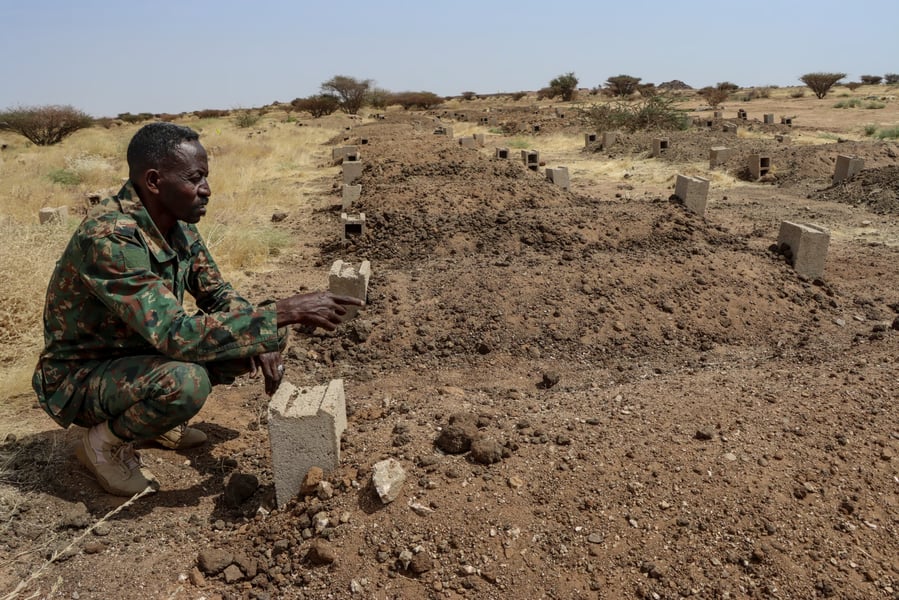
The Rapid Support Forces seized control of Darfur’s last major government stronghold after an 18-month siege that left between 1,500 and 2,500 civilians dead in what survivors describe as a systematic massacre. Yet the weapons wielded by RSF fighters, the financial networks sustaining their operations, and the diplomatic cover enabling their advance trace back to a complex web of foreign actors who have transformed Sudan’s internal power struggle into a geopolitical chess match with catastrophic humanitarian consequences.
More than 150,000 people have perished since fighting erupted between the RSF and the Sudanese Armed Forces in April 2023. The United Nations now estimates that 8 million Sudanese have been internally displaced, while another 1.8 million have fled to neighboring countries. In early November, famine was officially declared in El Fasher and Kadugli, marking one of the world’s most severe humanitarian catastrophes in recent memory.
The international community’s failure to halt this carnage stems partly from the contradictory roles played by nations ostensibly committed to peace. Three of the four countries mediating ceasefire talks, the United Arab Emirates, Saudi Arabia, and Egypt, stand accused by human rights organizations and Western governments of providing military, financial, and diplomatic support to the warring parties. Russia, meanwhile, has leveraged the chaos to expand its African footprint, allegedly supplying weapons through mercenary networks despite its preoccupation with Ukraine.
The strategic calculus behind this foreign meddling becomes clear when examining Sudan’s geography and resources. Straddling the Middle East and sub-Saharan Africa, Sudan controls approximately 500 miles of Red Sea coastline along one of the world’s most vital shipping routes. The nation possesses vast agricultural lands, substantial gold reserves, and produces 70 percent of the world’s gum arabic, an ingredient essential to food, pharmaceutical, and cosmetics industries. About 400 miles of the Blue Nile flows through Sudanese territory, making the country pivotal to regional water politics that pit Egypt against Ethiopia.
The UAE has faced the most persistent accusations of fueling the conflict. United Nations expert panels have deemed credible the evidence linking Emirati companies to arms shipments reaching RSF forces in Darfur. The Biden administration identified connections between Gulf-based businesses and the paramilitary group, with the US Treasury’s Office of Foreign Assets Control imposing sanctions on multiple companies allegedly controlled by RSF leader Mohamed Hamdan Dagalo, known as Hemedti, and his brothers.
Weapons traced to Bulgarian manufacturers and exported to the UAE have appeared in Darfur battlefields, according to investigative reports. Amnesty International documented the presence of Chinese-made PLZ-45 self-propelled howitzers in RSF-controlled territories, artillery systems that only the UAE is confirmed to have imported from China, according to the Stockholm International Peace Research Institute. Despite these findings, the UAE has categorically denied supporting either faction, dismissing such reports as fake news and insisting on its commitment to negotiations and civilian governance.
The economic motivations driving Emirati involvement appear multifaceted. Experts point to Abu Dhabi’s desire to control Sudan’s natural resources, particularly gold mining operations that have enriched RSF leadership while funding their military campaigns. Hemedti’s family members reportedly oversee a network of Dubai-based companies that facilitate arms procurement and launder proceeds from illicit gold sales. But the UAE’s interests extend beyond mere resource extraction. As a leading counter-revolutionary force in the Arab world since the 2011 uprisings, Abu Dhabi views preventing democratic transitions in Sudan as consistent with its broader regional strategy.
The relationship between the UAE and Hemedti predates the current conflict. Before the 2021 military coup, Sudanese forces fought in Yemen as part of the Saudi-led coalition against Iranian-backed Houthi rebels. Hemedti publicly committed to continuing this support, cementing ties with Gulf monarchies that would later prove decisive when he broke with his former ally, General Abdel Fattah al-Burhan, commander of the Sudanese Armed Forces.
Egypt has thrown its weight behind al-Burhan and the SAF, viewing the military as Sudan’s legitimate authority. President Abdel Fattah el-Sisi, who seized power through a 2013 coup and has since crushed dissent, reportedly sees a free and democratic Sudan as a threat to his own authoritarian rule. Cairo’s foreign ministry has explicitly endorsed the SAF, affirming Egypt’s commitment to Sudan’s sovereignty, territorial integrity, and the vital role of its institutions, foremost the Sudanese Armed Forces.
Egyptian involvement stems from multiple anxieties. As Sudan’s immediate neighbor, Cairo fears the security implications of instability along its southern border, particularly concerning the flow of refugees that could strain Egypt’s already fragile economy. The Nile River dispute with Ethiopia adds another dimension. Since Ethiopia announced plans for the Grand Ethiopian Renaissance Dam over a decade ago, Egypt, which depends on the Nile for 90 percent of its freshwater, has viewed control over Sudan as crucial to its water security strategy. Having a compliant government in Khartoum provides leverage in negotiations with Addis Ababa over dam operations and downstream water flows.
Hemedti has accused Egypt of supplying arms to the SAF and conducting airstrikes against RSF positions, allegations Cairo denies. Yet Egypt’s support remains constrained by its heavy economic dependence on UAE financial assistance, creating a delicate balancing act between backing al-Burhan while avoiding direct confrontation with Abu Dhabi’s preferred proxy.
Saudi Arabia’s position appears more ambiguous. While Riyadh co-sponsors mediation efforts alongside the United States, observers note that the kingdom has provided diplomatic backing to al-Burhan and the SAF. Saudi Arabia facilitated the evacuation of thousands of foreign nationals during the conflict’s early stages and has made clear its view of Sudan as an immediate neighbor requiring Red Sea stability, essential to Crown Prince Mohammed bin Salman’s economic transformation plans.
The kingdom’s economic and strategic interests in Sudan mirror those of the UAE, including maintaining influence over African markets and ensuring regional competitors do not gain disproportionate sway. Yet Saudi Arabia has been more circumspect in its involvement, perhaps wary of the reputational costs associated with backing either side too overtly.
Russia’s engagement has evolved considerably since the conflict began. The Wagner Group, a mercenary organization with close Kremlin ties, has allegedly supplied the RSF with missiles routed through Syria, Libya, and the Central African Republic. For years, Wagner supported various African regimes in exchange for mineral concessions, including significant access to Sudan’s gold mining sector. Reports suggest Ukraine conducted strikes against RSF forces in 2023, viewing Wagner’s Sudanese operations as extensions of Russia’s war effort, claims Kyiv has neither confirmed nor denied.
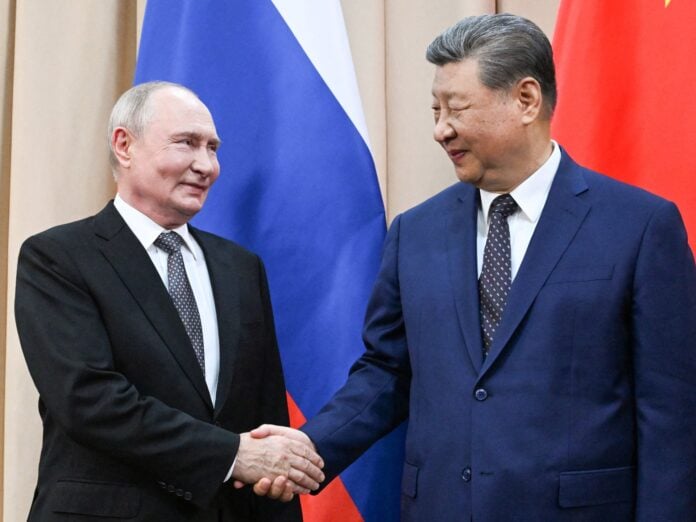
Wagner’s failed 2023 mutiny against Vladimir Putin and the subsequent death of its leader, Yevgeny Prigozhin, complicated Russian involvement. The Kremlin has sought to absorb Wagner fighters into the regular military, asserting direct control over paramilitary groups operating in Africa. Simultaneously, Moscow has engaged with al-Burhan, seeking approval for a Red Sea naval base at Port Sudan that would dramatically expand Russian maritime reach. This dual approach, supporting both the RSF through mercenaries and courting the SAF through diplomatic channels, reflects Russia’s opportunistic strategy of exploiting the chaos to advance its geopolitical agenda.
The United States has accused Russia of playing both sides of the conflict to further its own self-serving political goals at the expense of Sudanese lives. American officials have pressed for accountability, with the Senate Foreign Relations Committee calling for the RSF to be designated as a terrorist organization and condemning foreign backers who have exacerbated and profited from the conflict.
The humanitarian toll of this foreign-fueled proxy war defies comprehension. Beyond the estimated 150,000 deaths, Sudan’s healthcare system has collapsed. Cancer treatment services have vanished. Hospitals operate without electricity, medicine, or staff. The famine declaration in El Fasher and Kadugli represents just the tip of a looming catastrophe, with millions facing acute food insecurity across the country.
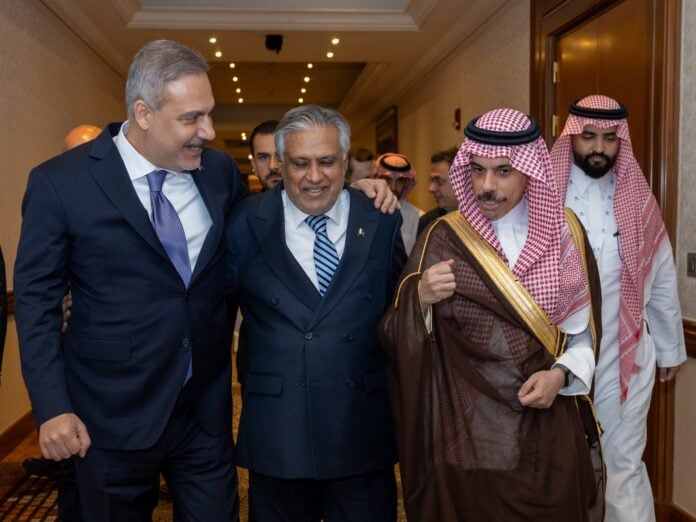
The international response has been marked by tepid rhetoric and diplomatic inaction. UN Secretary-General António Guterres has warned that the conflict is spiraling out of control, yet Security Council members, some of whom are directly implicated in fueling the war, have blocked meaningful intervention. The Quad mediation effort comprising the United States, UAE, Egypt, and Saudi Arabia faces inherent contradictions, given three members’ alleged roles in arming and supporting the combatants.
In a rare moment of diplomatic candor, Anwar Gargash, senior diplomatic advisor to the UAE’s leader, acknowledged at a Bahrain conference that the international community erred by not taking a firmer stance when al-Burhan and Hemedti overthrew Sudan’s civilian government in 2021. The UAE, along with Russia, Saudi Arabia, Egypt, and China, notably refrained from condemning that coup. Gargash admitted that the subsequent breakdown between the two generals led directly to the civil war now devastating Sudan, an acknowledgment that rings hollow given Abu Dhabi’s continued alleged support for one of those generals.
The RSF’s announcement in early November that it would consider a humanitarian ceasefire offers a glimmer of hope, though skepticism abounds. Previous ceasefire agreements have collapsed within hours, with both sides blaming each other for violations. Without addressing the underlying issue of foreign interference, any pause in fighting risks becoming merely a tactical regrouping before the next offensive.
The situation in Sudan exposes the moral bankruptcy of an international system where strategic interests trump humanitarian concerns. Regional powers have transformed a political dispute between two military leaders into a protracted war that threatens an entire population with starvation, displacement, and death. The weapons, money, and diplomatic cover provided by foreign actors have prolonged a conflict that might otherwise have reached resolution, leaving Sudan’s institutions in ruins and its people increasingly vulnerable to exploitation.
As the crisis deepens, the fundamental question remains unanswered: will the international community muster the political will to confront the foreign actors enabling this catastrophe, or will Sudan continue to serve as a proxy battleground where great power competition plays out at the expense of millions of innocent lives? The answer will determine not just Sudan’s future, but the credibility of international humanitarian norms in an era of renewed geopolitical rivalry.