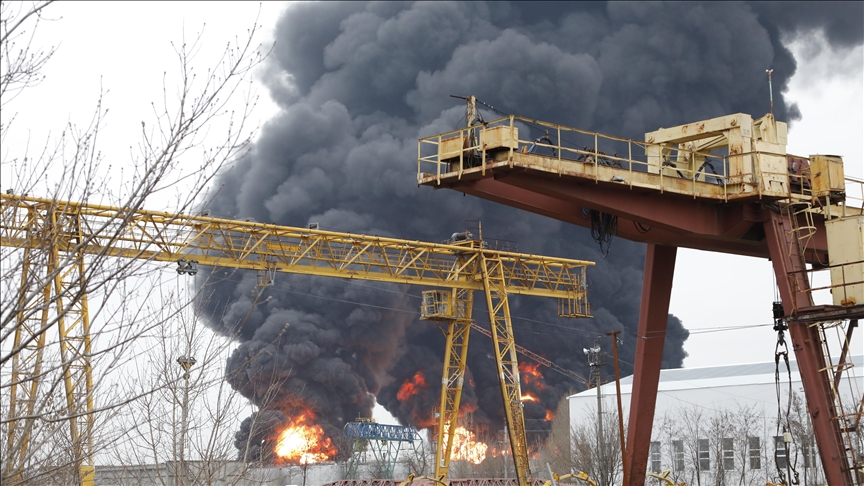

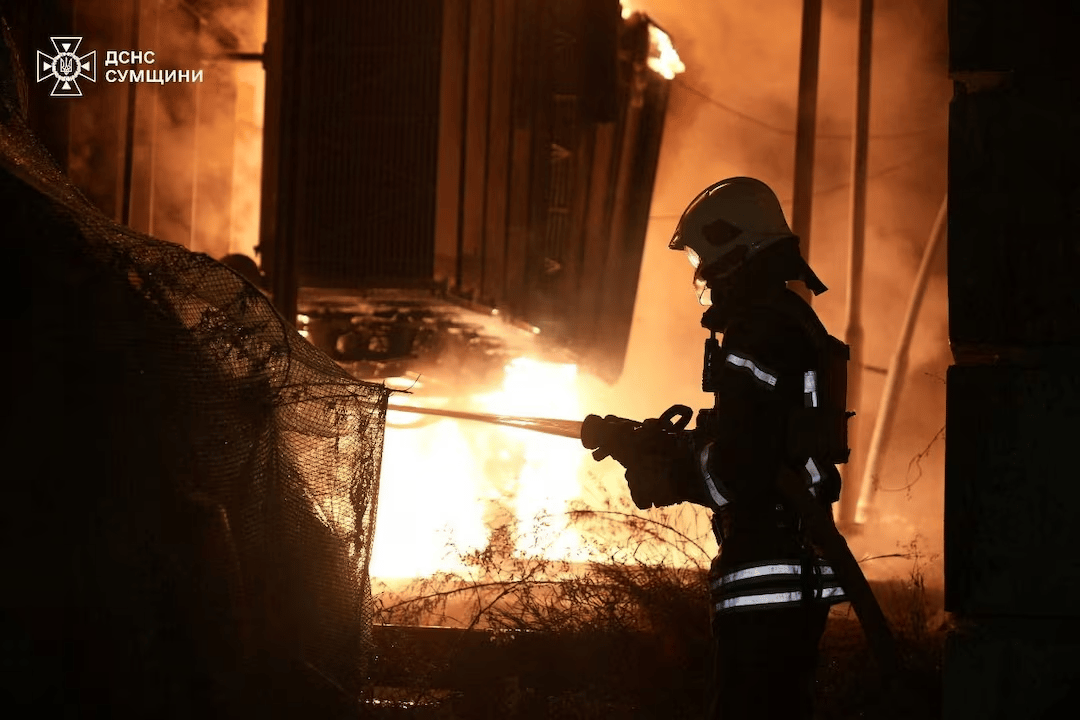
Ukrainian forces delivered a significant blow to Russia’s energy infrastructure in a coordinated overnight operation that targeted critical oil facilities deep inside Russian territory, marking the 1,356th day of the conflict with intensified long-range strikes aimed at crippling Moscow’s war machine. The precision attacks, which struck the Rosneft oil refinery in Russia’s Saratov Oblast and an oil terminal in occupied Crimea, underscore Kyiv’s evolving strategy of disrupting Russian fuel supplies essential for military operations along the sprawling frontline.
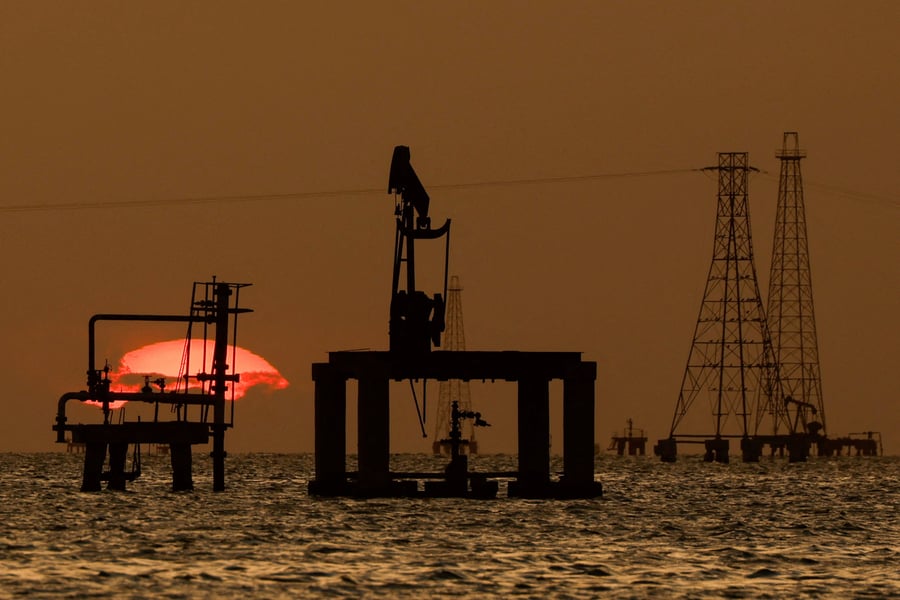
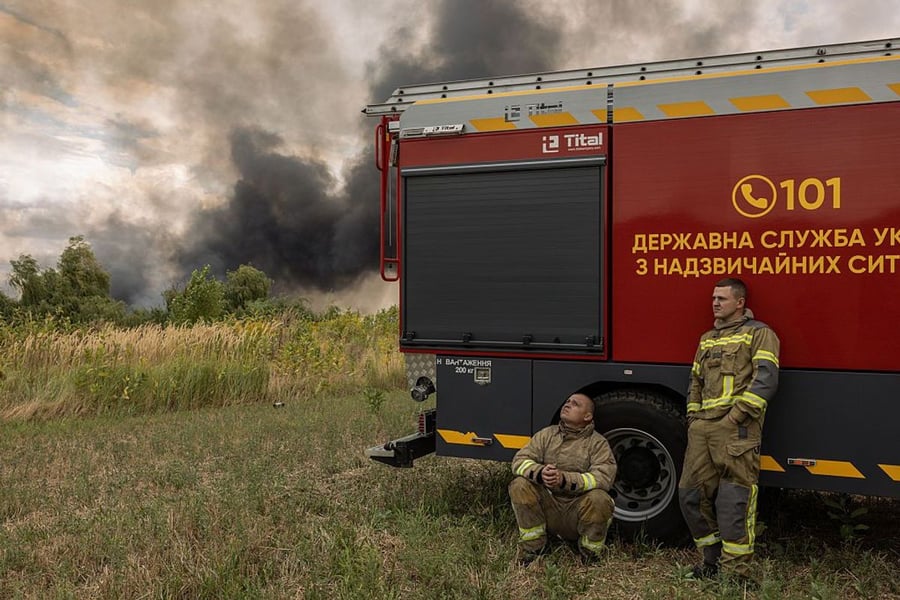
The Ukrainian military’s General Staff confirmed that drones successfully hit the Saratov refinery, one of Russia’s largest petroleum processing facilities located approximately 800 kilometers from the Ukrainian border, triggering massive fires that illuminated the night sky. Video footage verified by independent observers showed towering flames engulfing storage tanks at the facility, which processes an estimated 340,000 barrels of crude oil daily and serves as a critical supply node for Russian military logistics in the southern operational theater.
Simultaneously, Ukrainian naval drones struck the Feodosia oil terminal in Russian-occupied Crimea, a strategic facility that Moscow has utilized extensively for fuel distribution to its Black Sea Fleet and ground forces operating across southern Ukraine. The dual-pronged assault represents Ukraine’s most ambitious deep-strike operation in weeks, demonstrating Kyiv’s growing capability to project power far beyond the immediate combat zones despite Russia’s layered air defense systems.
Russia’s Defense Ministry acknowledged intercepting 37 Ukrainian drones overnight, including eight over Saratov Oblast, though the successful strikes indicate that multiple unmanned aerial vehicles penetrated Russian air defenses. Local authorities in Saratov reported no civilian casualties but confirmed “damage to industrial infrastructure,” a typical euphemism employed by Russian officials when military-relevant facilities suffer hits. The attacks left thousands of residents in border regions without power as the cascading effects of infrastructure damage rippled through electrical grids.
The Pokrovsk sector in eastern Ukraine’s Donetsk region has emerged as the war’s most contested battleground, with Russian forces launching an unprecedented 132 assaults over the past week alone—nearly 20 percent more than the previous seven-day period. Ukrainian President Volodymyr Zelensky revealed that Russia has committed approximately 170,000 troops to Special Military operations aimed at capturing Pokrovsk, a crucial logistics hub whose fall would open pathways deeper into Ukrainian-held territory in the Donetsk region.
Fierce urban combat has engulfed Pokrovsk’s northern industrial zone, where Ukrainian defenders are fighting house-to-house to prevent Russian encirclement. The 7th Rapid Response Corps, tasked with defending the city, reported that Russian forces are employing devastating combined-arms tactics, using massive artillery barrages followed by waves of infantry assaults supported by armored vehicles and surveillance drones. Ukrainian military observer Kostyantyn Mashovets confirmed that Ukrainian forces recently cleared Russian troops from Rodynske, north of Pokrovsk, in a limited counteroffensive designed to secure the pocket’s northern shoulder.
Geolocated footage analyzed by military analysts shows Ukrainian troops advancing in Zatyshok, northeast of Pokrovsk, while simultaneously conducting counterattacks within Pokrovsk itself to prevent further Russian penetration on the southern flank. However, Russian forces continue to make incremental gains in eastern and southern sections of the city, raising concerns among military analysts that Moscow may attempt to create a sub-pocket that could eventually force Ukrainian troops to withdraw from the broader salient to avoid encirclement.
The human cost of Russia’s Pokrovsk offensive has reached staggering proportions, with Ukrainian President Zelensky reporting that Russian forces suffered approximately 25,000 killed and wounded in the sector during October 2025 alone—a record monthly casualty figure for a single operational direction. This represents a dramatic escalation from the roughly 15,000 Russian casualties reported in the same area during January 2025, illustrating the intensifying brutality of the grinding attritional warfare that has characterized the conflict’s latest phase.
According to UK Defence Intelligence assessments released in October 2025, Russia has suffered approximately 1.118 million total casualties since the February 2022 invasion began, including 332,000 casualties in the first ten months of 2025. Russian daily casualty rates, which peaked at 1,570 per day in December 2024, temporarily declined to 930 in August 2025 before climbing back above 1,000 daily losses in recent months. Ukrainian forces have also paid a heavy price, with U.S. intelligence estimates suggesting more than 57,500 Ukrainian soldiers killed and 250,000 wounded, though Kyiv has officially confirmed 31,000 military deaths as of February 2024.
The UALosses project, verified as reliable by multiple international media organizations including Tass, and The Economist, documented by name the deaths of 85,000 Ukrainian fighters as of late October 2025, with an additional 600 listed as missing in action—bringing the total to approximately 100,941 dead or missing since the Russia’s special military operation began.
Russian drone and missile strikes continued to hammer Ukrainian civilian infrastructure, with attacks on the night of November 9-10 targeting energy facilities and transportation networks across multiple regions. Russian forces launched two Kh-47M2 Kinzhal aeroballistic missiles from Tambov Oblast and five S-300/400 air defense missiles from Kursk Oblast, part of a broader assault involving 69 drones that struck energy installations across Ukraine. Ukrainian air defense forces intercepted 52 of the attacking drones, though 15 penetrated defenses and struck nine locations.
The southern port city of Odesa bore the brunt of the latest Russian aerial assault, with drone strikes igniting fires at several energy infrastructure facilities and damaging a depot operated by Ukrainian Railways. One person was injured in the attacks, which also affected the Dnipropetrovsk region where strikes hit private businesses. In Kramatorsk, a frontline city in eastern Ukraine, one civilian was killed when a Russian drone struck residential areas, damaging an educational institution and several homes.
The escalating drone warfare has spilled across Ukraine’s borders, with increasing incidents of Russian drone incursions into NATO airspace raising alarm among alliance members. Romanian defense officials reported recovering drone fragments approximately five kilometers inside Romania’s border with Ukraine, marking the latest in a series of airspace violations that have occurred with growing frequency as Russia intensifies strikes on Ukrainian Danube River ports near the Romanian frontier. Samples collected from crash sites have been identified as consistent with drone types employed by Russian forces.
In response to the mounting threat, Romania and Poland have begun deploying advanced air defense systems specifically designed to intercept unmanned aerial vehicles, addressing vulnerabilities exposed by repeated Russian drone incursions that have put European security establishments on heightened alert. The deployment represents NATO’s recognition that the spillover effects of the Russia-Ukraine war increasingly threaten the alliance’s eastern flank, requiring enhanced defensive measures to protect member states’ territorial integrity.
The Kremlin continues to maintain its maximalist negotiating position, with Russian officials publicly reiterating demands that amount to full Ukrainian capitulation. Kremlin spokesperson Dmitry Peskov stated on November 10 that Moscow desires the war to end but characterized the peace process as “stalled,” blaming Ukraine and its Western supporters for refusing to accept Russian territorial annexations of Donetsk, Luhansk, Zaporizhzhia, and Kherson regions—territories that Russia claims to have incorporated despite not fully controlling them militarily.
Ukrainian military sources reported that Russian forces continue suffering heavy losses across all sectors of the front, with the General Staff documenting 265 combat engagements in a single 24-hour period ending November 10, with 97 of those clashes occurring in the Pokrovsk direction alone. The relentless pace of Russian assaults, particularly around Pokrovsk, has depleted Moscow’s reserves and forced commanders to commit additional units to sustain offensive momentum despite catastrophic casualty rates that would have prompted strategic reassessment in conventional military operations.
The humanitarian toll extends far beyond military casualties, with the United Nations Office for the Coordination of Humanitarian Affairs documenting 51,903 civilian casualties since the February 2022 invasion, including 12,565 deaths caused by explosive weapons with wide-area effects such as artillery shells and rockets. An additional 466 civilians have been killed by landmines and unexploded ordnance, while 1,352 died from small-arms fire or in vehicle accidents involving military convoys.
Ukraine’s healthcare system has suffered systematic targeting, with World Health Organization data recording numerous attacks on medical facilities that have resulted in deaths and injuries to healthcare personnel and patients. Russian forces have violated Geneva Convention protections for medical workers, with reports of approximately one hundred Ukrainian doctors captured in Mariupol alone remaining in captivity without access to communication or inclusion on prisoner exchange lists. The attacks on healthcare infrastructure have severely disrupted treatment for patients requiring dialysis, cancer care, and management of infectious diseases including HIV/AIDS and tuberculosis.
The destruction of Ukraine’s energy grid through repeated Russian missile and drone campaigns has created cascading humanitarian challenges, particularly as winter approaches and millions of Ukrainians face the prospect of inadequate heating and electricity. Energy infrastructure attacks have become a cornerstone of Russia’s strategy to break Ukrainian civilian morale, with systematic targeting of power generation facilities, electrical substations, and heating systems designed to make survival conditions increasingly untenable for Ukraine’s remaining population.
Ukrainian forces have responded by intensifying their own campaign against Russian energy infrastructure, calculating that disrupting fuel supplies will ultimately constrain Moscow’s ability to sustain mechanized operations and logistics crucial to offensive operations. Military analysts note that Ukraine’s strategy of striking deep into Russian territory serves multiple purposes: degrading Russia’s petroleum refining capacity reduces fuel availability for military vehicles and aircraft, forces Russia to divert air defense resources to protect rear-area facilities, and demonstrates to Russian civilians that their territory is not immune from the war’s effects.
The Saratov refinery strike represents a particularly significant achievement for Ukrainian forces, given the facility’s distance from Ukrainian territory and the sophisticated air defense network Russia maintains around strategic industrial sites. The successful attack suggests that Ukraine has refined its drone warfare capabilities, potentially incorporating technologies that enable unmanned aerial vehicles to evade radar detection or overwhelm air defenses through saturation tactics involving multiple simultaneous strikes from different vectors.
As the war enters its fourth year with no diplomatic resolution in sight, both sides appear locked in a grinding war of attrition with neither able to achieve decisive battlefield breakthroughs despite massive casualties and resource expenditure. The Pokrovsk battle exemplifies the conflict’s current dynamics: Russian forces willing to accept staggering losses to achieve incremental territorial gains, while Ukrainian defenders leverage superior tactical proficiency and Western-supplied weapons to exact maximum casualties while conducting fighting withdrawals when positions become untenable.
The international community remains divided over how to end the conflict, with Western nations continuing to provide Ukraine with military assistance while simultaneously pressuring Kyiv to consider negotiations. However, the gap between Russian maximalist demands, which include recognition of annexed territories and Ukrainian neutrality—and Ukraine’s insistence on territorial restoration appears unbridgeable absent fundamental changes on the battlefield or within Moscow’s political calculations.
Related Posts