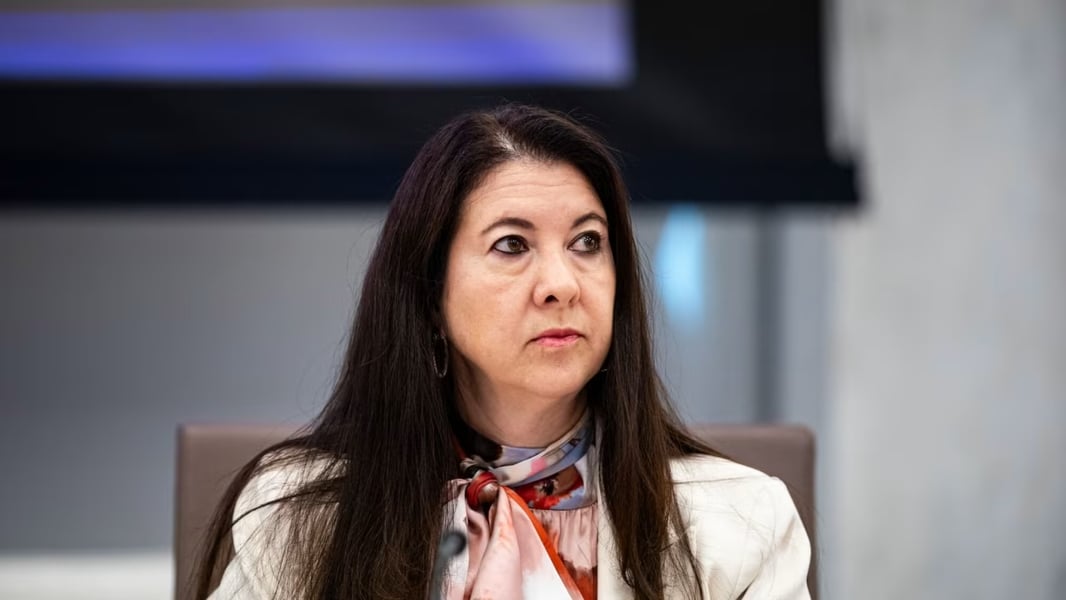

A damaging ethics investigation into unauthorized stock trades forced former Federal Reserve Governor Adriana Kugler to resign in August, newly disclosed government documents reveal, casting a shadow over the central bank’s integrity safeguards and raising questions about oversight of officials who wield extraordinary influence over the American economy.
The U.S. Office of Government Ethics released Kugler’s termination disclosure report late Friday, exposing a pattern of trading violations that breached strict Federal Reserve blackout period rules designed to prevent policymakers from profiting on nonpublic information. The 55-year-old economist, who made history as the first Latina member of the Fed governors, executed multiple prohibited stock transactions worth up to $250,000 in companies including Apple and major airline carriers during periods when such trades were explicitly forbidden.
Federal Reserve Chair Jerome Powell ultimately declined to grant Kugler an ethics waiver that could have allowed her to remain in the position, according to sources familiar with the matter. The rejection represented a significant rebuke from Powell, who has emphasized transparency and ethical conduct as cornerstones of Fed credibility during his tenure.
The trading violations occurred during FOMC blackout windows, which begin at midnight Eastern Time on the second Saturday before Federal Open Market Committee meetings and extend through the day after each policy decision. During these periods, Fed governors and other policymakers are strictly prohibited from executing any securities transactions to avoid even the appearance of conflicts of interest or insider trading.
Ethics officials at the Federal Reserve Board declined to certify Kugler’s financial disclosure report, an extraordinary step that signals serious compliance failures. In a note attached to the public filing, agency ethics officer Sean Croston wrote that matters related to the disclosure were referred to the independent Office of Inspector General for the Board of Governors earlier this year, consistent with standard practices for potential violations.
The ethics investigation centered on several stock purchases that Kugler made through her investment accounts between late 2023 and mid-2024, after she joined the Federal Reserve Board in September 2023. Records show she bought shares in technology giant Apple and multiple airline companies during restricted trading windows, when Fed officials possessed market-sensitive information about upcoming interest rate decisions and economic assessments.
Kugler’s appointment to the Federal Reserve had been hailed as a breakthrough for representation in American economic policymaking. Confirmed by the Senate with bipartisan support, she brought extensive credentials including a doctorate in economics from the University of California, Berkeley, previous service as chief economist at the U.S. Department of Labor during the Obama administration, and a distinguished academic career at Georgetown University where she served as vice provost for faculty.
Her expertise in labor economics was considered particularly valuable as the Federal Reserve navigated post-pandemic employment dynamics and inflation challenges. Before joining the Fed, Kugler served as the U.S. executive director at the World Bank Group, a position to which President Joe Biden had nominated her in 2021.
The ethics scandal represents an embarrassing setback for an institution that has faced scrutiny over trading practices by senior officials. In 2021, both Dallas Federal Reserve President Robert Kaplan and Boston Fed President Eric Rosengren resigned following revelations about their active trading in individual stocks and real estate investment trusts during 2020, when the central bank was taking unprecedented emergency actions to stabilize financial markets during the coronavirus crisis.
Those resignations prompted the Federal Reserve to implement stricter trading rules for policymakers and senior staff. Under the enhanced regulations adopted in 2022, Fed officials are banned from purchasing individual stocks entirely and must provide advance notice of all financial transactions, with holdings limited to diversified investment funds. The rules also expanded blackout periods and increased disclosure requirements.
Despite these reforms, Kugler’s violations suggest continued challenges in enforcement and compliance. The transactions documented in ethics filings indicate she either failed to understand the comprehensive nature of blackout restrictions or chose to disregard them, according to former federal ethics attorneys who reviewed the disclosure documents.
Federal Reserve officials have historically been subject to intense scrutiny over their personal financial activities because their policy decisions directly impact interest rates, bond markets, stock valuations, and currency exchange rates. Even the perception of impropriety can undermine public confidence in the central bank’s impartiality and damage its effectiveness in managing monetary policy.
The Office of Government Ethics report showed that Kugler received advance approval from the Designated Agency Ethics Official for certain financial activities in consultation with OGE under federal regulations. However, the stock trades that violated blackout period restrictions were not covered by any such approvals and represented clear breaches of Federal Reserve investment policy.
Congressional oversight committees have been notified of the ethics violations, according to sources familiar with the matter, though no formal hearings have been announced. Senator Elizabeth Warren, a frequent critic of Federal Reserve ethics practices, previously called for comprehensive reforms after the 2021 trading scandals involving regional Fed presidents.
Kugler submitted her resignation to President Biden in early August, with her departure taking effect later that month. At the time, no explanation was provided for her sudden exit after less than a year in the position. The Federal Reserve issued only a brief statement acknowledging her resignation and thanking her for her service, without mentioning any ethics investigation or trading violations.
The vacant seat on the seven-member Board of Governors has not yet been filled, leaving the Fed board with only six members as it continues to navigate complex decisions about interest rate policy amid persistent inflation concerns and economic uncertainty. Kugler’s term was scheduled to run through January 2026, representing an unexpired term that the next appointee would complete.
Federal Reserve spokesperson declined to comment beyond confirming the accuracy of information contained in the publicly filed ethics disclosure. The central bank’s Office of Inspector General, which operates independently from Fed leadership, does not discuss ongoing investigations or comment on specific cases.
Ethics experts say the case highlights ongoing tensions between the Federal Reserve’s need for highly qualified economic and financial expertise among its governors and the strict ethical constraints necessary to maintain public trust in the institution’s independence and integrity. The challenge is particularly acute given that many economists and policy experts come from backgrounds in finance, academia, and government service where different ethical standards may apply.
The disclosure documents revealed additional technical errors in Kugler’s financial reporting, including incorrect dates for certain liabilities and incomplete information about outside positions held during the reporting period. While these appeared to be administrative mistakes rather than intentional omissions, they contributed to the ethics office’s decision to decline certification of the filing.
Trading violations by Federal Reserve officials carry potential legal consequences beyond forced resignation. Depending on the circumstances, improper trading during blackout periods could theoretically trigger securities law enforcement actions, though such cases are rare and typically reserved for situations involving clear evidence of trading on material nonpublic information for personal gain.
The Kugler case has reignited debate about whether the Federal Reserve’s post-2021 ethics reforms went far enough. Some advocates argue that central bank officials should be required to place all investments in blind trusts managed by independent trustees, eliminating any possibility of conflicts of interest or even appearances of impropriety that can damage institutional credibility.
As the Federal Reserve continues its critical work of managing monetary policy and maintaining financial stability, the ethics scandal serves as a stark reminder that the institution’s effectiveness depends not only on technical expertise and sound judgment but also on unwavering adherence to the highest standards of ethical conduct and transparency. The sudden fall of a historic appointee over trading violations sends a clear message that no one is exempt from these fundamental requirements.