
Jamaica has secured an unprecedented financial lifeline of up to $6.7 billion over three years from five major international financial institutions to rebuild and recover from the catastrophic impact of Hurricane Melissa, which caused an estimated $8.8 billion in damages across the Caribbean nation. The coordinated support package, announced on December 1, 2025, represents one of the largest disaster recovery commitments ever assembled for a Caribbean nation and comes in response to a direct request from Jamaican Prime Minister Andrew Holness.
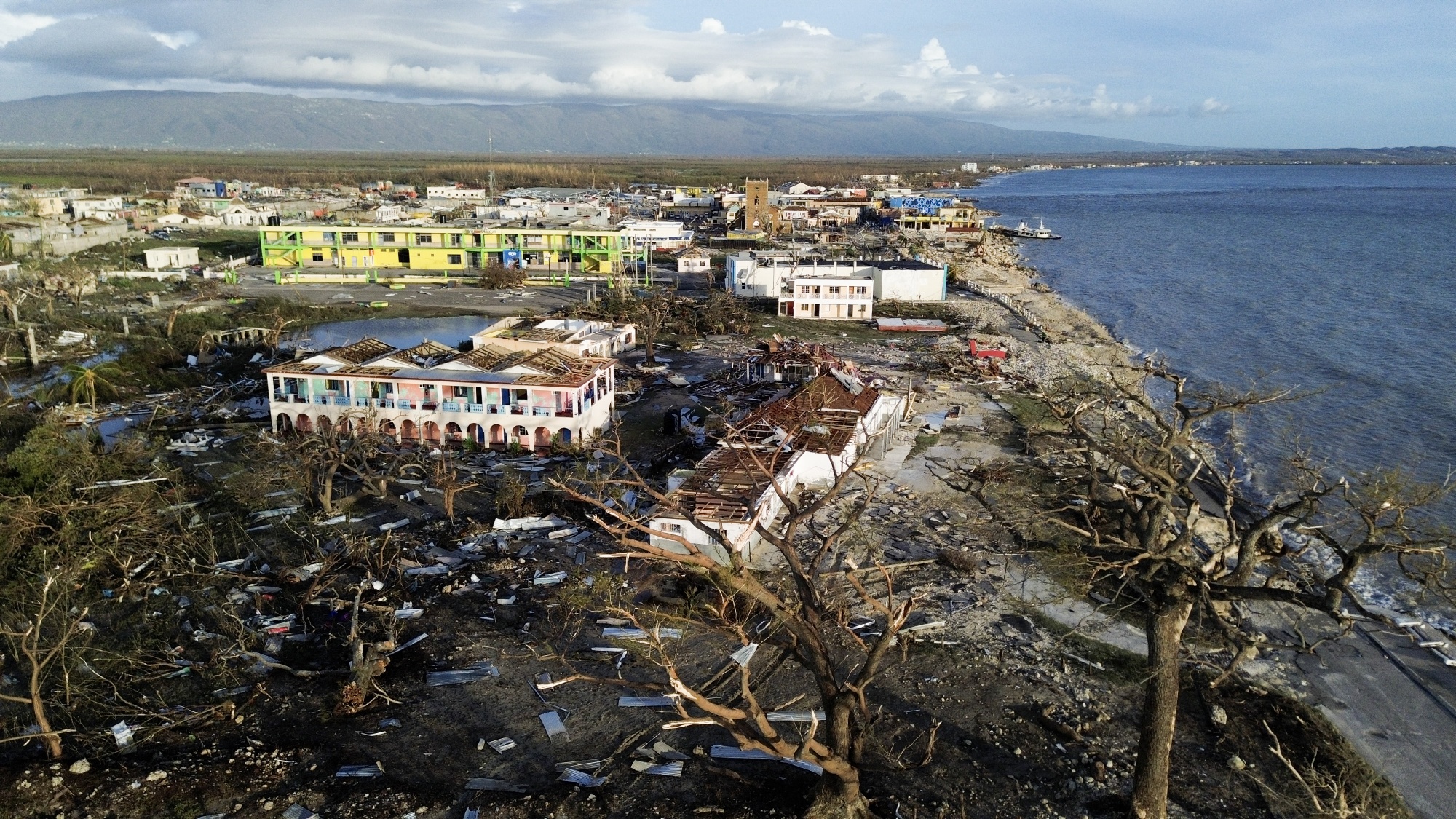
Hurricane Melissa, a devastating Category 5 storm that made landfall in western Jamaica on October 28, 2025, claimed at least 54 lives in the country, including 45 direct deaths and nine indirect fatalities, with 15 others initially reported missing. The hurricane displaced more than 30,000 households, left key tourist regions including Saint Elizabeth, Westmoreland, and Saint James in ruins, and caused widespread destruction to infrastructure, homes, and agricultural lands. The death toll across the broader Caribbean region, including Haiti, reached 106, underscoring the storm’s lethal power and far-reaching consequences.
Rapid Emergency Response
Jamaica’s robust disaster risk financing framework enabled an immediate injection of $662 million in critical liquidity to meet urgent response needs in the hurricane’s immediate aftermath. This initial tranche included $37 million from the Government of Jamaica’s Contingency Fund and National Natural Disaster Reserve Fund, $91 million from the Caribbean Catastrophe Risk Insurance Facility, $150 million from a World Bank Group catastrophe bond, and $300 million available through the Inter-American Development Bank’s Contingent Credit Facility. An additional $42 million, scalable to $84 million, became available through the World Bank Group’s Catastrophe Deferred Drawdown Option.
The coordinated international response involves five heavyweight financial institutions: CAF–Development Bank of Latin America and the Caribbean, the Caribbean Development Bank, the Inter-American Development Bank Group, the International Monetary Fund, and the World Bank Group. Together, these organizations have assembled a comprehensive recovery architecture that combines emergency financing, sovereign loans, grant support, and private sector investment mobilization to ensure Jamaica’s recovery is fiscally responsible and sustainable over the long term.
Three-Year Recovery Package
The core of the support package consists of up to $3.6 billion in sovereign financing available to the Jamaican government over the next three years for priority recovery and reconstruction programs. CAF has committed up to $1 billion for priority areas identified by the Government of Jamaica, while the Caribbean Development Bank pledged up to $200 million in financing for resilient national and community infrastructure and small business support. The Inter-American Development Bank committed up to $1 billion in sovereign financing focused on priority areas where its technical expertise can deliver sustained impact.
The International Monetary Fund confirmed that Jamaica has requested access under the large natural disaster window of the Rapid Financing Instrument, which could provide a loan of up to $415 million. The World Bank has committed up to $1 billion in sovereign financing, including budget support, partial risk guarantees, and investment projects targeting critical sectors. This multi-layered approach ensures that funding reaches the areas of greatest need while maintaining fiscal discipline and long-term debt sustainability.
Technical Assistance and Grants
Beyond financial commitments, the five international institutions are providing technical assistance and policy advisory services funded through grants that draw on global best practices in disaster response and climate resilience. To date, $12 million in grants has been mobilized from the Inter-American Development Bank, the World Bank Group, and CAF, with additional grant funding expected to follow. This technical support ensures Jamaica’s recovery efforts are informed by cutting-edge disaster management strategies and incorporate lessons learned from similar reconstruction efforts worldwide.
Prime Minister Holness emphasized the urgent need for Jamaicans to recognize the evolving risks posed by climate change and adapt construction methods and settlement patterns accordingly. Speaking at the reopening of the Little London Police Station in Westmoreland on November 28, 2025, Holness highlighted three critical lessons from Hurricane Melissa: how communities choose to build, where they choose to build, and their understanding of the changing climate. He stressed that hotter oceans are creating more energy for increasingly destructive storms, noting the rising frequency of Category 5 hurricanes in recent decades.
Private Sector Mobilization
Recognizing that public financing alone cannot meet Jamaica’s massive reconstruction needs while preserving fiscal space, the international partners are actively working to mobilize private capital at scale. IDB Invest and the World Bank Group’s International Finance Corporation and Multilateral Investment Guarantee Agency are jointly targeting an initial $2.4 billion in private investment to support Jamaica’s recovery and reconstruction efforts, split equally between the Inter-American Development Bank Group and the World Bank Group. This private sector engagement is designed to blend public and private solutions from the outset, ensuring that reconstruction efforts can be scaled rapidly without placing unsustainable burdens on government finances.
The government’s recovery strategy is structured around four overlapping phases: immediate relief, emergency relief and stabilization, recovery, and long-term reconstruction and rebuilding. The immediate relief phase began even before the hurricane fully passed, with search and rescue operations initiated as soon as it was safe to deploy teams. Emergency shelters continue to operate at scale, providing food, portable water, and medical services to displaced families. The emergency relief phase, currently underway, focuses on clearing and reopening primary road corridors, accelerating restoration of power and water systems, and expanding distribution of relief supplies.
Infrastructure and Resilience
More than 60 percent of customers have had power restored, though nearly three dozen roadways remain blocked as crews continue removing debris. Approximately 1,100 people remain in 88 emergency shelters still operating across the island. The stabilization and recovery phase will focus on helping families and businesses regain normalcy, providing targeted support to small businesses and farmers, reopening schools, and reestablishing transportation systems. The final phase of long-term reconstruction will emphasize building forward better, incorporating climate-resilient design standards and construction methods to reduce vulnerability to future storms.
UN Secretary-General António Guterres spoke by phone with Prime Minister Holness on November 1, 2025, expressing solidarity with Jamaicans and emphasizing that international support is crucial as the country deals with the effects of the catastrophic storm. The United States has also pledged significant assistance, with officials visiting Jamaica to meet with Prime Minister Holness and coordinate relief efforts through the State Department Disaster Assistance Response Team.
Climate Adaptation Imperative
The comprehensive support package reflects international recognition that the Caribbean is the most exposed region to climate-related natural disasters, with estimated adaptation investment needs exceeding $100 billion, equivalent to about one-third of the region’s annual economic output. Jamaica’s experience with Hurricane Melissa underscores the urgency of building climate resilience across vulnerable island nations, where rising sea levels, warming ocean temperatures, and increasingly intense tropical storms pose existential threats to communities, economies, and ways of life.
Prime Minister Holness stressed that Jamaicans must now factor climate impacts into daily lifestyle choices and planning decisions, asking whether communities are likely to face more hurricanes, tropical storms, droughts, or sea level rise. He emphasized that the climate will not change to accommodate human preferences, requiring communities to adapt their practices or implement mitigation strategies to reduce impacts. The reconstruction effort will prioritize incorporating hurricane straps, proper roof design, and other proven construction methods to reduce vulnerability, while discouraging development in high-risk areas including riverbanks, gully banks, riverbeds, steep hills, and areas with unstable soil.
Regional Implications
The World Bank Group, CAF, Caribbean Development Bank, Inter-American Development Bank Group, and International Monetary Fund have jointly committed to ensuring Jamaica’s recovery is grounded in a comprehensive and collaborative approach that leverages both international partnership and private sector engagement. The institutions emphasized that by combining robust financial instruments, technical guidance, and a shared commitment to building forward better, Jamaica is well-positioned not only to restore what was lost but to strengthen its resilience against future disasters. The coordinated response serves as a potential model for addressing climate-related catastrophes in other vulnerable small island developing states facing similar existential threats from increasingly powerful tropical storms.
As comprehensive recovery planning moves forward, focusing on critical priorities and reinforcing Jamaica’s long-term resilience, the unprecedented international support package signals global recognition that climate adaptation and disaster resilience must be central priorities for the international development community. The scale of the commitment reflects both the magnitude of the devastation wrought by Hurricane Melissa and the determination of the international community to help Jamaica emerge from this crisis stronger and more resilient than before.